The annual Amarnath Yatra is one of India‘s most significant religious pilgrimages, drawing devotees from across the country to the sacred cave shrine dedicated to Baba Barfani in the Himalayas of Jammu and Kashmir. In 2026, authorities have unveiled Operation Shiva, an extensive security framework designed to ensure that the 57-day pilgrimage from July 3 to August 28 takes place under an unprecedented security umbrella.
The initiative represents a coordinated effort involving the Indian Army, Jammu and Kashmir Police, Central Reserve Police Force (CRPF), Border Security Force (BSF), intelligence agencies and other central armed police forces. Their objective extends beyond preventing security threats. Authorities also aim to reassure pilgrims, facilitate smoother movement, improve emergency response capabilities and leverage modern Technology to create a safer pilgrimage experience.
Operation Shiva reflects the growing role of technology in pilgrimage security, integrating traditional ground deployment with real-time surveillance systems, data-driven monitoring and rapid incident response across one of India’s most geographically demanding religious routes.
Operation Shiva at a Glance
| Feature | Implementation | Purpose |
|---|---|---|
| Security Forces | Army, CRPF, BSF, Jammu & Kashmir Police and CAPFs | Comprehensive area security |
| Drone Surveillance | Continuous aerial monitoring | Detect suspicious movement |
| RFID Cards | Issued to registered pilgrims | Real-time location tracking |
| Facial Recognition CCTV | Installed at key locations | Enhanced monitoring and identification |
| Valley Quick Action Teams | Rapid deployment units | Immediate response to threats |
| Route Sanitisation | Daily bomb detection and clearance | Safe movement of pilgrims |
| Operation Dal | CRPF Water Wing patrols | Security around Dal Lake |
What Is Operation Shiva?
Operation Shiva is a coordinated multi-agency security plan designed specifically for the Amarnath Yatra.
Unlike conventional security deployments that primarily rely on checkpoints and personnel, this year’s operation integrates advanced surveillance technology, intelligence sharing, mobility, emergency preparedness and digital tracking to create multiple layers of protection.
The strategy is intended to secure every stage of the pilgrimage from arrival in Jammu to the final ascent toward the holy cave shrine.
Why the Amarnath Yatra Requires Extraordinary Security
The Amarnath pilgrimage presents unique operational challenges.
Every year, lakhs of devotees Travel through:
- High-altitude mountain passes.
- Dense forests.
- Narrow trekking routes.
- Remote valleys.
- Changing Weather conditions.
These geographical conditions require coordinated planning not only for security but also for disaster response, crowd management, medical emergencies and logistical support.
Multi-Layered Security Deployment
Operation Shiva follows a layered security model in which different agencies perform complementary roles.
| Security Layer | Primary Responsibility |
|---|---|
| Outer Security Ring | Highway protection and entry monitoring |
| Route Security | Continuous patrols and checkpoints |
| Mountain Surveillance | Observation posts and drone monitoring |
| Pilgrim Camps | Access control and emergency response |
| Rapid Response | Quick Action Teams and mobile patrols |
This layered approach reduces vulnerabilities while improving coordination among multiple security agencies.
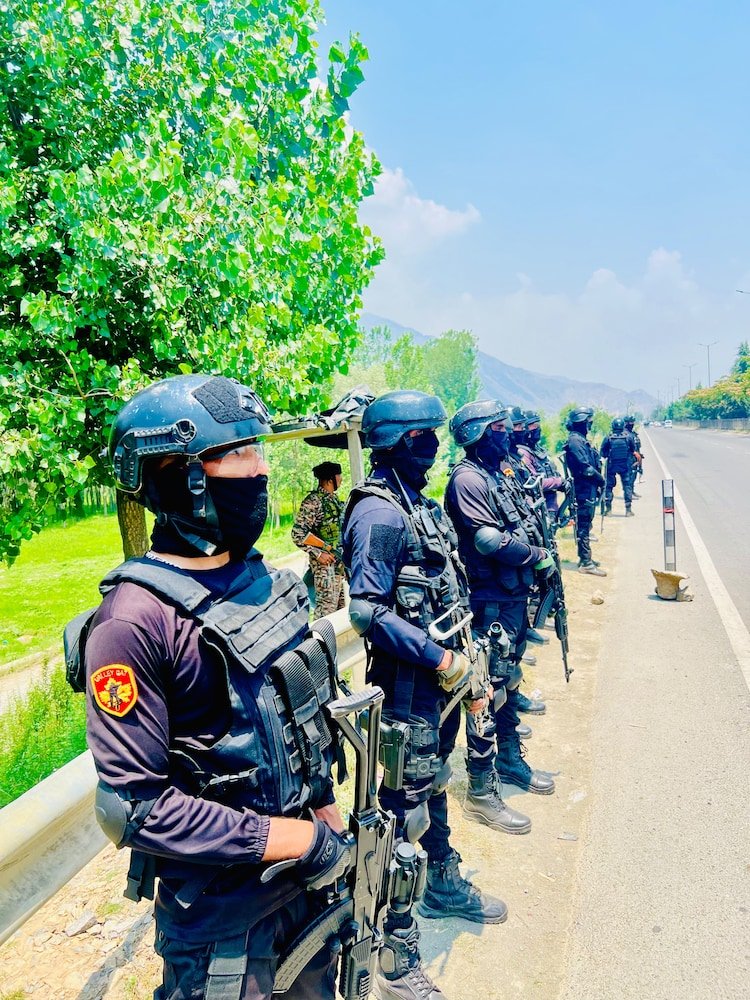
Valley Quick Action Teams: First Responders to Emerging Threats
One of the central components of Operation Shiva is the deployment of Valley Quick Action Teams (QATs).
These specialized units have been positioned along National Highway-44, the primary route connecting Jammu to Kashmir.
Their responsibilities include:
- Rapid deployment following intelligence inputs.
- Counter-terror response.
- High-mobility patrol operations.
- Protection of vulnerable stretches.
- Immediate reinforcement during emergencies.
Their mobility allows authorities to respond quickly if suspicious activity is detected.
Drone Surveillance Strengthens Situational Awareness
Modern aerial surveillance forms a major pillar of Operation Shiva.
Advanced drones are conducting continuous monitoring over:
- Mountain ridges.
- Forest corridors.
- Trekking routes.
- Remote valleys.
- High-risk zones.
Live imagery enables command centres to identify unusual activity more quickly and coordinate responses with ground personnel.
Drone technology has increasingly become an important force multiplier in difficult terrain where traditional observation may be limited.
Facial Recognition and Smart CCTV Network
Authorities have expanded electronic surveillance by installing CCTV systems across:
- Base camps.
- Railway stations.
- Entry checkpoints.
- Pilgrim routes.
- Critical public areas.
Many cameras are integrated with facial recognition capabilities intended to help identify persons of interest and improve monitoring efficiency.
Digital surveillance complements physical deployment rather than replacing it.
RFID Cards: Technology Supporting Pilgrim Safety
Every registered pilgrim will receive a Radio Frequency Identification (RFID) card.
The system enables authorities to:
- Track movement along designated routes.
- Locate missing pilgrims.
- Coordinate rescue operations.
- Improve emergency medical response.
- Enhance overall crowd management.
RFID technology has become increasingly valuable for managing large gatherings where visitors travel through remote terrain.
Daily Route Sanitisation Operations
Before each day’s pilgrimage begins, specialized teams will conduct route clearance exercises.
These operations include:
- Bomb detection.
- Bridge inspections.
- Road examination.
- Forest patrols.
- Identification of suspicious objects.
Only after these procedures are completed are pilgrims allowed to proceed along the designated routes.
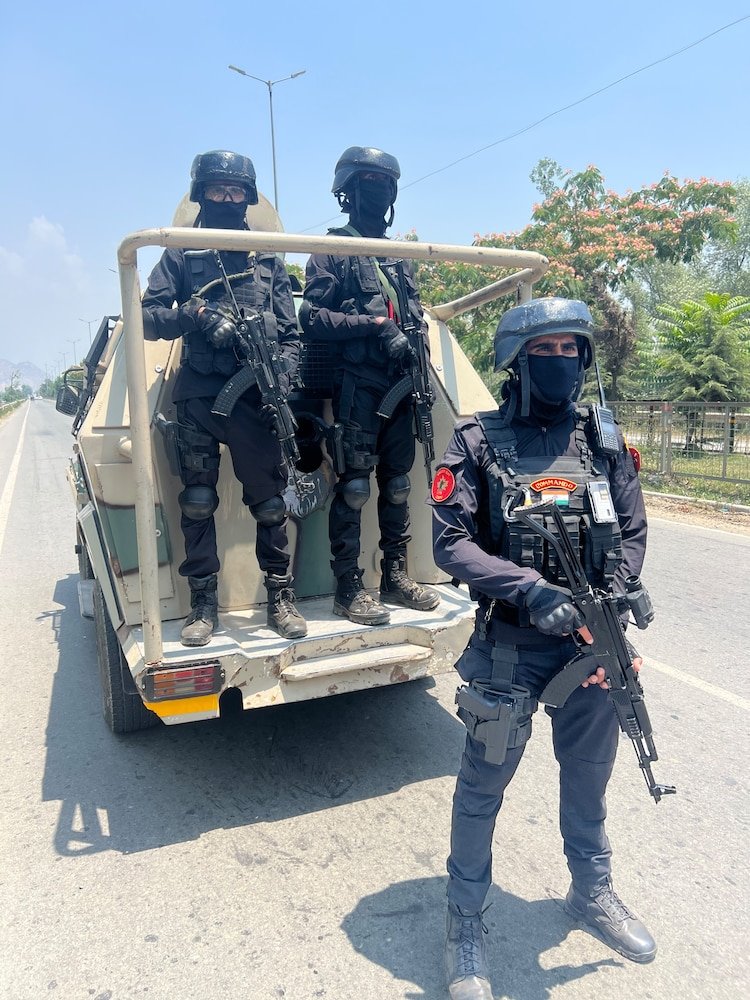
Bulletproof Vehicles and Mobile Security Units
Authorities have also increased deployment of bulletproof vehicles throughout sensitive stretches.
These vehicles support:
- Security patrols.
- Personnel movement.
- Emergency evacuation.
- Rapid reinforcement.
Improved mobility enhances operational flexibility across the mountainous region.
Largest Deployment of Central Armed Police Forces
The Ministry of Home Affairs has approved deployment of more than 670 companies of Central Armed Police Forces for the pilgrimage.
Personnel have been stationed at:
- Base camps.
- Highways.
- Sensitive mountain stretches.
- Railway stations.
- Transit points.
- Strategic installations.
The scale of deployment underscores the importance placed on ensuring uninterrupted conduct of the Yatra.
Security Along Baltal and Pahalgam Routes
The Amarnath Yatra primarily follows two routes:
| Route | Characteristics | Security Focus |
|---|---|---|
| Baltal Route | Shorter but steeper trek | Mountain surveillance and rapid response |
| Pahalgam Route | Longer traditional route | Extended patrols and camp security |
Both routes are under continuous observation through patrols, surveillance systems and strategically located observation posts.
Infrastructure Improvements for Pilgrims
Alongside security measures, authorities have implemented several infrastructure upgrades.
These include:
- Road widening.
- Improved lighting.
- Strengthened pathways.
- Enhanced crowd management facilities.
- Prepaid booking systems for ponies, palanquins and porters.
These initiatives aim to improve both safety and convenience for pilgrims.
Operation Dal Extends Security Beyond the Shrine
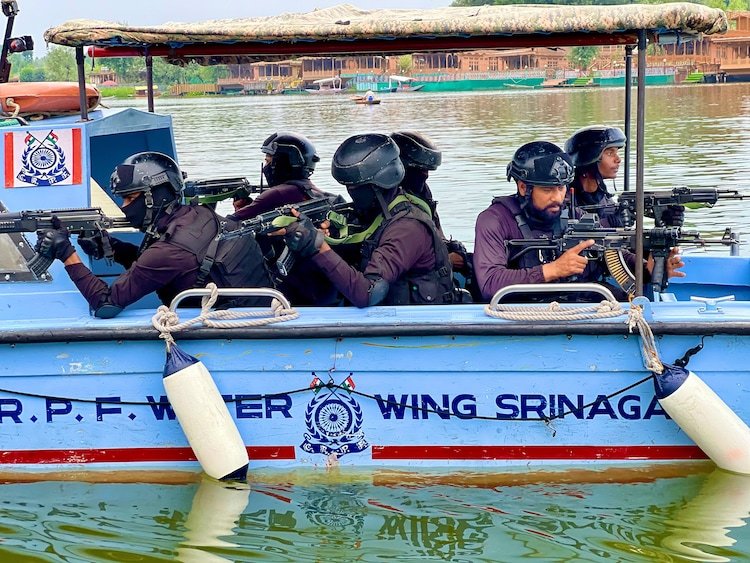
Recognizing that many pilgrims visit Srinagar after completing the Yatra, the CRPF Water Wing has launched Operation Dal.
The operation includes:
- Round-the-clock patrols on Dal Lake.
- Modern patrol boats.
- Communication-equipped water units.
- Emergency response capability.
This expands security coverage beyond the pilgrimage route itself.
Technology Is Transforming Pilgrimage Security
Operation Shiva demonstrates how modern security management increasingly combines:
- Artificial intelligence-assisted surveillance.
- Real-time tracking.
- Digital monitoring.
- Integrated communication systems.
- Data-supported operational decisions.
Rather than relying solely on manpower, authorities are creating a technology-enabled security ecosystem capable of faster detection and coordinated response.
Expert Insight: A Shift Toward Integrated Security Management
Large religious gatherings worldwide increasingly rely on integrated security strategies that combine personnel, surveillance technology, emergency planning and crowd analytics. Operation Shiva reflects this evolving approach by coordinating multiple agencies under a unified operational framework while incorporating advanced monitoring tools such as drones, RFID systems and smart surveillance.
Such integrated planning not only strengthens security preparedness but also improves disaster management, medical response and logistical coordination essential elements for safely managing millions of visitors in geographically challenging environments.
Future Outlook
As the Amarnath Yatra progresses through August 28, authorities are expected to continuously review intelligence inputs, weather conditions and operational requirements to adapt security measures as needed. The experience gained from Operation Shiva may also influence security planning for future large-scale religious events across India, particularly those involving difficult terrain and high visitor volumes.
The increasing integration of technology into pilgrimage management suggests that future operations may further expand the use of real-time analytics, automated monitoring and digital coordination while maintaining strong human oversight.
Conclusion
Operation Shiva represents one of the most extensive security frameworks ever implemented for the Amarnath Yatra. By combining large-scale deployment of security forces with advanced surveillance technologies, RFID tracking, rapid response units, route sanitisation and enhanced infrastructure, authorities aim to provide a secure environment for lakhs of pilgrims undertaking one of India’s most revered spiritual journeys.
While security remains the operation’s primary objective, the broader strategy also emphasizes confidence-building, efficient emergency response and smoother pilgrimage management. As devotees begin their journey to the holy cave shrine, Operation Shiva stands as an example of how modern technology and coordinated planning are reshaping the protection of major religious events in India.
For breaking news and live news updates, like us on Facebook or follow us on Twitter and Instagram. Read more on Latest India on thefoxdaily.com.





COMMENTS 0