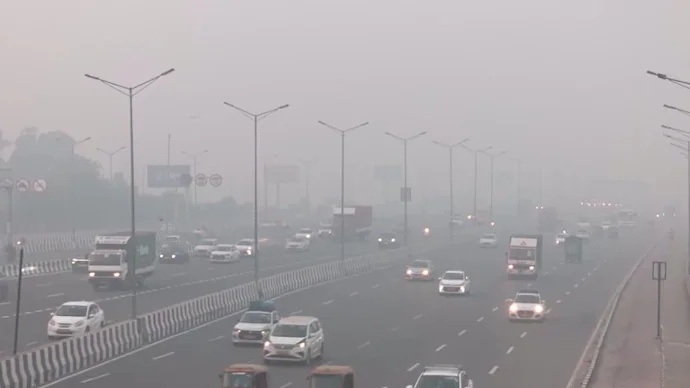
The Supreme Court has sought detailed explanations from Delhi, Uttar Pradesh, Haryana and Rajasthan over the steps being taken to control pollution caused by vehicles in the National Capital Region (NCR). The court said the sharp rise in vehicular emissions requires urgent intervention and asked the authorities to explain how they are preventing over-age and non-compliant vehicles from entering or operating in the region.
The directions were issued on November 6 while the court was hearing a suo motu case concerning air pollution in Delhi-NCR. The bench also asked the Municipal Corporation of Delhi (MCD) and Delhi Police to submit details of the measures being implemented to reduce vehicle emissions and their impact on air quality.
The court’s intervention comes against the backdrop of a reported decline in stubble-burning incidents across Delhi and neighbouring states. However, the bench observed that the improvement in this area has brought another pressing concern into focus: the increasing contribution of vehicular emissions to the region’s pollution problem.
The authorities have been asked to explain existing enforcement systems, the regulation of vehicles entering Delhi-NCR from neighbouring states and the short-term and long-term measures planned to address the problem.
Supreme Court Flags Rising Vehicular Emissions in Delhi-NCR
A bench comprising Chief Justice Surya Kant and Justices Joymalya Bagchi and V Mohana expressed concern over the growing contribution of vehicles to air pollution in the national capital and surrounding areas.
The bench noted that the data presented before it showed a substantial reduction in stubble-burning incidents across Delhi, Uttar Pradesh, Haryana and Rajasthan. While acknowledging the development, the judges said the same data highlighted a sharp increase in issues linked to vehicular emissions.
The court observed that the situation required immediate attention because pollution in Delhi-NCR is influenced by traffic movements across state boundaries. Vehicles travelling within Delhi and those entering from neighbouring regions collectively add to the emissions burden.
In its observations, the bench said the geographical and economic links between Delhi and surrounding areas make it difficult to address vehicle pollution through measures implemented by the national capital alone.
The court also highlighted the substantial number of commercial and private vehicles entering and operating in Delhi from different parts of the NCR. This movement adds to existing traffic and increases the pressure on efforts to control emissions.
The judges emphasised that the issue warranted urgent and immediate intervention, signalling closer judicial scrutiny of the measures adopted by the governments and enforcement agencies.
Four States Asked to Explain Action Against Over-Age Vehicles
The Supreme Court has directed the governments of Delhi, Uttar Pradesh, Haryana and Rajasthan to provide detailed information about the steps taken to prevent over-age, end-of-life and otherwise non-compliant vehicles from entering or operating in the NCR.
The court wants the authorities to explain how vehicles that do not meet prescribed emission standards are identified, monitored and regulated. It has also sought details of the existing systems used to enforce vehicle pollution requirements.
Particular attention has been given to vehicles arriving from neighbouring states. Since many commuters and commercial operators travel regularly between Delhi and surrounding cities, the court wants to understand how inter-state vehicle movement is being monitored.
The authorities must also explain the regulatory framework governing the entry and movement of both commercial and non-commercial vehicles in Delhi-NCR.
The directions are intended to establish whether existing rules are being enforced consistently and whether additional measures are needed to prevent highly polluting vehicles from contributing to the region’s air quality problems.
Court Seeks Details of Pollution Under Control Certificate Enforcement
Another major issue raised by the bench concerns the enforcement of Pollution Under Control (PUC) certificates. These certificates are used to demonstrate that a vehicle has met the prescribed emission requirements during testing.
The court has asked the authorities to explain the existing system for checking and monitoring PUC compliance, including how vehicles without valid certificates are identified and what action is taken against them.
The bench also wants information about the number of vehicles inspected, fined, denied entry or subjected to other enforcement proceedings during the relevant period.
This information could help the court assess whether the current enforcement system is functioning effectively or whether significant gaps remain between pollution-control rules and their implementation.
The authorities have also been asked to explain how vehicle checks are coordinated across different locations and how information about non-compliant vehicles is shared between agencies.
Supreme Court Wants Stronger Coordination Between Delhi and Neighbouring States
The court has highlighted the need for coordination between Delhi and the neighbouring states because vehicle pollution does not remain confined within administrative boundaries.
Large numbers of vehicles travel between Delhi and cities such as Ghaziabad, Greater Noida, Gurugram and Faridabad. The bench raised concerns about bumper-to-bumper traffic on roads connecting these urban centres with the national capital.
Such movement creates a combined emissions burden, making coordination between state governments and local enforcement agencies important for pollution control.
The court has therefore asked the authorities to explain how they work together to regulate inter-state vehicle movement and ensure that vehicles comply with prescribed emission standards.
The bench also wants the governments to identify specific steps that could strengthen existing enforcement mechanisms. These measures must be accompanied by a time-bound roadmap explaining when and how the proposed improvements will be implemented.
Centre Says Restrictions on Vehicles Below BS-VI Standards Are Being Implemented
During the November 6 hearing, the Centre informed the Supreme Court that restrictions on the entry of vehicles below BS-VI emission standards were being implemented.
BS-VI refers to Bharat Stage VI, India’s vehicle emission standard designed to limit pollutants released by vehicles. The restrictions form part of the broader effort to reduce emissions from transport operating in and around Delhi.
The Centre also informed the bench that Pollution Under Control certificates were being linked to the locations where vehicle checks were conducted, according to the report by the Press Trust of India.
The court’s latest directions indicate that it wants more detailed information about how these restrictions and checks operate in practice. The authorities must explain the enforcement process, the action taken against violations and whether the existing arrangements are sufficient to address the scale of the problem.
States Given Two Weeks to Submit Detailed Responses
The Supreme Court has directed the four state governments and the concerned authorities to file their submissions within two weeks.
The responses must cover measures already implemented, short-term and long-term plans, and steps proposed to strengthen vehicle pollution enforcement. The governments must also explain how they have responded to suggestions made by the Commission for Air Quality Management (CAQM) and the amicus curiae assisting the court.
The bench has asked the authorities to include any additional measures they independently consider necessary to control vehicular emissions in Delhi-NCR.
The requirement for a time-bound roadmap is particularly significant because it seeks to move the discussion beyond general assurances. The court wants specific information about proposed actions and their expected implementation schedules.
Supreme Court Sets November Dates for Other Delhi-NCR Pollution Issues
The Supreme Court registry has been directed to list different aspects of the ongoing suo motu pollution proceedings on separate dates in November.
The case concerning vehicular emissions and pollution in Delhi-NCR will be listed on November 23. Other pollution-related matters will be heard on different dates, allowing the court to examine specific sources of environmental damage separately.
The scheduled hearings include:
- November 23: The suo motu case concerning vehicular emissions and pollution in Delhi-NCR.
- November 30: Matters related to the conservation and expansion of green cover.
- November 26: Pollution from construction activities, power plants and other industries.
- November 25: Solid waste management and pollution linked to crop residue and firecracker burning.
The separate listings reflect the range of issues involved in Delhi-NCR’s recurring air pollution crisis. The court is examining transport emissions alongside other sources, including construction, industrial activity, waste burning and the loss of green cover.
Why Vehicular Pollution Is a Major Concern for Delhi-NCR
Vehicular emissions are an important part of the air pollution challenge facing Delhi and its surrounding urban areas. The large number of private cars, two-wheelers, buses, trucks and other commercial vehicles contributes to the region’s overall emissions load.
The problem becomes more complicated because Delhi functions as part of a wider economic and transport network. People travel across state borders for work, education, business and other daily activities, while commercial vehicles move goods between cities and industrial centres.
As a result, pollution-control measures limited to Delhi’s municipal boundaries may not address emissions from vehicles entering the capital from neighbouring states.
Over-age and non-compliant vehicles are a particular concern because they may not meet the emission requirements expected under current regulations. Effective monitoring, regular testing and enforcement are therefore important parts of any strategy to reduce transport-related pollution.
The Supreme Court’s questions focus on whether the authorities have systems capable of identifying such vehicles and preventing them from adding to the region’s pollution burden.
Decline in Stubble Burning Shifts Attention to Other Pollution Sources
The court’s observations also underline the importance of addressing multiple sources of pollution rather than concentrating on a single seasonal contributor.
Stubble burning in agricultural areas of northern India has frequently been discussed in connection with deteriorating air quality in Delhi during the post-harvest period. The latest data presented to the bench showed a substantial decline in incidents across Delhi, Uttar Pradesh, Haryana and Rajasthan.
Although the court welcomed this development, it warned that the reduction should not distract from other sources of emissions. Vehicular pollution, in particular, requires attention because traffic continues throughout the year and crosses administrative boundaries.
The court’s approach suggests that pollution-control efforts must address transport, industrial emissions, construction dust, waste management and agricultural burning together.
What Happens Next in the Delhi-NCR Pollution Case?
The next important step will be the submission of detailed responses by Delhi, Uttar Pradesh, Haryana and Rajasthan, along with information from the concerned civic and police authorities.
The Supreme Court will examine whether the existing vehicle restrictions are being enforced effectively, how many non-compliant vehicles have faced action and what additional steps are planned to strengthen monitoring.
The November 23 hearing will provide an opportunity for the bench to assess the responses and consider whether further directions are necessary.
For residents of Delhi-NCR, the proceedings are significant because they focus on practical measures to control emissions from vehicles travelling within and into the region. The effectiveness of the proposed steps will depend on enforcement, coordination between states and the ability of authorities to prevent non-compliant vehicles from operating on the roads.
The Supreme Court has made clear that the reduction in stubble burning does not resolve the wider air pollution crisis. Its latest directions place vehicular emissions under closer scrutiny and require the governments concerned to explain how they intend to tackle the problem with specific, measurable and time-bound action.
For breaking news and live news updates, like us on Facebook or follow us on Twitter and Instagram. Read more on Latest India on thefoxdaily.com.






COMMENTS 0