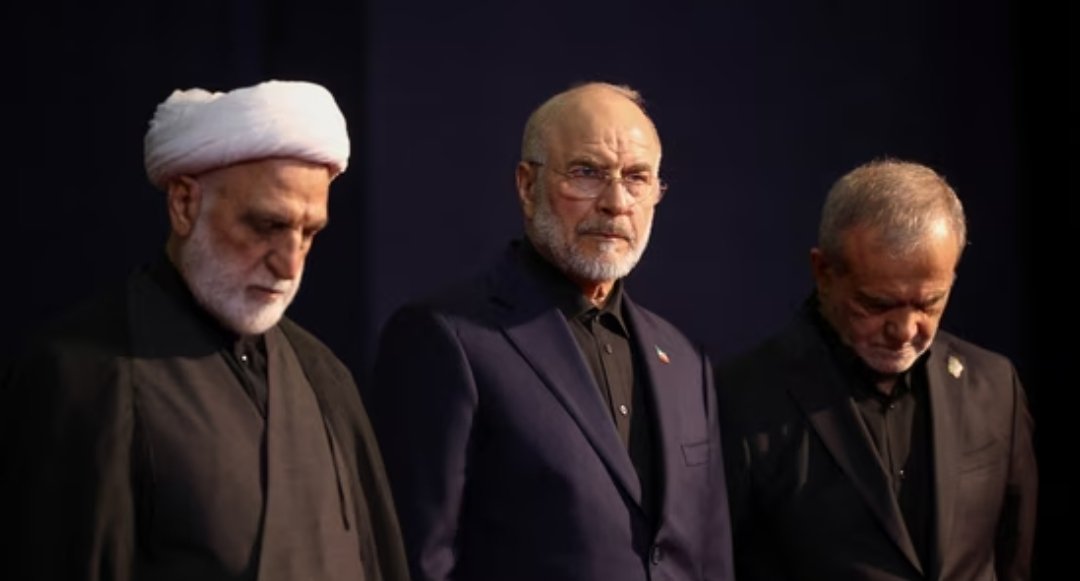
Iran is confronting one of its most complex political crises in decades. While the country remains engaged in an escalating confrontation with the United States over military strikes and the strategic Strait of Hormuz, a fierce internal power struggle is unfolding behind closed doors.
Hardline factions have accused President Masoud Pezeshkian and several senior officials of carrying out what they describe as a “soft coup” against the Islamic Republic. The allegations stem from the government’s negotiations with the United States, the implementation of wartime policies, and the continued absence of the country’s new Supreme Leader from public life.
The accusations highlight growing divisions within Iran’s political establishment and raise important questions about who currently holds real authority in Tehran. As military conflict continues abroad, internal political instability may prove equally significant in determining Iran’s future.
Why Are Iran’s Hardliners Talking About a ‘Soft Coup’?
The controversy revolves around the belief among some conservative factions that Iran’s visible leadership has gradually assumed greater authority while the country’s newly appointed Supreme Leader has remained largely out of public view.
According to reports, hardliners believe senior officials negotiated with the United States and made key wartime decisions without fully reflecting the ideological direction traditionally associated with Iran’s supreme leadership.
For these groups, the issue extends beyond diplomacy. They argue that political power is quietly shifting away from the religious establishment that has traditionally defined the Islamic Republic since 1979.
The Funeral That Exposed Political Divisions
The funeral ceremonies for former Supreme Leader Ayatollah Ali Khamenei became an unexpected display of Iran’s internal political tensions.
During public events, reports indicated that some mourners directed slogans against President Masoud Pezeshkian, accusing him of compromising with foreign powers. Foreign Minister Abbas Araghchi also reportedly faced hostility from sections of the crowd.
Rather than presenting a united national response following the death of Iran’s highest authority, the funeral highlighted the widening divide between government officials pursuing diplomacy and hardliners demanding confrontation.
Who Are the Main Figures at the Center of the Dispute?
President Masoud Pezeshkian
As Iran’s elected president, Pezeshkian has become one of the country’s most visible leaders during the current crisis. His involvement in negotiations and public messaging has made him a primary target for criticism from conservative factions.
Foreign Minister Abbas Araghchi
Araghchi has played a leading role in diplomatic engagement with the United States. Hardliners accuse him of making excessive concessions, while supporters argue diplomacy remains essential to reducing military escalation.
Mohammad Bagher Ghalibaf
Serving as one of the country’s most influential political figures, Ghalibaf has become increasingly prominent during the ongoing conflict. His growing visibility has fueled speculation among critics that civilian leaders are exercising greater authority than expected.
Mojtaba Khamenei
The reported absence of Iran’s new Supreme Leader from major public appearances has become one of the central issues driving speculation. Without frequent public statements or visible leadership, competing narratives have emerged regarding decision-making inside Tehran.
Understanding Iran’s Unique Political Structure
To understand the controversy, it is important to recognize that Iran operates under a dual system of governance.
| Institution | Primary Role |
|---|---|
| Supreme Leader | Highest political and religious authority with influence over military, security and strategic decisions. |
| President | Leads the elected government and oversees administration and economic policy. |
| Parliament | Passes legislation and supervises government affairs. |
| Islamic Revolutionary Guard Corps (IRGC) | Powerful military institution with significant political and economic influence. |
Because authority is shared across multiple institutions, periods of leadership transition often create uncertainty regarding where real power resides.
Why Leadership Visibility Matters
In highly centralized political systems, public appearances by top leaders often serve purposes beyond symbolism.
Visible leadership helps:
- Demonstrate political stability.
- Reduce uncertainty within government institutions.
- Project confidence during international crises.
- Reassure supporters about continuity of governance.
When senior leaders remain absent from public view during periods of conflict, speculation naturally increases regarding internal decision-making.
The Connection Between Domestic Politics and the US Conflict
Iran’s internal political debate cannot be separated from its military confrontation with the United States.
As American and Iranian forces continue exchanging strikes targeting military infrastructure and strategic assets, policymakers face difficult decisions balancing national security, diplomacy and economic stability.
Each diplomatic move risks criticism from hardliners who favor stronger military responses, while every escalation increases pressure on officials seeking to avoid a prolonged regional conflict.
The Strait of Hormuz Adds More Pressure
The conflict has increasingly focused on control of the Strait of Hormuz, one of the world’s most strategically important maritime routes.
Approximately one-fifth of global oil shipments normally pass through this narrow waterway.
Any disruption affects:
- Global energy markets.
- International shipping.
- Oil prices.
- Inflation in energy-importing countries.
- Regional security across the Middle East.
This means Iran’s internal political decisions now carry consequences extending well beyond its borders.
Why Hardliners Oppose Negotiations
For many conservative factions, negotiations with Washington represent more than foreign policy.
They view resistance to Western pressure as a defining principle of the Islamic Republic.
From this perspective, diplomatic engagement risks appearing as ideological compromise rather than strategic negotiation.
Supporters of diplomacy, however, argue that negotiations can coexist with national sovereignty and may reduce the economic and humanitarian costs of prolonged conflict.
What Experts Say About the Current Situation
Political analysts note that leadership transitions frequently expose disagreements that remain hidden during periods of stable authority.
Rather than indicating an immediate collapse of government institutions, public disagreements often reflect competition among different political factions seeking greater influence over future policy.
The current accusations of a “soft coup” therefore appear to represent an intense internal power struggle rather than confirmed evidence of an actual attempt to overthrow Iran’s political system.
Could the Political Crisis Affect Iran’s Stability?
Several possible consequences could emerge if political divisions continue to deepen.
- Greater tension between conservative and moderate political factions.
- Slower government decision-making during military conflict.
- Reduced confidence among investors and businesses.
- Increased uncertainty regarding future foreign policy.
- Potential impact on diplomatic negotiations with international partners.
Whether these risks materialize depends largely on how Iran’s leadership manages both internal disagreements and external military pressures.
Timeline of Recent Developments
| Event | Significance |
|---|---|
| Death of Ayatollah Ali Khamenei | Created a major leadership transition within Iran. |
| Funeral ceremonies | Public criticism directed at senior government officials. |
| Diplomatic engagement with the US | Generated backlash from hardline factions. |
| Renewed US-Iran strikes | Military conflict intensified alongside political tensions. |
| Hardliners allege “soft coup” | Internal political divisions became increasingly public. |
Why This Story Matters Beyond Iran
Iran remains one of the Middle East’s most influential regional powers. Political instability inside the country has implications for energy markets, regional security, diplomatic negotiations, and international trade.
Governments around the world are closely watching not only military developments but also signs of internal political cohesion or fragmentation within Tehran’s leadership.
The outcome of these domestic power struggles may shape Iran’s foreign policy far more than battlefield developments alone.
Future Outlook
Several key developments are likely to determine the direction of Iran’s political landscape in the coming weeks.
- Whether the Supreme Leader becomes more publicly visible.
- The continuation or suspension of diplomatic engagement with the United States.
- The response of hardline political factions.
- The evolution of military operations around the Strait of Hormuz.
- The government’s ability to maintain internal political unity during wartime.
How these issues unfold will influence both Iran’s domestic stability and broader regional security.
Conclusion
Iran’s current challenges extend well beyond its military confrontation with the United States. The accusations of a “soft coup” reveal growing ideological and political divisions within the country’s leadership at a time when national unity is under extraordinary pressure.
Although no evidence has confirmed claims of an organized attempt to seize power, the public emergence of these allegations demonstrates the increasing intensity of internal political competition. As conflict continues abroad and uncertainty persists at home, Iran faces one of the most consequential periods in its modern political history, where decisions made in Tehran could shape not only the country’s future but also the stability of the wider Middle East.
For breaking news and live news updates, like us on Facebook or follow us on Twitter and Instagram. Read more on Latest World on thefoxdaily.com.

COMMENTS 0