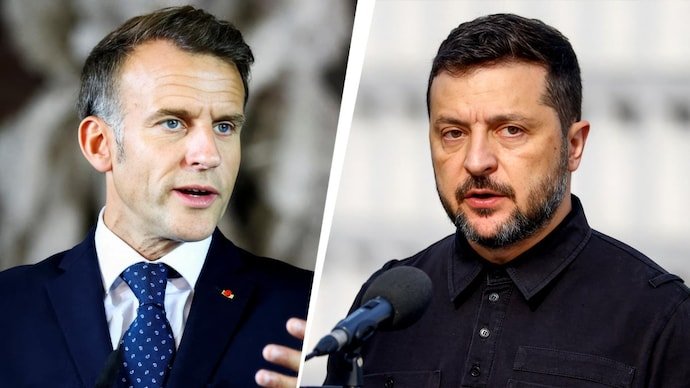
France has pledged to provide Ukraine with additional missile interceptors as a renewed wave of Russian strikes exposes one of Kyiv’s most serious battlefield vulnerabilities: a shortage of advanced air-defence ammunition capable of stopping some of Russia‘s fastest and most difficult-to-intercept weapons.
French President Emmanuel Macron announced the new support on Saturday, saying Ukraine needed the means to defend its airspace as Russian attacks intensified. The announcement came after a series of deadly strikes across Ukraine and Russia, including an attack on a shopping centre in Kryvyi Rih that killed 16 people and injured more than 100 others.
The latest escalation has also highlighted the growing strain on Ukraine’s air-defence network. Kyiv has relied heavily on Western systems, particularly US-made Patriot batteries, to defend against ballistic missiles. Ukrainian air-defence systems cannot intercept every type of weapon Russia uses, leaving some cities especially vulnerable when ballistic missile attacks occur.
France’s commitment comes as European governments prepare for another meeting of the Coalition of the Willing, a group led by France and Britain that is seeking ways to increase pressure on Moscow and strengthen support for Ukraine.
Why Ukraine urgently needs more missile interceptors
Air defence has become one of the most critical components of Ukraine’s ability to protect its population and infrastructure.
Russia has increasingly combined drones, cruise missiles and ballistic missiles in attacks against Ukrainian cities. Each weapon presents a different challenge for defenders, but ballistic missiles are particularly difficult because of their speed and flight characteristics.
Ballistic missiles can travel at very high speeds and follow trajectories that give defenders only a short period to respond once the weapon is detected. In urban areas such as Kyiv, the warning time can be so limited that civilians may have little opportunity to reach a shelter before impact.
That makes the availability of sophisticated interceptor missiles almost as important as the launchers themselves. A modern air-defence battery cannot continue protecting a city indefinitely if it runs out of ammunition.
Ukraine has repeatedly appealed to its allies for additional air-defence systems and interceptor missiles. The Patriot system has been particularly valuable because it provides a capability against some of the ballistic missiles Russia has used in attacks on Ukrainian cities.
Patriot interceptors have become a strategic priority
The shortage of advanced interceptors is not simply a question of replacing damaged equipment. Ukraine has to manage a limited supply of missiles against a much larger and continuing Russian arsenal.
Russia can launch large numbers of drones and missiles in coordinated attacks, forcing Ukrainian defenders to make difficult decisions about which threats to engage and how to conserve expensive interceptor ammunition.
The problem becomes more acute when ballistic missiles are involved. Ukraine’s domestic systems have important air-defence capabilities, but the country has acknowledged the need for Western systems to strengthen protection against the most difficult threats.
For Kyiv, additional interceptors therefore have two purposes. They can help protect civilians and critical infrastructure in the immediate term, while also giving Ukraine greater flexibility in managing future attacks.
Macron’s pledge is consequently about more than adding another weapons shipment. It addresses a specific vulnerability in Ukraine’s defensive architecture at a time when Russian strike activity is increasing.
Deadly strikes underline the cost of the air-defence shortage
The French announcement followed a particularly deadly period of attacks.
At least 13 people were reported killed in overnight and Saturday strikes, including seven in Ukraine, four in Russia and two in Russia-annexed Crimea. The figures include casualties from attacks carried out by both sides.
In Ukraine, the most devastating recent incident occurred in Kryvyi Rih, where Russian drones struck a busy shopping centre on Friday afternoon.
Sixteen people were confirmed killed and more than 100 injured. The attack caused a major fire and heavily damaged the building. Three people were still reported missing as rescuers searched through the wreckage the following day.
The incident drew particular attention because of reports that a second drone arrived roughly half an hour after the initial strike. Ukrainian President Volodymyr Zelenskyy described the attack as “cynical and despicable.”
Images from the scene showed the scale of the destruction. Parts of the shopping centre were blackened by fire, windows were blown out and sections of the ceiling were damaged. Rescue workers continued clearing debris while mourners placed flowers and messages at a temporary memorial outside the site.
Russian ballistic missile strikes create a different threat
The danger to Kyiv is particularly serious when Russia uses ballistic missiles.
Unlike many drones, which can take longer to reach their targets and may sometimes be detected well before impact, ballistic missiles can arrive within minutes. Their speed reduces the amount of time available for both air-defence systems and civilians to react.
That creates a two-part problem for Ukrainian authorities. Air-defence units need enough interceptor missiles to engage incoming threats, while civilians need sufficient warning to reach protected locations.
Russia’s use of ballistic missiles against Kyiv has therefore placed pressure on the country’s most sophisticated air-defence systems.
One such strike occurred during a visit to Kyiv by German Foreign Minister Johann Wadephul, who was holding talks with Ukrainian officials, including Foreign Minister Andrii Sybiha and President Volodymyr Zelenskyy.
The attack reportedly killed two people and wounded several others in the Boryspil district on the eastern outskirts of Kyiv. Ukrainian officials also reported at least four deaths in a series of strikes in the frontline Zaporizhzhia region.
The civilian impact is becoming harder to ignore
The latest attacks have added to a worsening civilian toll.
The United Nations reported that civilian deaths in Ukraine during the year had reached their highest level since the first months of Russia’s full-scale invasion. That development gives additional urgency to European efforts to strengthen Ukraine’s air-defence capabilities.
The significance of the trend goes beyond the number of casualties. Repeated strikes against residential areas and civilian infrastructure affect daily life across the country, disrupt businesses and public services, damage homes and place enormous pressure on emergency responders.
Air defence can reduce the damage caused by attacks, but it cannot eliminate the underlying threat. Ukraine therefore continues to require both military support and diplomatic efforts aimed at reducing the frequency and scale of Russian strikes.
France puts air defence at the centre of its support
Macron’s announcement reflects France’s continued focus on helping Ukraine defend its territory rather than simply supplying offensive weapons.
In announcing the additional interceptors, Macron said it was crucial to give Ukraine the means necessary to defend its skies and counter the Russian aggression.
For European governments supporting Kyiv, air defence has become one of the clearest areas where military assistance can have an immediate civilian-protection role. Interceptors can help protect cities, power infrastructure, transport facilities and other critical locations from incoming weapons.
But supplying interceptors is also complicated by production capacity and demand. Ukraine is not the only country seeking advanced air-defence ammunition, and some systems require sophisticated missiles that cannot be manufactured or delivered as quickly as conventional ammunition.
That means European pledges can help, but the timing and scale of deliveries remain crucial.
Europe’s Coalition of the Willing prepares for another meeting
The announcement comes shortly before allies in the Coalition of the Willing are due to meet on Monday.
The initiative, led by France and Britain, is focused on maintaining support for Ukraine and exploring ways to increase pressure on Russia to end the invasion.
The meeting takes place against a difficult diplomatic backdrop. The United States has previously facilitated several rounds of direct talks between Kyiv and Moscow, but negotiations have stalled.
The situation has become more complicated as Washington has also been dealing with its war with Iran. The US administration under President Donald Trump has expressed frustration with the difficulty of resolving the Ukraine conflict, which had previously been presented as a conflict that could potentially be settled relatively quickly.
With diplomacy struggling to produce a breakthrough, European governments face the challenge of maintaining military support while continuing to search for a political path toward ending the war.
Ukraine faces a difficult balance between defence and ammunition
The shortage of interceptors highlights a fundamental problem in modern air warfare: possessing an advanced defence system is not enough if there are insufficient missiles to operate it continuously.
Ukraine must decide how to distribute limited air-defence resources across a large territory. Kyiv is an obvious priority because of its political and economic importance, but major cities, military facilities, energy infrastructure and frontline areas also face threats.
Russia can exploit that challenge by varying the size, location and composition of its attacks. Large waves of drones can force defenders to use ammunition, while ballistic missiles create a much more difficult interception problem.
Additional French and European support could therefore improve Ukraine’s ability to manage these attacks, but the effect will depend on the number and type of interceptors delivered and how quickly they arrive.
Russia’s attacks are also causing casualties inside Russia
The escalation is not limited to Ukrainian territory.
A Ukrainian drone attack on a house in Russia’s southern Krasnodar region killed two children and injured their parents, according to the regional governor Veniamin Kondratyev.
Kondratyev said civilian infrastructure and residential buildings in the Yeysk district had come under attack, resulting in the deaths of the two children and hospitalisation of two adults.
The incident illustrates how the expanding use of drones has brought the consequences of the war increasingly closer to civilian areas on both sides of the conflict.
Russia has repeatedly accused Ukraine of carrying out drone attacks on its territory, while Ukraine has used drones as part of its efforts to strike Russian military and strategic targets. Both sides have continued to report civilian casualties as the war persists.
Why the Kryvyi Rih attack matters
The destruction at the Kryvyi Rih shopping centre is significant not only because of the number of casualties but also because it demonstrates the human consequences when incoming weapons reach civilian areas.
Kryvyi Rih is Zelenskyy’s home city and has previously been targeted during the war. The latest attack struck a place where civilians were shopping, turning an ordinary public space into a mass-casualty scene.
The reported second strike also intensified concerns about the risks faced by rescuers and civilians after an initial attack. Such tactics can complicate Emergency Response and increase the danger for people who gather at a damaged site.
For Ukraine, the incident reinforces the argument that additional air-defence ammunition is urgently needed, particularly around densely populated urban areas.
What Macron’s pledge could mean for Ukraine
The immediate impact of the French commitment will depend on delivery schedules and the number and type of interceptors ultimately provided.
If the additional missiles arrive quickly, they could help Ukraine preserve its existing air-defence capability during a period of sustained Russian attacks. More ammunition would also allow Ukrainian commanders greater flexibility in deciding which incoming threats can be engaged.
The broader value is strategic. Every successful interception can potentially prevent casualties, reduce damage to infrastructure and protect essential services.
At the same time, interceptors are defensive tools rather than a solution to the war itself. They can reduce the effectiveness of Russian strikes but cannot remove Russia’s ability to launch them. That is why military assistance and diplomatic efforts remain closely connected.
What happens next
The next important test will be whether France and other European allies can translate political commitments into sustained deliveries of air-defence ammunition.
The Monday meeting of the Coalition of the Willing could provide more information about how European countries intend to strengthen Ukraine’s defences and increase pressure on Moscow.
The diplomatic track will also remain important. With US-brokered talks stalled, European governments face pressure to maintain a credible long-term strategy that combines military support with efforts toward a negotiated end to the conflict.
For Ukraine, however, the immediate priority is more urgent. Russian missile and drone attacks are continuing, civilian casualties are rising and the country’s most advanced interceptors are in short supply.
Macron’s pledge therefore addresses one of Kyiv’s most immediate needs. Whether it can materially change the balance in the skies will depend not only on France’s commitment, but on how quickly additional interceptors arrive and whether other allies follow with enough ammunition to sustain Ukraine’s air-defence network.
As the war enters another period of intensified strikes, the ability to protect Ukrainian cities from the next Missile Attack may prove just as important as the weapons being used on the battlefield.
For breaking news and live news updates, like us on Facebook or follow us on Twitter and Instagram. Read more on Latest World on thefoxdaily.com.






COMMENTS 0