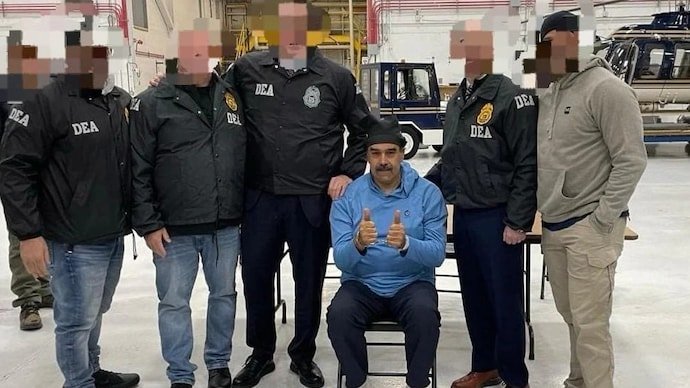
Former Venezuelan President Nicolás Maduro is seeking to stop his US Drug Trafficking prosecution before it reaches trial, arguing that his status as Venezuela’s head of state at the time of the alleged conduct shields him from criminal proceedings in an American court.
Maduro and his wife, Cilia Flores, filed separate motions in Manhattan federal court seeking dismissal of the indictment on sovereign immunity grounds. Maduro’s lawyers are also pursuing a second argument: even if he is not protected by immunity as a head of state, they say he is entitled to conduct-based immunity for actions carried out in his official capacity.
The legal challenge comes as the case moves toward a scheduled June 1, 2027, trial. US District Judge Alvin K. Hellerstein has set November 17 for oral arguments on the motions to dismiss, giving the court an opportunity to address an unusual question: how US criminal law should apply when the defendant is a foreign political leader whose government once treated him as its head of state.
Maduro and Flores have pleaded not guilty. Their lawyers deny the allegations against them, while US prosecutors accuse Maduro and other Venezuelan officials of participating in a long-running cocaine trafficking and narco-terrorism conspiracy.
Why Maduro is invoking sovereign immunity
Sovereign immunity is rooted in the principle that one sovereign state generally does not subject another sovereign state to its own authority without a recognized legal basis. Foreign official immunity can also protect government representatives from certain proceedings involving conduct performed on behalf of their governments.
Maduro’s defense is attempting to apply that principle to a criminal prosecution. His lawyers argue that the US court cannot prosecute a foreign leader who was recognized by his own country as its sitting head of state when the charges were brought.
The defense has characterized the issue as extending beyond Maduro personally. In its view, immunity belongs to the sovereign state and protects the person who represents that state. Flores’ lawyers have made a similar argument, saying her claimed immunity is an attribute of Venezuela’s sovereignty and that only Venezuela can surrender it.
That position faces an immediate complication: Maduro is no longer Venezuela’s president. He was removed from power and brought to the United States in January 2026, and the current legal dispute is taking place after a dramatic change in Venezuela’s political leadership.
The timing matters because the US government’s position toward Maduro has also changed over the years. Washington stopped recognizing Maduro as Venezuela’s legitimate president after disputing the country’s electoral process, a position that could become important when the court considers whether he can rely on head-of-state immunity.
The case dates back to a 2020 US indictment
The criminal prosecution did not begin with Maduro’s capture. The US Department of Justice unsealed an indictment against Maduro and other Venezuelan officials in March 2020.
US prosecutors alleged that Maduro and senior figures in his government participated in a conspiracy involving the Cartel of the Suns and the Colombian armed group FARC. The indictment accused the defendants of facilitating cocaine trafficking into the United States and using political and military influence to protect trafficking operations.
Prosecutors specifically alleged that Maduro helped negotiate multi-ton cocaine shipments and worked with other Venezuelan officials to provide protection for drug trafficking operations. The allegations also included claims involving weapons and cooperation with FARC leadership.
Those accusations remain allegations. An indictment is not a finding of guilt, and Maduro and Flores are presumed innocent unless prosecutors prove the charges beyond a reasonable doubt.
The case therefore has two very different questions at its center. The first is whether Maduro and Flores can legally be prosecuted in the United States. The second, if the prosecution survives, is whether prosecutors can prove the underlying criminal allegations at trial.
Maduro’s lawyers are making two immunity arguments
The primary argument is based on Maduro’s claimed status as a head of state. His lawyers contend that the criminal process of another country’s courts should not be used against a foreign leader acting as the representative of a sovereign nation.
The defense has emphasized the lack of a direct historical example involving an American criminal trial of a foreign leader who was recognized by his own country as its sitting head of state when charges were filed.
Maduro’s lawyers have also presented an alternative argument based on conduct-based sovereign immunity. This distinction is important because immunity does not necessarily depend only on whether a defendant currently holds office.
Conduct-based immunity concerns acts allegedly performed in an official governmental capacity. Maduro’s defense argues that even if the court rejects his broader head-of-state claim, the prosecution should still be dismissed because the alleged conduct was connected to his official role.
The prosecution is expected to challenge that reasoning. A central issue will be whether alleged participation in an international drug trafficking conspiracy can properly be characterized as an official act of a government.
That distinction could become one of the most consequential parts of the litigation. Governments routinely perform acts that have effects outside their borders, but criminal conduct does not automatically become governmental conduct simply because the accused holds political office.
Why the US recognition of Maduro could matter
The immunity dispute is complicated by the long-running disagreement between Washington and Maduro over Venezuela’s political leadership.
The US government stopped recognizing Maduro as Venezuela’s legitimate president after the disputed 2018 Venezuelan presidential election. That position is significant because the question of who qualifies as a foreign head of state is not determined solely by the defendant’s own assertion that he occupied the office.
Maduro’s defense nevertheless points to the fact that Venezuela itself treated him as the country’s leader when the alleged conduct occurred. The lawyers argue that the sovereignty of Venezuela, rather than Washington’s political recognition of Maduro, should control the immunity question.
This creates an unusual collision between International Relations and domestic criminal law. The court must consider not only what Maduro allegedly did but also how a US court should treat the legal consequences of his former position as Venezuela’s leader.
The capture of Maduro adds another legal dispute
The immunity motion is not the only unusual feature of the case. Maduro and Flores were seized by US forces in Caracas in January 2026 and transported to the United States.
They have remained in custody at a federal detention facility in Brooklyn while the criminal proceedings have moved forward. Their lawyers have objected to the circumstances of their capture, while the Trump administration has described the operation as a law-enforcement action.
Maduro has described himself as a prisoner of war and characterized his capture as a kidnapping. The US government has rejected that characterization.
The circumstances of the arrest could become relevant to the defense strategy, but they do not necessarily determine whether a criminal case can proceed. The immediate motion before Judge Hellerstein is focused on sovereign immunity, while other legal challenges may involve different questions concerning jurisdiction, the circumstances of the arrest and the admissibility of evidence.
What prosecutors allege against Maduro
The US government’s allegations against Maduro are extensive and date back years before his removal from power.
According to the 2020 indictment, prosecutors alleged that Maduro and other senior Venezuelan officials used government institutions to facilitate the movement of cocaine. The alleged network involved Venezuelan military and political figures as well as members of FARC.
The Justice Department said the alleged conspiracy involved cocaine produced in Colombia and trafficking routes that moved drugs through Venezuela toward the United States. Prosecutors also alleged that Venezuelan officials provided political and military protection to traffickers.
The case was therefore framed by US prosecutors as more than a conventional drug trafficking prosecution. It alleged that government power and state institutions were used to support an international narcotics network.
That allegation is particularly relevant to Maduro’s immunity defense. The defense wants to connect the challenged conduct to his governmental role, while prosecutors are likely to argue that alleged criminal activity cannot be transformed into protected state conduct merely because the accused occupied the highest political office.
What happens if the judge rejects the immunity motion?
If Judge Hellerstein rejects the motions to dismiss, the case would continue toward the June 1, 2027, trial date unless another ruling or procedural development changes the schedule.
The prosecution would then have to prove the charges against Maduro and Flores in court. The defense would have an opportunity to challenge the government’s evidence, question witnesses and present its own case.
For Maduro, the stakes are exceptionally high. The charges filed in the original prosecution included offenses carrying severe potential penalties, including life imprisonment. However, potential sentencing depends on the specific charges of conviction and the eventual findings of the court, so the existence of a possible life sentence should not be confused with a prediction of the outcome.
Flores faces her own legal case and has separately challenged the government’s ability to prosecute her under sovereign immunity principles.
The legal question is bigger than Maduro
The most important consequence of the immunity fight may extend beyond the former Venezuelan president.
A ruling from Judge Hellerstein could help clarify how US courts approach claims of foreign official immunity in criminal proceedings, particularly when the defendant was a senior foreign leader at the time of the alleged conduct.
The case is also unfolding against a broader legal backdrop. The US Supreme Court has recently addressed presidential immunity in the context of American presidents, holding that former US presidents can have immunity for certain official acts. But that doctrine concerns the US constitutional system and does not automatically answer the separate question of immunity for foreign officials.
That distinction matters. Maduro is not an American president being prosecuted under US constitutional rules. He is a former foreign leader challenging the authority of a US court to prosecute him for alleged conduct connected to his time in office.
The court therefore has to navigate principles of International Law, US recognition policy and domestic criminal procedure without simply assuming that immunity for one category of political leader applies identically to another.
Why the June trial date remains important
The scheduled trial date provides a clear deadline for the immunity dispute. The November 17 hearing is expected to be a major procedural checkpoint because the court will hear arguments on whether the indictment can survive the defendants’ challenges.
The government’s response will be important in determining how prosecutors address the defense’s claim that Maduro’s former position protects him from prosecution. Prosecutors will also have to confront the distinction between legitimate governmental activity and the criminal conduct alleged in the indictment.
For readers following the case, the key point is that the immunity motions do not decide whether Maduro committed the crimes alleged against him. They ask a prior question: whether the US criminal justice system can put him on trial at all.
What to watch next in the Maduro case
The next major development is the US government’s response to the immunity arguments, followed by the November 17 hearing before Judge Hellerstein. The court’s ruling will determine whether the prosecution can move forward on the present schedule.
If the motions fail, attention will shift toward pretrial litigation and the evidence prosecutors intend to present. If the motions succeed, the case could be substantially altered or dismissed, depending on the scope of the court’s ruling and any possible appeal.
The outcome could also carry significance beyond the individuals involved. A decision addressing whether a foreign leader can invoke sovereign immunity against US criminal charges may become an important reference point in future cases involving foreign officials accused of serious crimes.
For now, however, Maduro and Flores remain defendants, not convicted criminals. Their immunity claims are awaiting judicial review, and the allegations in the indictment will ultimately have to be tested through the US legal process if the case reaches trial.
For breaking news and live news updates, like us on Facebook or follow us on Twitter and Instagram. Read more on Latest World on thefoxdaily.com.





COMMENTS 0