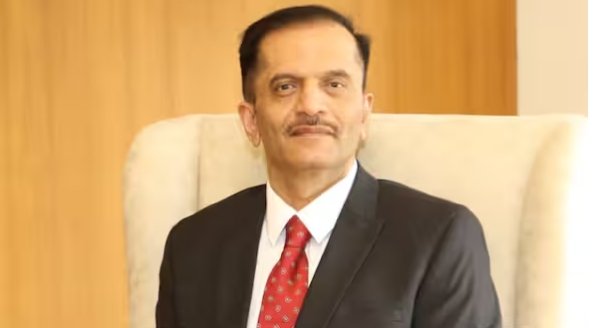
The election of Professor Dr. Bimal N. Patel as a judge of the International Tribunal for the Law of the Sea (ITLOS) represents far more than a personal achievement. It signals India’s expanding influence in international legal institutions and highlights the country’s increasing participation in the Governance of oceans, maritime disputes, and global legal frameworks.
As maritime security, blue economy initiatives, deep-sea resources, environmental protection, and freedom of navigation become central to global Geopolitics, India’s presence within one of the world’s most important maritime judicial bodies assumes strategic significance. Patel’s election comes at a time when the Indo-Pacific region is witnessing increased competition, evolving maritime partnerships, and growing debates over international maritime rights and obligations.
His appointment also reflects India’s long-standing commitment to multilateralism, International Law, and the principles established under the United Nations Convention on the Law of the Sea (UNCLOS), often described as the constitution of the oceans.
Who Is Bimal Patel?
Bimal Patel is among India’s most distinguished scholars and practitioners of international law. Over a professional career spanning more than three decades, he has built a reputation as an academic, legal expert, administrator, and policy adviser.
Currently serving as the Vice-Chancellor of Rashtriya Raksha University, Patel has played an influential role in advancing legal education and strategic studies in India. He is also a Professor of Public International Law and has been associated with several national and international institutions dealing with complex legal and governance issues.
His experience extends beyond academia. Patel has served as a member of the United Nations International Law Commission (ILC), one of the UN’s most respected legal bodies responsible for the progressive development and codification of international law.
He has additionally held positions in India’s national policy ecosystem, including serving on bodies connected with national security and legal reform. His multidisciplinary expertise covering international law, state responsibility, maritime governance, and global legal institutions makes him particularly suited for the responsibilities of an ITLOS judge.
What Is the International Tribunal for the Law of the Sea?
The International Tribunal for the Law of the Sea is an independent judicial institution established under the 1982 United Nations Convention on the Law of the Sea.
Headquartered in Hamburg, Germany, the tribunal serves as one of the most important legal mechanisms for resolving disputes related to maritime affairs. It functions as a specialized court dedicated to interpreting and applying provisions of UNCLOS.
The tribunal consists of 21 independent judges elected by member states that are party to the convention. These judges represent various geographical regions and legal traditions to ensure balanced global representation.
ITLOS adjudicates a wide range of maritime disputes, including:
- Maritime boundary delimitation between states.
- Navigation rights and freedom of passage.
- Conservation and management of marine living resources.
- Protection of the marine Environment.
- Deep seabed mining and resource exploitation.
- Marine scientific research.
- Detention and release of vessels and crews.
- Interpretation of UNCLOS provisions.
As global maritime activity increases, the tribunal’s importance continues to grow. Issues involving fisheries, offshore energy resources, environmental damage, territorial claims, and maritime security increasingly require legal interpretation under international law.
Why Patel’s Election Matters for India
Patel’s election is significant because it strengthens India’s representation within a key international judicial institution at a time when maritime affairs have become central to the country’s strategic priorities.
India possesses a coastline exceeding 7,500 kilometers, a vast Exclusive Economic Zone (EEZ), major commercial ports, and extensive maritime trade routes. Nearly 95% of India’s trade by volume and a substantial portion of its energy imports move through sea lanes.
Consequently, developments in Maritime Law directly affect India’s economic growth, national security, Energy Security, and geopolitical interests.
Having an Indian judge on ITLOS enhances India’s intellectual and diplomatic presence within global maritime legal discussions. While judges act independently and do not represent their governments, their expertise, legal perspectives, and understanding of regional realities contribute to broader international jurisprudence.
The election also demonstrates confidence among member states in India’s legal scholarship and international credibility.
India’s Growing Maritime Ambitions
Over the last decade, India has increasingly positioned itself as a major maritime power. Government initiatives have focused on strengthening port infrastructure, expanding naval capabilities, promoting maritime trade, and developing the blue economy.
Programs aimed at modernizing ports, improving coastal Logistics, and enhancing maritime connectivity have become important pillars of India’s economic strategy.
At the same time, India has expanded its engagement in the Indo-Pacific region through partnerships with countries across Asia, Africa, Europe, and the Pacific.
These developments have elevated the importance of maritime law and governance. Questions relating to shipping routes, marine environmental protection, seabed resources, and maritime security are no longer distant legal matters they are central policy concerns.
Patel’s election aligns with this broader strategic transformation.
The Importance of UNCLOS in Modern Geopolitics
The United Nations Convention on the Law of the Sea serves as the foundation of contemporary maritime governance.
Often referred to as the “Constitution for the Oceans,” UNCLOS establishes legal rules governing maritime zones, navigation rights, resource management, environmental protection, and dispute resolution.
Under UNCLOS, coastal states are granted specific rights and responsibilities within various maritime zones, including territorial seas, contiguous zones, Exclusive Economic Zones, and continental shelves.
As competition over maritime resources intensifies, the convention provides a legal framework for resolving disputes peacefully.
From the South China Sea to Arctic shipping routes, from fisheries management to deep-sea mining, UNCLOS continues to shape some of the most important international discussions of the 21st century.
Judges serving on ITLOS therefore influence the interpretation of legal principles that affect governments, businesses, environmental organizations, and international institutions worldwide.
India’s Expanding Role in International Law
Patel’s election also reflects India’s broader emergence as an influential participant in international legal institutions.
For many years, India has advocated a rules-based international order while emphasizing sovereign equality, peaceful dispute resolution, and multilateral cooperation.
Indian legal experts increasingly occupy leadership positions in global organizations, tribunals, and commissions.
The country’s growing economic weight, strategic importance, and diplomatic engagement have created opportunities for greater participation in international governance structures.
By securing representation within institutions like ITLOS, India gains additional opportunities to contribute to the development of international legal norms.
Such representation enhances the country’s profile as a responsible stakeholder in global governance.
The Significance of Having Multiple Indian Voices at ITLOS
Patel’s election comes at a notable moment because India already has a strong presence within the tribunal.
Neeru Chadha currently serves as Vice-President of ITLOS, making her one of the most senior figures within the institution.
The presence of distinguished Indian legal experts in leadership and judicial roles underscores the international recognition of India’s legal scholarship.
It also demonstrates the country’s ability to produce professionals capable of contributing at the highest levels of international adjudication.
This dual presence is particularly important as maritime issues become increasingly complex and interconnected with climate change, energy transitions, fisheries sustainability, and emerging technologies.
Implications for the Indo-Pacific Region
The Indo-Pacific has emerged as one of the most strategically important regions in the world.
Major economies depend on the region’s sea lanes for trade and energy transportation. At the same time, maritime disputes, military modernization, and resource competition continue to shape regional security dynamics.
International legal mechanisms play an important role in preventing conflicts and encouraging peaceful dispute resolution.
As countries seek clarity regarding maritime rights and obligations, institutions such as ITLOS provide a venue for legal interpretation and judicial settlement.
India’s enhanced profile within maritime legal institutions aligns with its vision of promoting a free, open, inclusive, and rules-based Indo-Pacific.
Legal frameworks help ensure predictability, stability, and confidence among nations operating in shared maritime spaces.
Challenges Facing Global Maritime Governance
The maritime domain is undergoing rapid transformation.
Climate change is affecting coastlines, fisheries, and marine ecosystems. Technological advancements are creating new opportunities for deep-sea exploration and resource extraction. Increasing maritime traffic is placing pressure on environmental protections and navigational safety.
At the same time, disputes over maritime boundaries and resource ownership continue to emerge in different parts of the world.
These developments require sophisticated legal responses that balance economic interests, environmental sustainability, and international stability.
Judges at ITLOS play a critical role in addressing these challenges through carefully reasoned decisions that clarify legal obligations and establish precedents for future disputes.
Patel’s extensive experience in international law positions him to contribute meaningfully to these discussions.
What Comes Next?
As an ITLOS judge, Bimal Patel will participate in adjudicating complex maritime cases and contributing to the development of international maritime jurisprudence.
His role will require impartiality, independence, and adherence to international legal principles.
For India, his election represents another step in the country’s journey toward greater influence within global governance institutions. It highlights the growing recognition of Indian expertise in international law and reinforces India’s commitment to multilateral cooperation.
The appointment also serves as a reminder that international influence is not exercised solely through economic strength or military capabilities. Legal expertise, institutional participation, and intellectual leadership are equally important dimensions of global power.
Conclusion
The election of Bimal Patel to the International Tribunal for the Law of the Sea is a landmark achievement for both the jurist and India.
It reflects international confidence in Indian legal expertise, strengthens India’s voice in maritime governance, and reinforces the country’s commitment to a rules-based international order.
At a time when oceans are becoming increasingly central to global commerce, security, environmental sustainability, and geopolitical competition, institutions like ITLOS are more important than ever. Patel’s presence on the tribunal places India in a stronger position within conversations shaping the future of maritime law.
As the world navigates new maritime challenges from climate change and resource competition to technological disruption and strategic rivalry the role of international law will continue to expand. The election of Bimal Patel ensures that India will have a respected and influential voice helping guide that evolution.
For breaking news and live news updates, like us on Facebook or follow us on Twitter and Instagram. Read more on Latest World on thefoxdaily.com.






COMMENTS 0