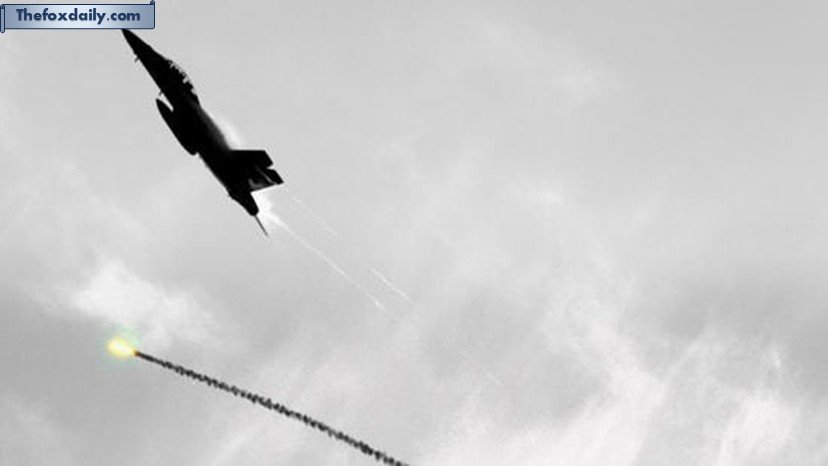
At least 14 people were killed in a reported Myanmar military airstrike on a Buddhist monastery in the central Sagaing region on Friday, August 21, according to an opposition group and a local resident cited by the Associated Press.
The attack took place in Swel Le Oh village in Myaung township, about 75 kilometres west of Mandalay. The victims were participating in a meditation retreat at the monastery during Buddhist Lent when the strike occurred.
Reports said more than 100 people had gathered in the area for the retreat. The attack has drawn particular attention because the site was being used for a religious gathering rather than an apparent military formation.
The incident is still developing, and details from the area remain limited. Independent verification of the circumstances surrounding the strike is difficult because Myanmar’s conflict zones are often difficult for journalists and outside investigators to access.
The reported deaths add to growing concerns about the use of air power in Myanmar’s Civil War and the risks faced by civilians sheltering in or gathering at religious sites.
What happened at the Buddhist monastery?
The reported airstrike took place on Friday morning at a monastery in Swel Le Oh village in Myaung township, in Sagaing region.
According to local residents and the opposition-linked Civil Defence and Security Organization of Myaung Township, the monastery was hosting a meditation retreat when the attack occurred.
The Associated Press reported that a military jet dropped two bombs approximately 15 minutes apart. The second bomb reportedly struck a nearby house where more than 100 people had gathered.
Local reporting by The Irrawaddy gave a somewhat different account of the attack, saying a fighter jet dropped four 250-pound bombs on the monastery at about 9:15 a.m. The outlet reported at least 14 civilian deaths and more than 20 injuries.
Because accounts from the conflict area differ on some details, the precise sequence and number of munitions used should be treated cautiously as the situation develops.
What is consistent across the initial reports is that civilians taking part in a religious meditation gathering were caught in an aerial attack and that the death toll was at least 14.
Who were the victims?
The people killed were reported to have been civilians attending the meditation retreat.
The retreat was taking place during Buddhist Lent, a period when Buddhist religious observance is particularly significant in Myanmar, a predominantly Buddhist country.
The presence of a large civilian gathering at the monastery makes the reported incident especially significant. Religious buildings in conflict areas can serve several purposes at the same time. They may function as places of worship, community gathering points and, in some cases, temporary shelters for displaced people.
That combination can make monasteries particularly vulnerable when fighting reaches civilian communities.
Reports indicated that more than 100 people were gathered around the site. The number of casualties could therefore change as rescue and recovery efforts continue and more information becomes available.
Why Sagaing has become a major conflict zone
The attack occurred in Sagaing region, one of the areas of Myanmar that has experienced intense fighting since the military seized power in February 2021.
The coup triggered widespread resistance, first through mass protests and later through armed opposition. People’s Defence Forces emerged alongside established ethnic armed organisations, creating a complex conflict involving the military, resistance groups and ethnic forces.
Sagaing has become one of the major areas of resistance to military rule. Fighting and military operations have repeatedly affected villages and civilian infrastructure.
The region’s geography and the strength of armed resistance groups have also made conventional military control difficult in many areas. As ground forces face resistance and territorial challenges, air power has become an important tool for the Myanmar military.
Myanmar’s growing reliance on air power
The reported monastery strike comes against a broader backdrop of intensified aerial attacks in Myanmar.
Conflict-monitoring organisation ACLED said in a July 2026 assessment that Myanmar’s military had intensified its aerial bombing campaign following changes to its military command structure earlier in the year.
ACLED said civilians in several major conflict zones, including Sagaing, remained exposed to airstrikes, artillery and other forms of remote violence.
The organisation also reported that military attacks have affected civilian infrastructure and social gatherings, including religious sites.
That pattern matters because airstrikes allow forces to attack locations from a distance without requiring large numbers of ground troops to enter contested areas.
For civilians, however, the use of aircraft and other forms of remote weaponry can make attacks particularly difficult to anticipate or escape.
Religious sites have repeatedly been caught in the conflict
The reported attack is not an isolated example of a religious building being affected by Myanmar’s war.
Research by Myanmar Witness, an organisation that investigates and verifies conflict-related incidents using open-source material, documented hundreds of airstrike incidents affecting religious buildings in Myanmar during 2024 and 2025.
Its findings included attacks affecting monasteries, churches, mosques and temples.
Myanmar Witness said that between 2024 and 2025 it documented 312 airstrikes affecting religious buildings across the country. The organisation noted that attribution can be difficult in some cases, although many of the incidents it examined were attributed to the Myanmar Air Force.
The significance of religious sites extends beyond their physical structures. Monasteries and other religious institutions often have deep connections to local communities and can become places where civilians gather during periods of displacement or uncertainty.
Damage to such locations therefore has consequences beyond the destruction of a building.
Why civilian gatherings are particularly vulnerable
Large gatherings create a serious protection challenge in an active conflict zone.
When more than 100 people gather in one location, an airstrike can result in substantial casualties even if the intended target is disputed or unclear.
Monasteries can also be difficult to distinguish from other civilian structures from the air, particularly when nearby areas contain homes, roads and other buildings.
In Myanmar, the problem is compounded by the limited access available to independent observers in many contested areas.
That means initial information often comes from local residents, opposition groups, humanitarian organisations or Media outlets working with sources inside the affected communities.
Different accounts can therefore emerge regarding the number of aircraft involved, the type of weapons used and the intended target.
Those differences do not necessarily mean that an attack did not occur. They illustrate the difficulty of establishing facts during an ongoing war.
What is known and what remains unclear
| Detail | Current information |
|---|---|
| Location | Swel Le Oh village, Myaung township, Sagaing region |
| Date | August 21, 2026 |
| Reported deaths | At least 14 people |
| Reported injuries | More than 20, according to local reporting |
| People gathered | More than 100 reported to have been at the site |
| Purpose of gathering | Meditation retreat during Buddhist Lent |
| Reported attacker | Myanmar military, according to opposition sources and local reporting |
| Independent verification | Limited while the situation remains developing |
The casualty figure and other details could change as authorities, local residents and independent organisations gather more information.
The wider human cost of Myanmar’s war
The monastery strike needs to be viewed within the broader Humanitarian Crisis created by Myanmar’s prolonged conflict.
Since the 2021 military takeover, violence has spread across large parts of the country. Fighting has involved conventional ground operations, artillery, airstrikes, drones and other forms of remote warfare.
Civilians have repeatedly been caught between opposing forces.
People living in conflict-affected areas face more than the immediate danger of being killed or injured. Repeated attacks can force communities to abandon their homes, disrupt Education and Healthcare, damage religious and community infrastructure and make access to Food and humanitarian assistance more difficult.
The use of air power creates another layer of insecurity because communities may have little warning before an aircraft or other aerial platform reaches an area.
Why airstrikes are strategically important to the Myanmar military
The Myanmar military has retained an important advantage in the air despite facing territorial challenges from resistance forces and ethnic armed groups.
That advantage allows the military to attack areas that may be difficult to reach with ground troops.
ACLED has described the military’s aerial campaign as an important part of its strategy in several conflict zones. The organisation has also reported that air and drone strikes have been used in areas where the military is attempting to regain or consolidate control.
For resistance groups that lack a conventional air force comparable to the military’s, preventing or responding to air attacks is particularly difficult.
This imbalance can have a direct effect on civilians because villages and communities located in contested areas may be exposed to aerial operations regardless of whether residents are actively participating in fighting.
Myanmar’s conflict has also changed the role of drones
Air power in Myanmar is no longer limited to conventional military aircraft.
Both the military and resistance groups have increasingly used drones during the conflict. Resistance forces have used relatively inexpensive drones for reconnaissance and attacks, helping compensate for their lack of conventional air power.
The military has also expanded its use of drones and other aerial platforms.
ACLED has documented a wider evolution in Myanmar’s aerial warfare, including the use of drones and improvised aircraft alongside conventional military aviation.
This development has made the conflict more difficult for civilians because threats can emerge from several different types of airborne platforms.
The religious dimension adds to the shock of the attack
Myanmar’s Buddhist monasteries hold an important position in many communities. They are not simply places where monks live and worship. They can also serve as centres of education, cultural activity and community life.
A meditation retreat is therefore a distinctly civilian activity, making the reported attack particularly disturbing to residents and observers.
The timing during Buddhist Lent further underlines the religious nature of the gathering.
At the same time, establishing the legal and military circumstances surrounding an individual strike requires evidence about the intended target, the circumstances of the attack and the precautions taken to protect civilians.
Those questions cannot be conclusively answered from initial reports alone.
What could happen next?
The immediate priority will be determining the final casualty count and assisting people WHO were injured or displaced by the strike.
More information may also emerge about the monastery, the meditation retreat, the number of people present and the circumstances surrounding the bombing.
Independent verification will be particularly important because competing sides in Myanmar’s conflict frequently provide different accounts of military operations.
Any assessment of responsibility, targeting and possible violations of international law would require a detailed examination of available evidence rather than relying solely on initial statements.
A developing story in a long-running conflict
The reported killing of at least 14 people at a Buddhist monastery is significant not only because of the immediate loss of life but also because it illustrates the continuing danger faced by civilians in Myanmar’s conflict zones.
A meditation retreat that brought more than 100 people together became the site of a deadly airstrike, according to initial reports. The incident highlights how religious and community spaces can become exposed to military operations when fighting reaches civilian areas.
The attack also comes as conflict monitors continue to document the growing importance of aerial warfare in Myanmar.
For residents of Sagaing and other conflict-affected regions, the danger is not limited to battles between armed groups. Homes, religious sites, schools and other civilian spaces can all be caught in the violence.
As more information emerges from Swel Le Oh village, the key questions will be whether the reported death toll rises, what evidence becomes available about the strike and how authorities and international organisations respond.
For now, the reported 14 deaths are another stark reminder that Myanmar’s conflict continues to carry a devastating cost for civilians, including people who were gathered for religious observance rather than fighting.
For breaking news and live news updates, like us on Facebook or follow us on Twitter and Instagram. Read more on Latest World on thefoxdaily.com.




COMMENTS 0