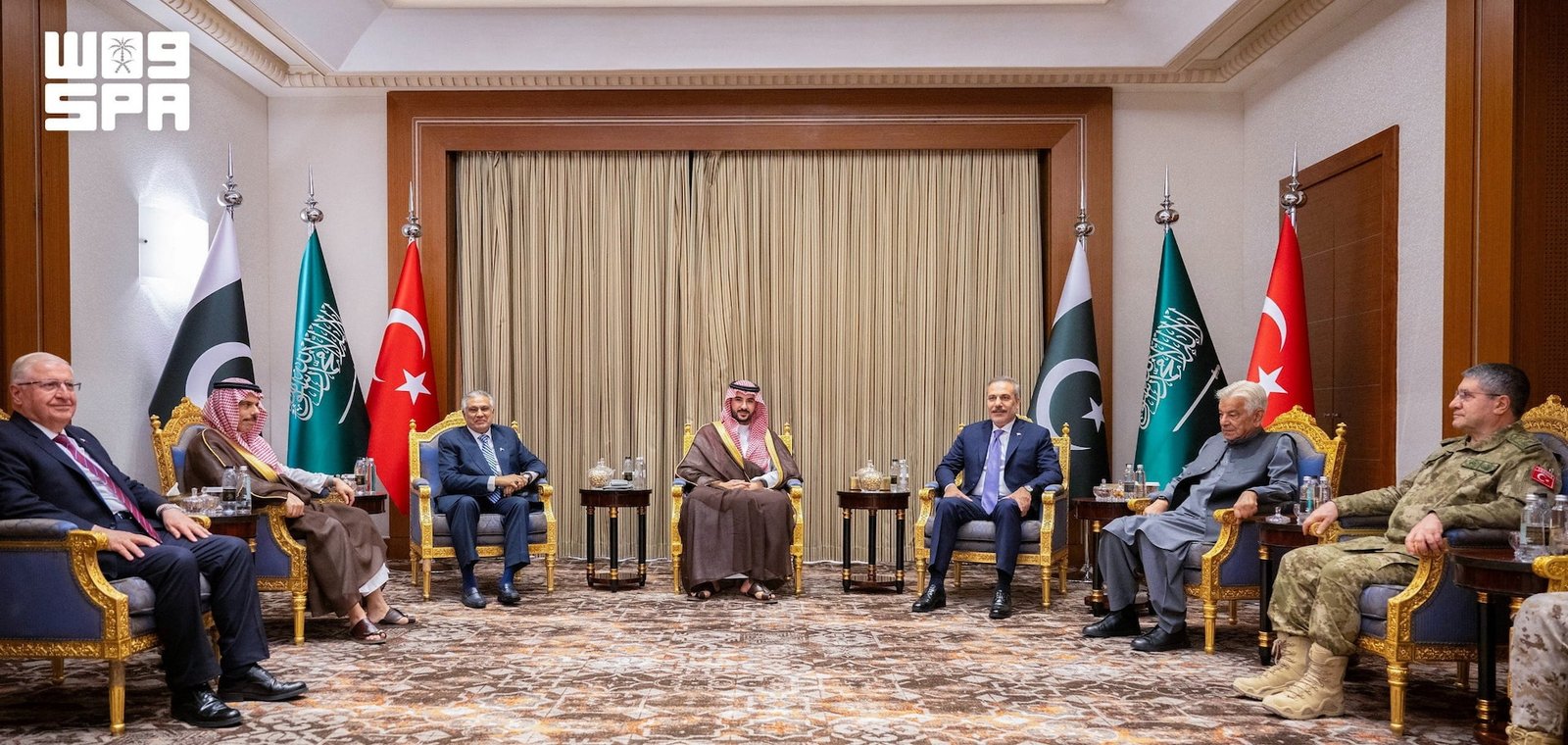
Turkey, Qatar, Pakistan and Indonesia have signed a new defence cooperation agreement aimed at strengthening military capabilities, expanding defence industry partnerships and improving collaboration in military research, development and training. The agreement, known as the Badr Memorandum of Understanding, was signed in Doha on October 21, 2026, according to Turkey’s Defence Ministry.
The accord reflects the four countries’ interest in deepening defence ties and making greater use of their respective military production capabilities. Under the arrangement, the participating countries intend to expand cooperation in military manufacturing, technical training and research and development while improving their ability to meet defence requirements.
The agreement comes as Turkey strengthens its defence relationships across the Middle East and Asia. Ankara has been helping Gulf countries, including Qatar, bolster their defence capabilities amid the Iran war. It has also developed closer military and industrial ties with Pakistan and Indonesia, creating an established foundation for the latest multilateral initiative.
Although the agreement signals a commitment to closer defence cooperation, the Turkish Defence Ministry’s announcement did not disclose detailed implementation timelines, financial commitments or specific weapons procurement arrangements. The immediate focus, according to the ministry, is on improving industrial cooperation, military capabilities and partnerships among the four countries.
What Is the Badr Memorandum of Understanding?
The Badr Memorandum of Understanding is a defence cooperation agreement signed by Turkey, Qatar, Pakistan and Indonesia in Doha. According to Turkey’s Defence Ministry, the agreement demonstrates the countries’ shared intention to deepen existing relationships and develop new partnerships across their defence sectors.
The ministry described the accord as having substantial economic importance, highlighting the role of military production and industrial cooperation alongside traditional defence relationships. Rather than focusing exclusively on military exercises or operational coordination, the agreement seeks to create opportunities for collaboration in manufacturing, technical expertise and defence-related research.
The four countries have different defence industries, military requirements and areas of technical expertise. Greater cooperation could allow them to explore ways to combine these capabilities, coordinate production efforts and develop solutions suited to their respective security needs.
The ministry said the initiative would use the distinctive military production capabilities of each participant to facilitate cooperation and integration, strengthen defence industrial capacity and help meet the requirements of allied and friendly countries.
However, the announcement did not establish whether the four governments had agreed to particular joint manufacturing projects, technology-transfer arrangements or procurement contracts. Those details would be necessary to assess how quickly the memorandum could translate into practical industrial or military outcomes.
Key Objectives of the Turkey-Qatar-Pakistan-Indonesia Defence Deal
The agreement identifies several areas in which the four countries intend to expand cooperation. These include military production, defence capability development, technical training and research and development.
1. Expanding Military Production
One of the principal objectives is to encourage cooperation in military manufacturing. By bringing together their respective industrial capabilities, the participating countries could explore opportunities to coordinate production, share technical expertise and address common defence requirements.
Turkey has developed a substantial domestic defence industry, while Pakistan and Indonesia also maintain defence production and procurement programmes tailored to their national requirements. Qatar, meanwhile, has invested in strengthening its military capabilities and international defence partnerships.
Cooperation could potentially support joint production initiatives or improve access to equipment and technical expertise. However, the memorandum announcement did not identify specific products or confirm that any joint manufacturing contracts had been signed.
2. Strengthening National Defence Capabilities
The agreement also seeks to improve the military capabilities of the four participants. This objective could involve closer coordination between defence institutions, greater access to technical knowledge and cooperation on equipment and production requirements.
For countries seeking to modernise their armed forces, industrial partnerships can complement equipment purchases by building domestic expertise and improving long-term maintenance and production capacity.
The extent to which the Badr memorandum delivers these benefits will depend on the projects the governments pursue, the resources they commit and the arrangements they establish to turn the agreement into operational cooperation.
3. Improving Military Training
Technical military training is another area covered by the accord. The four countries intend to strengthen collaboration in training activities, potentially allowing personnel and institutions to exchange knowledge and technical experience.
Training cooperation can support the effective use and maintenance of military equipment while helping participating institutions develop specialised skills. It can also provide opportunities to exchange practices and improve coordination between defence organisations.
The announcement did not specify which training programmes would be introduced, whether personnel exchanges were planned or how the participating governments intended to organise joint activities.
4. Supporting Research and Development
Research and development form another important part of the agreement. Collaboration in these areas could allow participating countries to explore technical solutions, share expertise and strengthen their ability to develop or improve defence-related technologies.
Research partnerships can also contribute to domestic industrial development by connecting technical institutions, military requirements and manufacturing capabilities. If supported by concrete projects, such cooperation could help the countries build expertise beyond the procurement of finished equipment.
Nevertheless, the Turkish Defence Ministry did not disclose specific research programmes, technologies or funding commitments associated with the memorandum.
Why Turkey Is Expanding Defence Cooperation
Turkey’s participation reflects its broader effort to strengthen defence relationships with countries across the Middle East and Asia. Ankara has developed a substantial domestic defence industry and maintains military partnerships with several countries seeking to improve their defence capabilities.
Turkey also has NATO’s second-largest army, according to the supplied report, giving it a significant military role within the alliance. Its defence relationships extend beyond NATO, with cooperation involving countries that have different security priorities and regional interests.
Through defence industrial partnerships, Turkey can build long-term relationships that extend beyond the sale of military equipment. Manufacturing cooperation, training programmes and technical exchanges can create continuing links between governments, armed forces and defence companies.
The Badr memorandum provides a framework for expanding these relationships with Qatar, Pakistan and Indonesia. The agreement also aligns with Turkey’s interest in using its domestic production capabilities to support partnerships with allied and friendly countries.
However, the accord should not automatically be interpreted as the creation of a new military alliance. The announcement describes a defence cooperation agreement focused on industrial capacity, training, research and capability development. It does not state that the four countries have committed to defend one another in the event of an armed attack.
Turkey and Qatar: Existing Military and Defence Ties
Turkey and Qatar already maintain close defence relations. Turkey has a military base in Qatar and has been helping Gulf countries strengthen their defences amid the Iran war.
The relationship gives the two countries an established foundation for further cooperation. Their existing military links can provide a basis for discussions about training, defence planning and industrial partnerships, although the specific projects that could emerge under the Badr memorandum have not been announced.
Qatar has pursued international defence partnerships as part of its efforts to maintain and modernise its armed forces. Cooperation with Turkey provides another channel through which Doha can engage with a country that has developed domestic military manufacturing capabilities.
For Ankara, cooperation with Qatar strengthens an existing regional relationship while creating opportunities for further defence industry engagement. For Doha, participation in the four-country agreement offers a framework for developing partnerships with Turkey, Pakistan and Indonesia.
The agreement’s broader significance will depend on how the four governments coordinate their industrial and military priorities. Although the memorandum establishes a shared framework, practical results would require follow-up arrangements and projects.
Turkey and Pakistan’s Mutual Defence Pact
Turkey’s latest agreement with Qatar, Pakistan and Indonesia follows another important development in Ankara’s defence relationships. In August, Turkey signed a mutual defence pact with nuclear-armed Pakistan and Saudi Arabia.
Under that pact, an attack on one party is treated as an attack on all, according to the supplied report. This language establishes a mutual defence commitment that is distinct from the industrial and technical cooperation described in the Badr memorandum.
The difference matters when assessing the significance of the new four-country agreement. A mutual defence pact concerns commitments relating to an attack on a participating country, while the Badr memorandum focuses on strengthening defence industries, military capabilities, training and research.
Turkey’s agreements with different partners demonstrate the range of arrangements it is pursuing across the region and beyond. These relationships can involve industrial cooperation, military partnerships or more explicit defence commitments, depending on the terms of each agreement.
Pakistan’s participation in the Badr memorandum also creates an additional framework for cooperation with Turkey. The countries can potentially explore opportunities involving defence production and technical expertise, although the memorandum announcement did not specify particular joint projects.
For Pakistan, the agreement provides another avenue for engaging with Turkey and Qatar while developing ties with Indonesia. The practical value of the arrangement will depend on whether the participants can identify compatible requirements and establish workable mechanisms for cooperation.
Indonesia’s Role in the Four-Country Defence Agreement
Indonesia’s participation highlights the agreement’s reach beyond the Middle East. Turkey already maintains close ties with Indonesia, particularly in the defence industry, according to the Turkish Defence Ministry’s announcement.
Indonesia has its own military modernisation requirements and defence industrial interests. Cooperation with Turkey, Pakistan and Qatar could provide opportunities for further technical engagement and partnerships in areas covered by the memorandum.
The agreement also creates a multilateral framework in which Indonesia can participate alongside countries with established defence relationships with Ankara. Rather than relying exclusively on separate bilateral arrangements, the four governments can use the memorandum as a basis for broader discussions about common industrial and technical objectives.
However, the announcement did not identify specific Indonesian defence companies, equipment programmes or manufacturing facilities that would participate in the arrangement. It also did not disclose whether the countries had agreed to share particular technologies or establish joint production lines.
Indonesia’s role will therefore become clearer as the governments define projects and establish practical arrangements under the agreement. For now, its signature demonstrates a stated intention to deepen defence cooperation with the other three participants.
Can the Agreement Strengthen Defence Industries Across the Four Countries?
The Turkish Defence Ministry presented the Badr memorandum as a means of improving cooperation and integration between the participating countries’ defence industries. The central idea is to use their respective production capabilities to strengthen industrial capacity and address military requirements.
International defence cooperation can take several forms, including joint manufacturing, research partnerships, training, technical support and coordinated procurement. Such arrangements can help participating countries develop expertise and build relationships between defence organisations and companies.
For the four countries, the potential benefits would depend on the type of projects they pursue. Cooperation in research and development could support technical innovation, while manufacturing partnerships could create opportunities to combine specialised capabilities or coordinate production.
Industrial cooperation can also have an economic dimension. Defence manufacturing involves specialised skills, equipment, supply chains and long-term support requirements. Partnerships that generate sustained production activity can create commercial opportunities, although the scale of any economic benefit depends on actual contracts and investment.
The ministry’s statement that the agreement has substantial economic importance reflects this broader industrial focus. However, without information about budgets, procurement volumes or investment commitments, it is not yet possible to quantify the economic impact of the memorandum.
Another consideration is that the four countries may have different operational requirements, technical standards and procurement procedures. Turning the agreement into joint projects would require coordination on these issues, as well as decisions about financing, production responsibilities and the protection of sensitive technologies.
The memorandum establishes a basis for cooperation, but it does not by itself demonstrate that these practical challenges have been resolved.
What the Badr Memorandum Means for Regional Security
The agreement comes at a time of heightened security concerns in the region, with Turkey helping Gulf countries strengthen their defences amid the Iran war. The participation of Qatar, Pakistan and Indonesia brings together countries with different geographic positions and defence priorities under a shared cooperation framework.
Closer defence industry relationships can affect regional security by improving participating countries’ access to equipment, technical expertise and training. They can also deepen diplomatic relationships by creating continuing links between military institutions and defence manufacturers.
However, the agreement’s immediate implications should be assessed according to its stated objectives. The Turkish Defence Ministry described plans to promote industrial cooperation, military production, training, research and development. It did not announce a unified command structure, joint military deployment or a mutual defence guarantee among all four signatories.
Nor does the memorandum establish that the countries have adopted identical positions on regional conflicts or international security issues. Defence cooperation can exist between countries that retain different diplomatic priorities and national interests.
The agreement is therefore best understood as a framework for developing military and industrial partnerships rather than evidence of a fully integrated military bloc. Its significance will depend on how the participating governments implement the commitments and whether cooperation expands into specific programmes.
What Happens Next After the Defence Accord?
The signing of the Badr Memorandum of Understanding marks a formal step towards closer defence cooperation among Turkey, Qatar, Pakistan and Indonesia. The next stage will involve determining how the countries intend to translate the broad objectives into practical activities.
Several developments will help clarify the agreement’s impact: the announcement of joint manufacturing initiatives, the establishment of research partnerships, the introduction of technical training programmes and the identification of military capability requirements that the countries can address together.
Details about financing, procurement and industrial participation will also be important. Without specific projects or commitments, it remains difficult to determine the scale of the agreement’s economic and military effects.
The countries will also need to coordinate their respective defence industries and technical requirements. The success of any joint initiative will depend on whether they can agree on responsibilities, standards, investment and the practical arrangements required to sustain cooperation.
For Turkey, the accord adds another multilateral dimension to its defence relationships in the Middle East and Asia. For Qatar, Pakistan and Indonesia, it creates a framework for expanding cooperation with partners that have existing defence and industrial links with Ankara.
The Turkish Defence Ministry said the agreement was intended to strengthen defence industry ties, improve military capabilities and promote security in pursuit of shared objectives. Whether those ambitions produce measurable results will become clearer as the four governments announce further details and implement specific programmes.
Conclusion
Turkey, Qatar, Pakistan and Indonesia have signed the Badr Memorandum of Understanding in Doha, establishing a framework for deeper cooperation in military production, technical training, research and development, and defence capability building.
The agreement reflects Turkey’s expanding defence relationships across the Middle East and Asia, building on its military ties with Qatar, its mutual defence pact with Pakistan and Saudi Arabia, and its defence industry cooperation with Indonesia.
Although the memorandum could create opportunities for joint industrial projects and technical collaboration, the four countries have not publicly detailed specific manufacturing contracts, financial commitments or implementation timelines in the announcement. Its eventual impact will depend on the projects that follow.
For now, the accord represents a commitment to strengthen defence partnerships and use the participating countries’ respective military production capabilities to address shared requirements. It establishes a basis for cooperation, while leaving the details of its practical implementation to be worked out in the next stage.
For breaking news and live news updates, like us on Facebook or follow us on Twitter and Instagram. Read more on Latest World on thefoxdaily.com.






COMMENTS 0