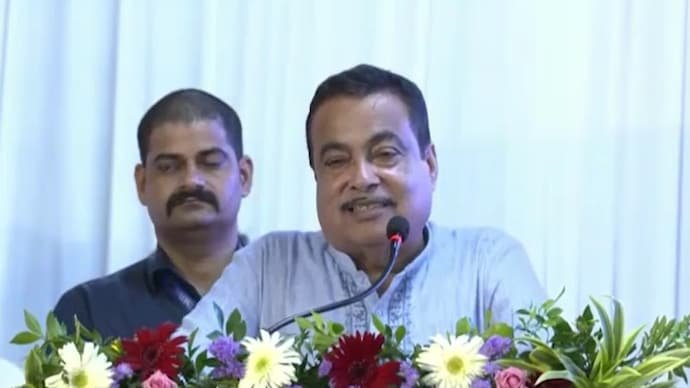
Union Minister Nitin Gadkari has said the time has come for the younger generation to take on greater responsibility in public life, saying he can no longer work as much as he once did after three decades in Politics and public service.
Gadkari made the remarks at an event in Nagpur, where he reflected on his long career, the changing role of the older generation and the need to give younger leaders an opportunity to carry public work forward. His comments have attracted attention because they come shortly after a major organisational overhaul within the Bharatiya Janata Party (BJP) and amid speculation about a possible reshuffle of Prime Minister Narendra Modi’s Union Cabinet.
While Gadkari did not announce any decision about his own political future or indicate that he was stepping away from government, his comments have inevitably prompted discussion about generational change within the BJP and the broader political leadership.
What Nitin Gadkari said about handing over responsibility
Speaking in Nagpur, Gadkari said his participation in day-to-day public work had declined and argued that younger leaders should now receive greater opportunities.
“Work should be handed over to the new generation. A new generation has come, and the older generation is guiding them,” Gadkari said.
He also reflected on his own three decades in public life, saying he had experienced both successes and setbacks and received several awards during his career. But he added that he was no longer able to work at the same pace.
“I have been continuously working in public life for the last 30 years. I have seen many ups and downs and received many awards. But I can’t work much now, the new generation should be given a chance to work,” he said.
The comments are notable for their emphasis on generational transition. Gadkari did not frame the change simply as retirement or withdrawal. Instead, he spoke about the older generation continuing to guide younger leaders while allowing them to assume greater responsibility.
Gadkari’s remarks come amid BJP’s organisational changes
The timing of Gadkari’s comments has added political significance. The BJP has recently completed a major overhaul of its national organisational structure, marking one of the party’s most substantial changes in years.
The party recently announced a new national team under BJP president Nitin Nabin. The 65-member team includes 51 new faces, a composition that points to a substantial change in the party’s organisational leadership.
The new team includes 13 national vice presidents, among them former Rajasthan Chief Minister Vasundhara Raje Scindia and former RSS functionary Ram Madhav. Former Union minister Smriti Irani has also been appointed as one of the party’s eight national general secretaries.
That scale of change has naturally brought the issue of succession and generational leadership into sharper focus. Gadkari’s comments, however, should not automatically be interpreted as an announcement about any specific BJP appointment or impending departure.
His remarks were broader, focusing on the principle that experienced leaders should make room for younger politicians while continuing to provide guidance.
Why the comments are being linked to Cabinet reshuffle speculation
Gadkari’s statement comes at a time when there is political speculation about a possible expansion or reshuffle of the Union Cabinet. The BJP’s organisational revamp has added to interest in whether similar changes could occur within the government.
However, there is an important distinction between political speculation and an official decision. Gadkari did not say that he was being removed from the Cabinet, nor did he announce a decision to leave ministerial office.
His comments instead focused on his own workload and the broader need to give younger people opportunities in public life.
That distinction matters because Gadkari remains one of the most prominent members of the Union government. Any major change in his responsibilities would therefore have significance beyond the question of individual leadership.
Gadkari’s three decades in public life
Gadkari’s reference to his 30 years in public life places his comments in the context of a long political career that has included both party organisation and government administration.
Over the years, he has held important responsibilities within the BJP and the Union government. His political base in Maharashtra has also made him a prominent figure in the state’s public life.
His remarks suggest an understanding of political leadership as a process in which experience is eventually transferred to a new generation. Rather than presenting younger leaders and experienced politicians as competing groups, he described the older generation’s role as one of guidance.
That approach is particularly relevant for large political organisations such as the BJP, where leadership renewal can involve changes at multiple levels, from party offices to government responsibilities.
What Gadkari said about the work still ahead
Despite speaking about reduced involvement in public work, Gadkari did not suggest that the development agenda was slowing down.
He said the scale of development work would increase in the coming years and highlighted the need to ensure that tribal villages in Maharashtra were not left without electricity.
The remarks therefore combined two ideas that may initially appear contradictory: Gadkari acknowledged that he could not continue working at the same pace while also stressing that significant development responsibilities remained ahead.
This helps explain why his comments should not be read simply as a statement about stepping aside. He was also talking about continuity: the work must continue, but younger people should have a larger role in carrying it forward.
BJP’s new team signals a generational shift
The BJP’s latest organisational appointments provide an important backdrop to the discussion.
The new national team contains a large number of new faces. Of the 65 members announced, 51 are new to the national team, indicating a substantial reconfiguration of the party’s organisational leadership.
At the same time, the inclusion of experienced political figures such as Vasundhara Raje Scindia and Ram Madhav shows that the change is not simply a replacement of senior leaders with younger ones. Instead, the structure combines experienced politicians with newer faces.
That model broadly resembles the principle Gadkari described in Nagpur: experienced leaders can continue to provide political guidance while newer leaders receive opportunities to take on organisational responsibilities.
Generational change is different from simply changing faces
There is a broader political lesson in Gadkari’s remarks. A generational transition is not necessarily about removing older leaders or replacing them wholesale.
For a political organisation, the more difficult challenge is often transferring institutional knowledge. Senior leaders have experience dealing with Elections, administration, party organisation and political crises. Younger leaders may bring different communication styles, priorities and approaches, but they also need exposure to the practical realities of public life.
Gadkari’s formulation of the older generation “guiding” the new generation points towards this kind of transition rather than an abrupt break.
It also means that a leadership change can be measured not only by WHO receives a new post, but by whether younger politicians are actually given meaningful responsibilities and decision-making authority.
What this could mean for the BJP
If the BJP continues its current organisational renewal, the party could see a greater number of relatively new leaders taking responsibility at the national and state levels. The recent appointments already indicate that organisational positions are being redistributed.
For the BJP, the challenge will be balancing continuity with renewal. Experienced leaders remain valuable because of their institutional knowledge and political networks, while younger leaders are essential for building the party’s future leadership pipeline.
Gadkari’s remarks fit naturally into that larger debate, but they should not be treated as confirmation of a specific succession plan.
What happens next?
The immediate political question is whether the organisational changes within the BJP will be followed by changes in the Union government. Speculation about a Cabinet reshuffle has intensified, but the timing and scope of any such move cannot be established from Gadkari’s comments alone.
For now, the clearest message from the minister is about leadership renewal. After three decades in public life, Gadkari says younger people should be given a greater opportunity to work while the experienced generation continues to guide them.
Whether that philosophy translates into specific changes in government or party responsibilities remains to be seen. What is clear is that the BJP’s latest organisational overhaul has already put generational change firmly on the political agenda, making Gadkari’s unusually candid comments especially significant.
For breaking news and live news updates, like us on Facebook or follow us on Twitter and Instagram. Read more on Latest India on thefoxdaily.com.






COMMENTS 0