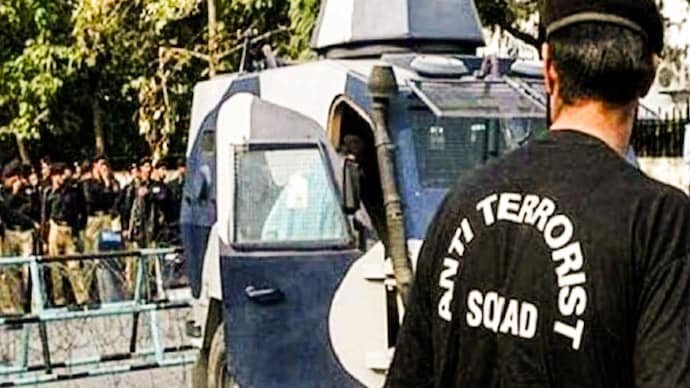
The Uttar Pradesh Anti-terrorism Squad (ATS) has widened its Investigation into an alleged Pakistan-linked terror network, scrutinising the backgrounds of more than 150 people identified during the questioning of 52 arrested suspects.
Investigators are examining social-media activity, private conversations, banking transactions and other digital connections to determine whether the newly identified individuals had meaningful links to the network or were simply among the wider circle of contacts maintained by those already arrested.
More than 60 of the additional suspects have been questioned so far, according to officials. Investigators are now working through digital and financial evidence to distinguish between ordinary contact and possible involvement in criminal or terror-related activity.
The distinction is central to the investigation. Being connected to an arrested person on Social Media, appearing in a chat record or having a financial transaction with someone under investigation does not by itself establish participation in terrorism. The ATS is therefore attempting to establish the Nature, purpose and extent of the relationships uncovered during interrogation.
How the investigation expanded
The current investigation follows the arrest of 52 people over a period of about four months on allegations linked to terror activities.
During questioning, investigators obtained information about a much larger network of contacts. More than 150 people were subsequently identified for further scrutiny.
Rather than treating all 150 individuals as members of the alleged network, the ATS is investigating their backgrounds and relationships with the arrested suspects.
Officials said investigators have already questioned more than 60 of the people identified during the probe. The remaining individuals are being monitored and assessed as the investigation continues.
This approach allows investigators to build a picture of how the alleged network may have operated, including whether people performed specific tasks, facilitated communication, provided financial support or simply interacted with the accused without knowledge of any illegal activity.
Why investigators are examining social media and chats
Digital communications have become an important source of evidence in investigations involving alleged organised criminal or terror networks.
The ATS is examining social-media accounts and conversations associated with the suspects to identify patterns of communication and connections between individuals.
Investigators have identified more than two dozen people who were in contact with the arrested accused through social media. Those contacts are now being examined to determine whether they represent ordinary online interactions or something more substantial.
The investigation can potentially establish when people communicated, how frequently they interacted and whether their conversations are relevant to the allegations being investigated.
However, digital contact alone does not establish criminal involvement. A social-media connection can represent anything from an acquaintance to a close operational relationship. Investigators therefore need corroborating evidence before drawing conclusions about a person’s role.
Banking records form another part of the probe
The ATS is also examining the banking transactions of people identified during the investigation.
Financial records can help investigators establish whether money moved between individuals under scrutiny and whether particular transactions require further explanation.
In an investigation into an alleged network, financial information can potentially help investigators identify relationships that may not be obvious from social-media activity alone.
At the same time, a transaction between two people is not automatically evidence of criminal activity. The purpose, timing, amount and surrounding circumstances would need to be established before investigators could determine its significance.
That is why the ATS is combining financial information with communications and other evidence rather than relying on a single category of data.
What role did the 52 arrested suspects allegedly play?
According to officials, several of the 52 arrested individuals were allegedly operating as sleeper cells for Pakistani gangster Shahzad Bhatti and his network.
The term “sleeper cell” generally refers to individuals who remain inactive or maintain a low profile until they are instructed to carry out a particular task. In this case, however, the allegation is part of the ongoing investigation and does not establish that every person identified by investigators had such a role.
The arrested suspects have been accused of various activities, including allegedly spreading terror through arson, planning explosions in crowded locations and displaying posters associated with Pakistani gangsters.
Investigators are now attempting to determine whether the newly identified individuals were connected to these alleged activities or whether their relationships with the arrested suspects were unrelated.
The Shahzad Bhatti connection under investigation
A key part of the ATS investigation is the alleged connection between some of the arrested suspects and Pakistani gangster Shahzad Bhatti.
Officials say several accused individuals were allegedly functioning as sleeper cells for Bhatti and his network. Investigators are now examining whether contacts identified during interrogation extend the network beyond those already arrested.
The investigation therefore has two interconnected objectives. The first is to establish what the arrested suspects allegedly did. The second is to determine whether the contacts identified through their questioning represent a broader organised structure.
That second task is more complicated because large networks can contain people with very different levels of involvement.
Some individuals may have had direct operational roles. Others could have provided logistical or financial assistance. Still others may have had no knowledge of any alleged criminal activity by the people they communicated with.
Establishing those distinctions is likely to be one of the central challenges facing investigators as the probe expands.
Why questioning more than 150 people matters
The number of people under scrutiny does not necessarily represent the size of a confirmed terror network.
Instead, it reflects the breadth of the investigation after information gathered from arrested suspects pointed investigators toward additional contacts.
This distinction is particularly important in large digital investigations. One suspect may have hundreds of social-media contacts, phone numbers or online interactions. Investigators must determine which relationships are relevant and which are incidental.
The ATS therefore faces a process of filtering evidence. Investigators need to identify connections that can be supported by multiple forms of evidence and separate them from contacts that have no demonstrated connection to the alleged activities.
The fact that more than 60 of the identified people have already been questioned indicates that the agency is actively narrowing the field.
What investigators are trying to establish
The central question is not simply whether the 150-plus people knew any of the arrested suspects.
Investigators are attempting to establish several broader issues:
- Whether the individuals had direct or indirect connections with the alleged Pakistani network.
- Whether communications with arrested suspects involved any illegal activity.
- Whether financial transactions indicate a relationship requiring further investigation.
- Whether any individuals helped facilitate activities allegedly carried out by the arrested suspects.
- Whether the contacts were aware of any alleged terror-related plans or activities.
These questions require investigators to compare different types of evidence. A message, a financial transaction or a social-media connection can provide a lead, but investigators may need additional evidence to establish its meaning.
Digital evidence could become crucial
The ATS’s focus on digital networks reflects the increasingly important role of electronic evidence in modern criminal investigations.
Phones and social-media accounts can reveal communication patterns that are difficult to identify through conventional questioning alone. Investigators can potentially establish links between people who live in different locations and identify relationships that were not initially known to authorities.
Digital evidence can also help investigators reconstruct events over time.
For example, investigators may compare communications with financial transactions and alleged incidents to determine whether different pieces of information are connected. Such analysis can help authorities distinguish between a casual acquaintance and a relationship that warrants further investigation.
But digital evidence also requires careful interpretation. Messages can be incomplete or taken out of context, and online connections do not necessarily reflect real-world relationships. The evidentiary value of any communication ultimately depends on what it establishes and whether it can be corroborated.
Central agencies may assist the investigation
As the investigation expands, the ATS is seeking assistance from central investigating agencies.
Such coordination can become important when an investigation crosses state boundaries or involves suspected connections outside India.
A broader investigation may require the examination of financial records, communications, identities and other information held by different agencies. Cooperation can help investigators consolidate evidence and establish whether apparently separate cases are connected.
The involvement of central agencies could also become relevant if investigators uncover evidence pointing to activity beyond Uttar Pradesh.
At this stage, however, the investigation remains focused on establishing the nature of the alleged network and identifying the role, if any, played by the people who have emerged during questioning.
Why the investigation needs to distinguish contacts from suspects
One of the most important safeguards in an investigation of this scale is distinguishing between a person who appears in an accused person’s digital network and someone against whom there is evidence of criminal involvement.
A person’s presence in a contact list, social-media conversation or financial record does not by itself prove participation in a terror network.
That is especially relevant when investigators are examining more than 150 people. The larger the pool of contacts, the greater the need to establish individual roles rather than treating the entire group as a single network.
The ATS’s stated objective is to determine which people had actual links to the alleged Pakistani network and, if so, what their involvement was. That means the investigation must ultimately move from association to evidence.
What could happen next?
The investigation is likely to continue as investigators complete questioning and analyse the digital and financial evidence already collected.
People whose backgrounds and communications raise further questions could face additional questioning or investigation, while those for whom investigators find no meaningful connection may eventually be excluded from the probe.
The ultimate direction of the case will depend on what investigators can establish through corroborated evidence.
If the ATS finds evidence connecting additional individuals to the alleged network or specific criminal activities, those cases could lead to further legal action. If investigators cannot establish such links, contact with the arrested suspects alone would not establish criminal liability.
The involvement of central agencies could also broaden the investigation if evidence points to connections outside Uttar Pradesh or beyond the jurisdiction of the state police.
The broader significance of the UP ATS probe
The investigation illustrates the challenge authorities face when attempting to dismantle alleged terror networks that operate through dispersed personal, digital and financial connections.
The original arrests of 52 suspects have now produced a much wider investigative map containing more than 150 additional people. The key task for the ATS is to determine which of those connections are meaningful.
That process could reveal whether the arrested suspects were part of a larger organised network or whether many of the newly identified contacts were peripheral.
For investigators, the most valuable outcome will not necessarily be a larger number of suspects. It will be a clearer and evidence-based understanding of how the alleged network operated, who was involved and what activities can be legally attributed to each person.
For now, the case remains under investigation. The questioning of more than 60 of the newly identified individuals and the analysis of their digital and financial links represent the next stage of the ATS probe, while authorities work to establish whether the alleged Pakistan connection extends beyond those already arrested.
For breaking news and live news updates, like us on Facebook or follow us on Twitter and Instagram. Read more on Latest India on thefoxdaily.com.






COMMENTS 0