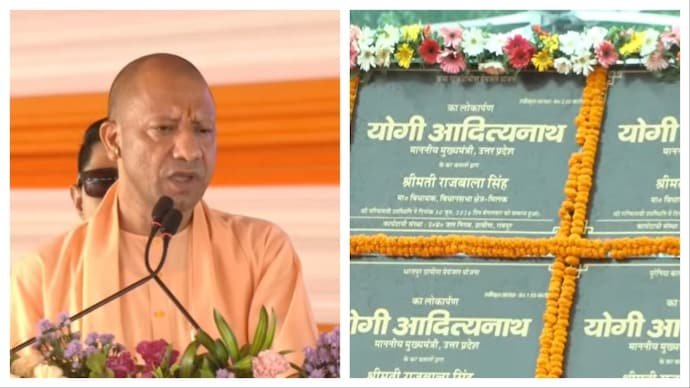
Rampur witnessed a significant infrastructure and public welfare milestone as Uttar Pradesh Chief Minister Yogi Adityanath inaugurated and laid the foundation stones for 102 development projects worth more than Rs 690 crore. The announcement represents another phase of Uttar Pradesh’s ongoing effort to modernize infrastructure, improve public services, expand welfare delivery, and stimulate economic growth across districts.
The programme brought together government officials, local representatives, students, entrepreneurs, farmers, and beneficiaries of multiple welfare schemes. Alongside project inaugurations, the Chief Minister distributed benefits under various state initiatives, including educational assistance, financial support for farmers, entrepreneurship funding, and social welfare programmes. The event also became a platform to discuss Governance, development priorities, and the state’s long-term Vision for balanced regional growth.
With Uttar Pradesh positioning itself as one of India‘s fastest-growing state economies, investments such as these are increasingly viewed not only as district-level development initiatives but also as part of a broader strategy to improve infrastructure, attract investment, generate employment, and strengthen public service delivery.
Key Highlights of the Rs 690 Crore Rampur Development Package
The infrastructure package includes a combination of newly inaugurated projects and foundation stones for upcoming works spanning multiple sectors. While the detailed project-wise allocation varies, the overall investment focuses on improving essential public infrastructure and expanding citizen services.
| Category | Focus Area | Expected Impact |
|---|---|---|
| Infrastructure | Roads, public buildings and civic facilities | Improved connectivity and urban development |
| Education | Student recognition and digital support | Higher educational motivation and digital inclusion |
| Agriculture | Financial assistance for eligible farming families | Greater financial security for rural households |
| Entrepreneurship | Youth business funding initiatives | Employment generation and startup growth |
| Social Welfare | Support for vulnerable children and families | Inclusive development and social protection |
Rather than focusing on a single sector, the investment package follows a multi-dimensional development model that combines physical infrastructure with human capital development.
What Happened During the Rampur Programme?
Beyond infrastructure announcements, several welfare initiatives formed an important part of the event.
- Meritorious students from the 2026 High School and Intermediate Board examinations were felicitated.
- Laptops were distributed to eligible beneficiaries under the Mukhyamantri Bal Seva Yojana.
- Financial assistance was provided under the Mukhyamantri Yuva Udyami Yojana to encourage entrepreneurship.
- Eligible families received compensation through the Mukhyamantri Krishak Durghatna Kalyan Yojana.
- Local traders who contributed to social development were honoured.
This combination of infrastructure investment and welfare delivery reflects an approach where development is measured not only by new construction but also by improvements in education, employment opportunities, financial security and community participation.
Why Infrastructure Investment Matters for Rampur
Rampur occupies an important position in western Uttar Pradesh. Historically known for its cultural heritage, handicrafts and agriculture, the district has significant potential for industrial expansion, improved logistics, educational growth and service-sector development.
Infrastructure remains one of the strongest drivers of regional economic growth. Better roads reduce transportation costs, improved public facilities increase access to government services, and upgraded civic infrastructure creates conditions that encourage private investment.
Economic research consistently shows that public infrastructure spending creates both immediate and long-term benefits. Construction activities generate employment during project execution, while completed infrastructure improves productivity across multiple sectors of the economy.
For districts like Rampur, improved infrastructure can strengthen connections with larger commercial centres across Uttar Pradesh, making local businesses more competitive and improving market access for farmers and manufacturers.
The Role of Welfare Schemes Alongside Infrastructure
Infrastructure alone does not automatically translate into inclusive growth. This is why governments increasingly combine capital investment with targeted welfare programmes.
During the event, benefits distributed under multiple state schemes highlighted this broader Policy approach.
Mukhyamantri Bal Seva Yojana
The scheme aims to support eligible children facing vulnerable circumstances by providing assistance that helps them continue education and improve long-term opportunities. Distribution of laptops also strengthens digital learning capabilities.
Mukhyamantri Yuva Udyami Yojana
Youth entrepreneurship has become an important pillar of employment generation. Financial assistance under this programme encourages aspiring entrepreneurs to establish businesses that can create jobs and strengthen local economies.
Mukhyamantri Krishak Durghatna Kalyan Yojana
Agriculture continues to support millions of households in Uttar Pradesh. Financial protection schemes reduce the economic burden on families affected by accidental loss, providing an important social safety net for rural communities.
Political Context of the Chief Minister’s Remarks
During his address, Chief Minister Yogi Adityanath compared the current development trajectory of Rampur with the period before 2017. He argued that governance reforms, stronger law-and-order measures and accelerated infrastructure spending have changed the district’s development landscape.
The Chief Minister also criticized previous governments, alleging that development had been uneven and that governance challenges affected public welfare in earlier years. His remarks formed part of a broader political narrative surrounding governance, public investment and administrative reforms in Uttar Pradesh.
Political speeches at government events often combine policy announcements with broader discussions about governance priorities, allowing leaders to communicate their administration’s achievements while contrasting them with previous governments.
Infrastructure Development as a Statewide Strategy
The Rampur projects are part of a wider development strategy underway across Uttar Pradesh.
Over the past several years, the state has invested heavily in:
- Expressways
- Airport expansion
- Industrial corridors
- Urban infrastructure
- Medical colleges
- Educational institutions
- Rural road connectivity
- Water supply projects
- Smart city initiatives
The objective is to improve ease of doing Business while simultaneously expanding access to public services across rural and urban regions.
How Public Infrastructure Influences Economic Growth
Infrastructure spending has multiplier effects across the economy.
When governments invest in roads, public buildings and civic infrastructure, construction activity generates employment and increases demand for materials such as cement, steel, transportation and engineering services.
Once completed, improved infrastructure lowers operational costs for businesses, reduces travel time, strengthens logistics networks and enhances productivity.
For farmers, better roads improve market access and reduce transportation losses. For students, educational infrastructure increases accessibility. For businesses, improved connectivity supports expansion into new markets.
These combined effects often produce economic benefits well beyond the initial investment.
Education and Digital Empowerment
The recognition of high-performing students reflects another important element of long-term development: investment in human capital.
Economic development increasingly depends on skilled workers, digital literacy and access to quality education. Laptop distribution and academic recognition encourage continued learning while supporting digital inclusion among young beneficiaries.
As education becomes increasingly technology-driven, digital access plays an important role in reducing educational inequalities between regions.
Supporting Entrepreneurship and Local Businesses
Micro, small and medium enterprises contribute significantly to employment generation across Uttar Pradesh.
Government-backed entrepreneurship schemes reduce entry barriers for first-time business owners by improving access to financial assistance and institutional support.
Successful small businesses frequently generate local employment, encourage innovation and diversify district economies beyond agriculture.
The recognition of traders during the Rampur programme also reflects the important contribution of local commerce to community development and economic stability.
Public Investment and Private Investment Often Go Together
An important but often overlooked aspect of infrastructure development is its ability to attract private capital.
Investors generally prefer locations with:
- Reliable transportation networks
- Stable public infrastructure
- Efficient administrative services
- Improved law and order
- Growing consumer markets
Public investment therefore acts as a foundation upon which private businesses can expand operations and create employment opportunities.
How Rampur Could Benefit in the Long Term
If projects are completed efficiently and maintained effectively, Rampur could experience benefits across several sectors.
| Sector | Potential Long-Term Benefit |
|---|---|
| Transportation | Reduced travel time and improved logistics |
| Business | Higher investment and commercial activity |
| Education | Improved digital learning opportunities |
| Agriculture | Better access to markets and financial support |
| Employment | Construction jobs and business expansion |
| Public Services | Enhanced delivery of government programmes |
The pace at which these benefits materialize will depend on timely project execution, quality construction, maintenance standards and effective administrative coordination.
Challenges That Accompany Large Infrastructure Programmes
While infrastructure investment creates opportunities, successful implementation requires careful planning and monitoring.
Common challenges include timely completion, cost management, land-related issues, maintenance after construction and ensuring that projects continue delivering value over the long term.
Transparent implementation and regular progress reviews are essential to maximize the benefits of public spending.
Comparison with Broader Development Trends
Many Indian states are increasingly adopting integrated development strategies that combine infrastructure expansion with targeted welfare initiatives. Rather than treating roads, education, agriculture and entrepreneurship as separate policy areas, governments are linking them into broader economic development frameworks.
The Rampur programme reflects this evolving model by pairing capital expenditure with direct support for students, entrepreneurs, farmers and vulnerable families.
Future Outlook
The Chief Minister’s visit to Bareilly following the Rampur programme indicates that district-level reviews and development monitoring remain central to the state’s governance approach. Continued oversight of project implementation, combined with periodic assessments of law and order and administrative performance, is expected to remain part of Uttar Pradesh’s broader development agenda.
Looking ahead, the success of the Rs 690 crore investment will ultimately be measured not only by the number of projects completed but also by their long-term impact on employment, connectivity, education, public services and quality of life. If implemented effectively, these initiatives have the potential to strengthen Rampur’s role in western Uttar Pradesh’s economic landscape while contributing to the state’s wider infrastructure-led growth strategy.
Conclusion
The launch of more than 102 development projects worth over Rs 690 crore marks one of Rampur’s significant recent public investment initiatives. By combining infrastructure expansion with educational support, entrepreneurship promotion, agricultural assistance and social welfare programmes, the state government has presented a comprehensive development package aimed at accelerating inclusive growth.
Beyond the political messaging surrounding the event, the lasting significance of these projects will depend on execution, transparency and measurable outcomes. Well-planned infrastructure, supported by effective welfare delivery and continued economic reforms, has the potential to create sustained improvements in regional development. As Uttar Pradesh continues its broader infrastructure expansion, Rampur’s progress will serve as an important indicator of how integrated public investment can shape local economies and improve opportunities for citizens over the coming years.
For breaking news and live news updates, like us on Facebook or follow us on Twitter and Instagram. Read more on Latest India on thefoxdaily.com.






COMMENTS 0