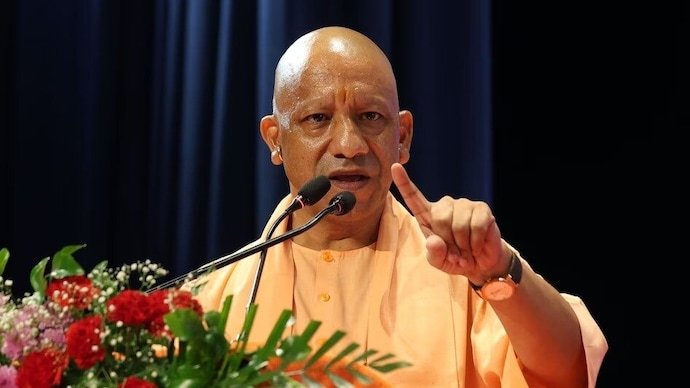
Uttar Pradesh Chief Minister Yogi Adityanath has announced a fresh package of support for the state’s legal fraternity, including a cashless insurance scheme of up to Rs 5 lakh for practising advocates and tablets for 400 state law officers.
The announcements were made at a felicitation ceremony organised by the Allahabad High Court Bar Association in Prayagraj, where Adityanath also used the occasion to outline his government’s broader approach to policing, prosecution, court infrastructure and technology in the justice system.
Rather than presenting the measures only as welfare initiatives, the chief minister linked them to a wider argument about judicial efficiency and Governance. He said improvements in law and order, digital systems, infrastructure and coordination between government agencies and the judiciary were necessary to strengthen public confidence in the justice system.
Rs 5 lakh cashless insurance for practising advocates
One of the key announcements was a cashless insurance scheme of up to Rs 5 lakh for practising advocates in Uttar Pradesh.
The measure is aimed at providing greater financial protection to lawyers, particularly as medical emergencies and other unexpected expenses can create significant financial pressure on professionals and their families.
Adityanath also highlighted changes to the lawyers’ welfare fund. According to his announcement, assistance available through the fund has been increased from Rs 1.5 lakh to Rs 5 lakh.
Another change concerns assistance for families of deceased advocates. The age limit for receiving financial assistance has been increased from 60 to 70 years, expanding the period during which eligible families can benefit from the welfare provision.
Taken together, the announcements indicate that the state government’s approach toward the legal profession is not limited to courtroom infrastructure. It also includes financial and social-security measures for advocates and their families.
400 state law officers to receive tablets
The chief minister also announced that 400 state law officers would be provided tablets.
The stated purpose is to help law officers use modern technology and quickly access information connected with government cases pending before courts.
For government litigation, access to case records, legal documents, previous orders and other information can be particularly important because state agencies are involved in a large volume of proceedings across different courts.
The tablet distribution therefore fits into a larger digitalisation strategy described by Adityanath at the event. Rather than treating technology as an isolated convenience, the government is presenting digital access as part of a broader effort to make prosecution and litigation more organised and responsive.
Why technology has become central to judicial reform
Adityanath’s remarks placed considerable emphasis on technology in the criminal justice process.
He said district courts and jails had been provided with high-speed internet and video-conferencing facilities. He also referred to virtual recording of evidence and the digitisation of court documents as measures intended to reduce delays in trials.
The government’s stated objective is to reduce the amount of time lost because people, documents or officials cannot physically move between different parts of the justice system.
Video conferencing, for example, can reduce the need for prisoners to be physically transported from jails to courts for certain proceedings. Digital records can also make it easier for authorised participants to access documents without depending entirely on physical files.
These changes matter because the justice system involves multiple institutions. Police investigate cases, prosecutors present them, courts evaluate evidence, prisons hold accused or convicted persons, and lawyers represent parties. Delays in one part of the chain can affect the rest.
Online prosecution system and scientific evidence
The chief minister also said the prosecution system had been connected to online platforms to facilitate timely filing of charge sheets and more effective presentation of scientific evidence before courts.
This reflects a broader shift from a largely paper-based criminal justice process toward greater use of digital systems.
Technology alone, however, cannot guarantee faster justice. Digital platforms can improve the movement and availability of information, but outcomes still depend on the quality of investigation, evidence collection, legal representation, judicial capacity and compliance with procedural requirements.
That distinction is important when assessing technology-led judicial reform. Digitising a process can remove administrative bottlenecks, but it does not automatically resolve deeper problems such as vacancies, inadequate infrastructure or delays caused by complex litigation.
Yogi Adityanath’s criticism of the pre-2017 system
During his address, Adityanath contrasted the current system with what he described as conditions in Uttar Pradesh before 2017, when the previous Samajwadi Party government was in power.
He argued that the challenges at that time were not simply about a shortage of money. According to the chief minister, the state also faced problems involving administrative systems, transparency, accountability, law and order and judicial infrastructure.
Adityanath claimed that nearly 45 to 50 per cent of Uttar Pradesh Police posts were vacant before his government came to office in 2017. He also said annual police training capacity was around 3,000 personnel at the time and had since increased to 60,000.
These figures were presented by the chief minister as evidence of the scale of institutional change undertaken by his government. They form part of his broader argument that improving the justice system requires investment not only in courts but also in the police and prosecution systems that feed cases into those courts.
Focus on police training and criminal justice infrastructure
According to Adityanath, the state had also faced deficiencies in basic police facilities and training infrastructure before 2017.
He said his government had expanded training facilities and strengthened police infrastructure across Uttar Pradesh.
The importance of police capacity to the judicial process is straightforward. Courts can only adjudicate cases effectively when investigations are conducted properly and evidence is collected and presented according to law.
Adityanath therefore presented police reform and judicial reform as connected parts of the same system rather than separate policy areas.
Subordinate courts also part of the reform agenda
The chief minister also discussed the condition of subordinate courts, saying many had previously operated from dilapidated or temporary buildings.
He said district courts in 10 districts were operating from rented premises, highlighting what he described as infrastructure deficiencies within the lower judiciary.
The issue is significant because district and subordinate courts handle a large share of ordinary litigation and criminal cases. Improvements at the level of the High Court can have limited impact on everyday access to justice if courtrooms, residential facilities, digital systems and other basic infrastructure remain inadequate at the district level.
Adityanath said the state had attempted to address these problems through modern infrastructure and integrated facilities.
Integrated court complexes planned
Another part of the government’s infrastructure strategy involves the development of integrated court complexes.
These complexes are intended to bring multiple judicial facilities together, including court infrastructure, residential accommodation for judicial officers, lawyers’ chambers and other amenities.
The idea is to create a more coordinated environment in which judges, lawyers and court staff can work without being spread across unsuitable or disconnected premises.
At the Prayagraj event, Adityanath also said the government would provide full support for essential facilities such as furniture and equipment for chambers being built for more than 10,000 lawyers as part of a multi-level parking and chamber complex.
He said the government would assist with proposals submitted through the judiciary and the chief justice.
Witnesses, prisoners and delays in criminal cases
Adityanath also referred to problems that he said had previously affected the criminal justice system, including witnesses turning hostile because of fear and difficulties in taking prisoners from jails to courts.
Both issues can have a direct effect on the pace and reliability of criminal proceedings.
Witnesses are central to many criminal trials, and intimidation or fear can undermine the ability of courts to assess evidence. Similarly, logistical problems involving the production of prisoners can lead to adjournments and delay.
Digital hearings and video-conferencing facilities can help address some logistical problems, although their use must operate within judicial procedures and safeguards governing fair trials and the rights of all parties.
Why coordination between police, prosecution and courts matters
A recurring theme in the chief minister’s address was coordination between the executive and the judiciary.
He argued that better coordination between the police, prosecution and judicial institutions had contributed to improvements in the criminal justice process, including what he described as a rise in conviction rates.
The broader principle is that the justice system works as a chain. A well-equipped police force cannot compensate for weak prosecution. Strong prosecutors cannot compensate for missing records or poor evidence collection. Modern court buildings cannot by themselves eliminate delays.
That is why reforms covering investigation, prosecution, digital records, court infrastructure and prisoner movement can have greater significance when implemented together.
At the same time, conviction rates should be interpreted carefully. A higher conviction rate by itself does not establish that an entire justice system has become more effective. The quality of investigations, fairness of trials, evidence standards and protection of the rights of accused persons remain equally important.
The legal profession faces new challenges
Adityanath also urged lawyers to prepare for areas of law that are becoming increasingly important as technology and the Economy change.
He specifically referred to cybercrime, Artificial Intelligence, data privacy, e-commerce, fintech, intellectual property and climate litigation.
This list reflects how significantly the legal landscape is expanding beyond traditional disputes.
Artificial intelligence is creating new questions involving accountability, copyright, automated decision-making and data. Fintech is generating complex regulatory and financial disputes. E-commerce has expanded legal questions around consumers, platforms and digital transactions. Climate litigation is increasingly connecting environmental policy with constitutional and administrative law.
For younger lawyers, familiarity with these areas could become increasingly important alongside traditional legal training.
A push toward a “future-ready” Bar
Adityanath described the legal profession’s next challenge as preparing for a more technology-driven justice system. He argued that a future-ready Bar would contribute to building a future-ready justice system.
The message is particularly relevant for the younger generation of lawyers entering a profession where digital research, electronic records, virtual hearings and specialised areas of law are becoming increasingly important.
For the government, the distribution of tablets to 400 state law officers is therefore more than a hardware announcement. It is part of a broader attempt to connect government litigation with digital tools and faster access to legal information.
What the announcements mean for UP advocates
The measures announced in Prayagraj combine three distinct areas: financial welfare, technology and professional infrastructure.
The proposed Rs 5 lakh cashless insurance cover directly affects practising advocates. The increase in welfare-fund assistance and the higher age limit for assistance to families of deceased lawyers broaden the social-support component.
The tablets for 400 state law officers target government litigation, while the planned facilities for thousands of lawyers address the physical infrastructure used by the Bar.
At the institutional level, the government is also presenting court digitisation, integrated complexes, police training and prosecution technology as parts of a larger judicial reform programme.
The effectiveness of these measures will ultimately depend on implementation, access and how consistently the new systems function across districts. Infrastructure announcements can create capacity, but sustained improvement in justice delivery requires that the technology, personnel and institutions operating it work together.
For now, the Prayagraj event marked a clear attempt by the Uttar Pradesh government to connect welfare for lawyers with a much broader reform agenda one that places digital systems, court infrastructure, police capacity and coordination between institutions at the centre of its vision for the state’s justice system.
For breaking news and live news updates, like us on Facebook or follow us on Twitter and Instagram. Read more on Latest India on thefoxdaily.com.






COMMENTS 0