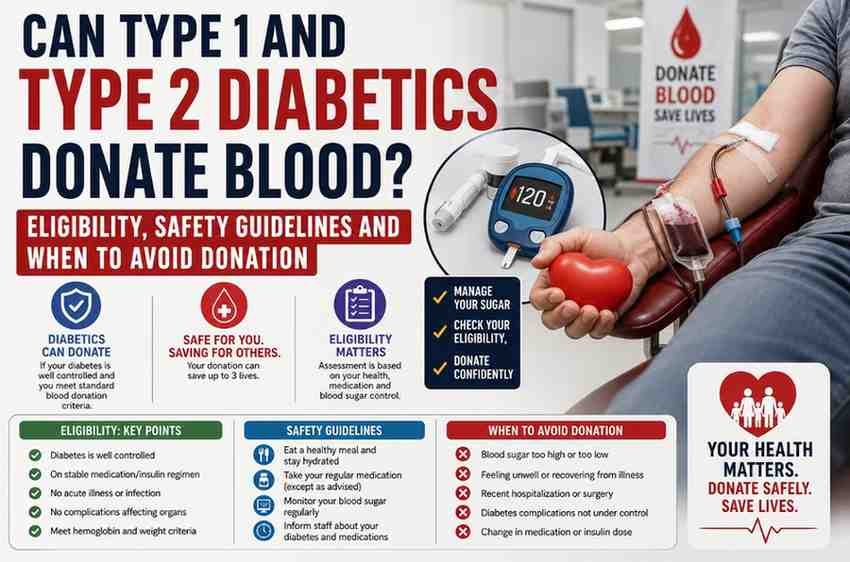
Every blood donation has the potential to save lives, yet many people living with Diabetes are uncertain whether they are eligible to donate. One of the most common misconceptions is that a diagnosis of diabetes automatically prevents blood donation. In reality, the answer is more nuanced.
Many individuals with Type 1 diabetes and Type 2 diabetes can donate blood if their condition is well managed and they meet the standard eligibility criteria established by blood donation authorities. However, safety remains the top priority for both the donor and the recipient. Healthcare professionals assess overall health rather than diabetes alone, ensuring that blood donation does not place unnecessary strain on the donor or compromise blood quality.
Understanding when it is safe to donate, when donation should be postponed, and how diabetes affects eligibility can help remove uncertainty while encouraging more eligible people to contribute to the blood supply.
Can People with Diabetes Donate Blood?
Yes, many people living with diabetes are eligible to donate blood.
The presence of diabetes alone is generally not considered an automatic reason for deferral. Instead, eligibility depends on whether:
- Blood sugar is well controlled.
- The donor feels healthy on the day of donation.
- No serious diabetes-related complications are present.
- The individual meets all other routine blood donation requirements.
If diabetes is stable and the person’s healthcare provider has not advised against donation, blood donation is often possible.
Understanding the Difference Between Type 1 and Type 2 Diabetes
Although both conditions affect blood sugar regulation, they differ in their underlying causes.
Type 1 Diabetes
Type 1 diabetes is an autoimmune condition in which the body’s immune system attacks insulin-producing cells in the pancreas. People with Type 1 diabetes require lifelong insulin therapy to regulate blood glucose.
Type 2 Diabetes
Type 2 diabetes develops when the body becomes resistant to insulin or cannot produce enough insulin to maintain normal blood sugar levels. It is often managed through lifestyle changes, oral medications, injectable therapies, insulin, or a combination of these approaches.
For blood donation purposes, the focus is less on the type of diabetes and more on the individual’s current health status.
When Is It Safe for a Person with Diabetes to Donate Blood?
Blood donation is generally considered appropriate when the donor:
- Has stable blood sugar levels.
- Feels physically well.
- Has no active infection or illness.
- Is eating and drinking normally.
- Has no recent diabetes-related medical emergencies.
- Meets standard donor eligibility criteria.
Good diabetes management reduces the likelihood of experiencing low blood sugar or other complications during or after donation.
When Should Blood Donation Be Postponed?
There are situations in which postponing donation is the safest option.
Donation may be deferred if:
- Blood sugar is poorly controlled.
- The individual is recovering from an illness.
- There is an active infection.
- Recent hospitalization has occurred.
- Significant diabetes-related complications are present.
- The donor feels weak, dehydrated, or unwell.
Waiting until overall health improves helps ensure both donor safety and a successful donation experience.
| Situation | Blood Donation Recommendation |
|---|---|
| Well-controlled diabetes | Often eligible if other criteria are met |
| Poorly controlled blood sugar | Postpone donation |
| Recovering from illness | Wait until fully recovered |
| Active infection | Donation should be delayed |
| Feeling unwell on donation day | Do not donate until recovered |
Does Taking Insulin Prevent Blood Donation?
A common myth is that insulin therapy automatically prevents someone from donating blood. In many regions, this is not necessarily true.
Eligibility depends on local blood donation guidelines and, more importantly, on the person’s overall health. Individuals using insulin may still be eligible if their diabetes is stable, they feel well, and they meet all donation requirements.
Because eligibility rules may vary between blood collection organizations, donors should always follow the recommendations of the local blood donation centre.
How Blood Donation Affects Blood Sugar
Blood donation itself does not directly lower or raise blood glucose levels. However, the donation process may indirectly influence blood sugar if the donor skips meals, becomes dehydrated, or experiences stress or anxiety.
To reduce these risks, people with diabetes should:
- Eat a balanced meal before donating.
- Stay well hydrated.
- Take medications as prescribed unless advised otherwise.
- Carry a source of fast-acting carbohydrate if recommended.
- Monitor blood sugar before and after donation if appropriate.
Most donors recover quickly when they follow standard post-donation advice.
Can Diabetes Complications Affect Eligibility?
Yes. Advanced diabetes complications may influence whether donation is considered safe.
Healthcare professionals may evaluate for conditions such as:
- Severe kidney disease.
- Significant heart disease.
- Active foot ulcers or infections.
- Serious nerve damage.
- Poorly healing wounds.
- Other medical conditions affecting overall health.
The goal is to ensure that blood donation does not increase health risks for the donor.
Preparing for Blood Donation with Diabetes
Proper preparation can help make the donation process smoother.
Experts generally recommend:
- Getting adequate sleep the night before.
- Eating regular meals.
- Drinking plenty of fluids.
- Avoiding strenuous exercise immediately before donation.
- Informing staff about diabetes and current medications.
These simple measures help maintain stable blood sugar and reduce the likelihood of dizziness or fatigue.
| Preparation Tip | Why It Matters |
|---|---|
| Eat before donating | Helps maintain stable blood sugar |
| Stay hydrated | Supports blood volume and recovery |
| Monitor blood sugar | Confirms diabetes is well controlled |
| Tell donation staff about diabetes | Allows appropriate assessment |
| Rest after donation | Supports safe recovery |
Benefits of Blood Donation Beyond Helping Others
The primary purpose of blood donation is to help patients in need, including those undergoing surgery, trauma care, cancer treatment, childbirth, and management of blood disorders.
For donors, the experience can also reinforce healthy habits. People with diabetes who donate often become more attentive to hydration, nutrition, and routine health monitoring, although blood donation should never be viewed as a treatment for diabetes.
Common Myths About Diabetes and Blood Donation
Myth: People with diabetes can never donate blood.
Fact: Many people with well-controlled diabetes are eligible.
Myth: Blood donation cures or improves diabetes.
Fact: Blood donation does not treat diabetes or replace medical care.
Myth: Everyone taking insulin is automatically ineligible.
Fact: Eligibility depends on overall health and local donation guidelines, not insulin use alone.
When to Seek Medical Advice Before Donating
People with diabetes should consider speaking with their healthcare provider if they have recently experienced severe fluctuations in blood sugar, started a new medication, recovered from a serious illness, or developed diabetes-related complications.
A healthcare professional can help determine whether donation is appropriate based on individual circumstances.
The Bigger Picture: Diabetes Should Not Discourage Lifesaving Donations
As diabetes becomes increasingly common worldwide, encouraging eligible individuals to donate blood can help strengthen national blood supplies while dispelling outdated misconceptions. Modern donor screening processes are designed to protect both donors and recipients, making blood donation safe for many people living with well-managed diabetes.
The emphasis should always remain on individual health rather than the diagnosis alone. Careful screening allows donation centres to identify those who can donate safely while advising others to wait until their health improves.
Conclusion
People living with Type 1 or Type 2 diabetes are often able to donate blood, provided their condition is well controlled and they meet all standard donor eligibility requirements. Stable blood sugar, good overall health, and the absence of significant complications are the key factors that determine eligibility—not simply the diagnosis itself.
At the same time, donation should be postponed if blood sugar is poorly controlled, illness is present, or diabetes-related complications have developed. By following medical advice, preparing properly, and undergoing routine donor screening, many people with diabetes can safely contribute to lifesaving blood donation while protecting their own health.
For breaking news and live news updates, like us on Facebook or follow us on Twitter and Instagram. Read more on Latest Lifestyle on thefoxdaily.com.






COMMENTS 0