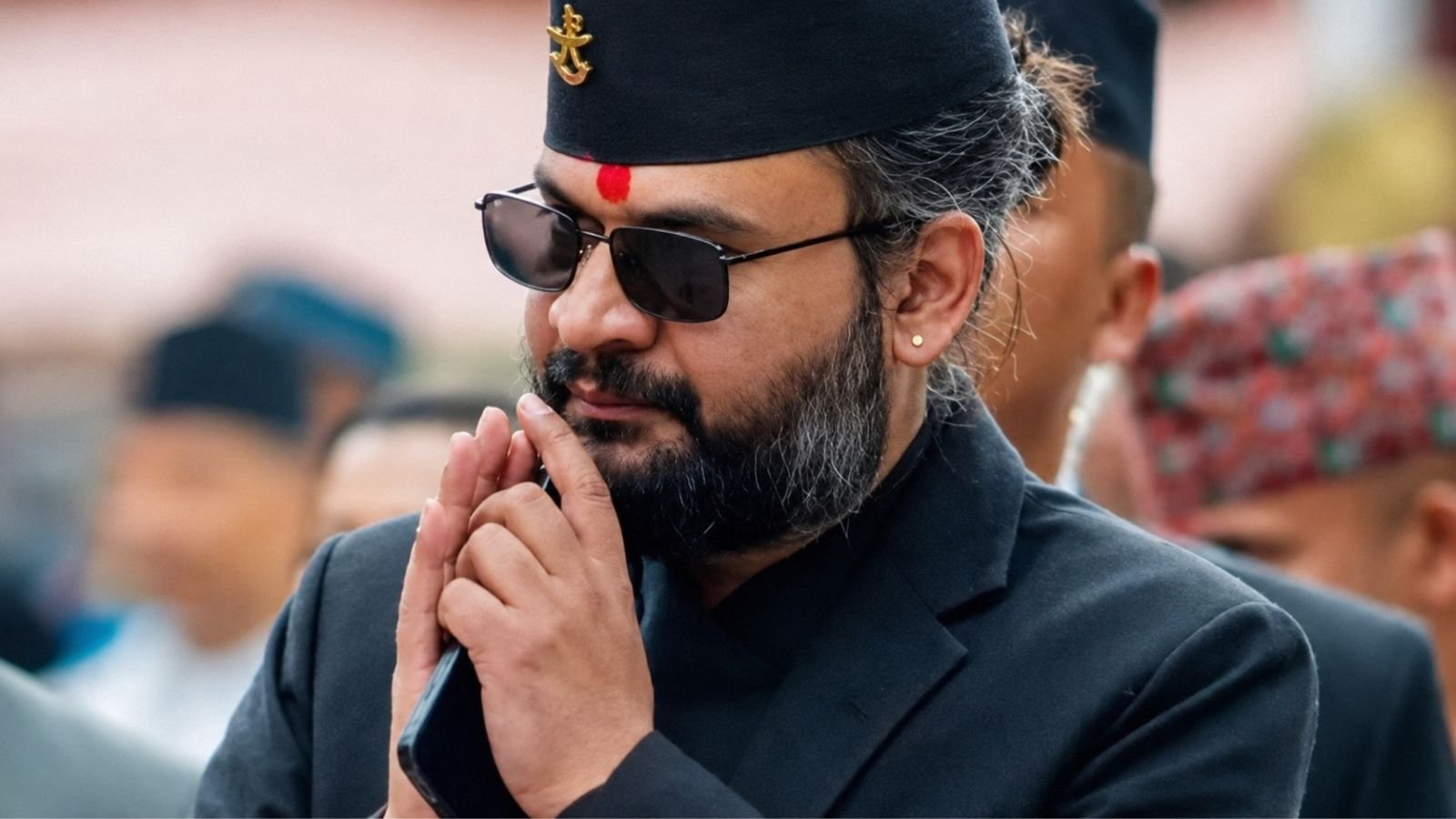
Nepal is witnessing a wave of public anger after the death of 25-year-old Ganesh Nepali, whose self-immolation following an encounter with Kathmandu Metropolitan security personnel has triggered nationwide debate over governance, policing, and social welfare. What began as an individual tragedy has rapidly evolved into one of the biggest political and humanitarian challenges faced by Prime Minister Balen Shah’s administration since taking office.
The incident has fueled protests in Kathmandu, united previously separate activist groups, and intensified criticism of the government’s handling of urban redevelopment, displaced families, and law enforcement. Demonstrators argue that the tragedy reflects deeper concerns about accountability, public administration, and the treatment of economically vulnerable citizens.
Although the government has announced an official inquiry and compensation for the victim’s family, the protests indicate that many Nepalese citizens are demanding broader institutional reforms rather than isolated responses to a single incident.
What Happened?
Ganesh Nepali, a resident of Nepal’s remote Mugu district, sustained severe burn injuries after setting himself on fire following an altercation involving Kathmandu Metropolitan security personnel. According to available information, security guards had placed a wheel lock on his motorcycle, which was parked outside the passport office in Kathmandu.
Nepali had reportedly visited the passport office because he was seeking employment opportunities abroad, a common aspiration among many young Nepalese looking for better economic prospects.
Despite receiving medical treatment, he later succumbed to his injuries. His funeral was held at Aryaghat on the banks of the Bagmati River after the government agreed to several demands made by his family, including an official Investigation, financial compensation, employment support for his wife, and educational assistance for his children.
How a Personal Tragedy Became a National Protest
While self-immolation incidents often draw public attention, this case resonated far beyond the immediate circumstances because it intersected with existing dissatisfaction over several government policies.
Within days of Nepali’s death, protesters gathered outside Singha Durbar, Nepal’s central administrative complex that houses the Prime Minister’s Office. Demonstrators called for greater compassion toward low-income families and demanded accountability from public authorities.
Although heavy rainfall limited the size of planned demonstrations, public anger continued to spread through civil society organizations, student groups, youth activists, and communities affected by recent government actions.
Timeline of Key Events
| Date / Period | Development |
|---|---|
| Earlier in 2026 | Kathmandu Metropolitan launches demolition drive targeting alleged encroachments. |
| Following Demolitions | Thousands of residents moved into temporary holding centres. |
| Recent Weeks | Residents asked to vacate temporary shelters without permanent alternatives. |
| Passport Office Incident | Ganesh Nepali reportedly sets himself on fire following a dispute involving his motorcycle. |
| Two Days Later | Nepali dies from burn injuries. |
| After the Funeral | Protests expand across Kathmandu demanding accountability and policy changes. |
Why the Incident Resonated Across Nepal
Many observers believe the incident became symbolic because it highlighted broader economic and social challenges facing young Nepalese citizens.
Employment opportunities remain limited in many parts of Nepal, prompting hundreds of thousands of citizens to seek jobs overseas each year. Labor migration has become an important source of household income, with remittances contributing significantly to Nepal’s Economy.
Against this backdrop, the circumstances surrounding Nepali’s final visit to obtain a passport struck a powerful emotional chord with many citizens WHO saw the incident as representing wider frustrations about economic hardship and administrative systems.
Urban Demolition Drive Adds to Public Anger
The protests are also closely linked to Kathmandu’s recent demolition campaign targeting structures identified by authorities as occupying public or encroached land.
According to reports, approximately 1,000 families were displaced during the campaign. Temporary holding centres were established, but critics argue that permanent rehabilitation measures have not kept pace with the demolitions.
The government’s subsequent notice asking displaced residents to vacate temporary facilities without confirmed long-term housing solutions further intensified public dissatisfaction.
Housing rights advocates argue that urban redevelopment projects should balance infrastructure goals with adequate rehabilitation measures for affected communities.
Arrests During the Demonstrations
The protests also resulted in multiple detentions, including the arrest of law student Majjid Ansari, who had previously participated in youth-led political movements.
Ansari later stated that he had not been informed of the reasons for his detention and appealed to Human Rights organizations to examine the circumstances surrounding his arrest and alleged assault.
His detention added another dimension to the controversy, with some activists raising concerns about freedom of assembly and the treatment of peaceful demonstrators.
Government Response
In response to growing public pressure, the government agreed to several measures requested by Ganesh Nepali’s family.
- An official inquiry into the incident.
- Financial compensation.
- Employment support for the victim’s wife.
- Educational assistance for the family’s children.
These commitments enabled the funeral to proceed, but they have not significantly reduced public criticism regarding the broader issues raised during the demonstrations.
Understanding Nepal’s Housing Challenge
Rapid urbanization has transformed Kathmandu over the past two decades. Population growth, migration from rural districts, and limited affordable housing have increased pressure on public land and urban infrastructure.
Municipal authorities frequently face the difficult task of balancing city planning, environmental protection, transportation improvements, and housing needs.
However, experts generally emphasize that successful urban redevelopment requires:
- Transparent legal procedures.
- Adequate rehabilitation planning.
- Community consultation.
- Alternative housing arrangements.
- Social support for displaced families.
When these elements are perceived to be insufficient, redevelopment projects often become politically sensitive.
Why Youth Participation Matters
Young voters played a significant role in Nepal’s recent political landscape, with many supporting promises of governance reform, transparency, and improved public services.
As a result, the participation of several youth activists in the current demonstrations has attracted particular attention. Their involvement suggests that concerns extend beyond a single incident and include broader expectations regarding accountability and responsive governance.
The protests illustrate how rapidly public opinion can shift when governments are perceived as falling short of campaign expectations.
Economic Pressures Facing Nepal’s Young Population
The tragedy has also renewed discussion about Youth Employment and migration.
Many Nepalese citizens seek employment overseas due to limited domestic job opportunities. Foreign employment has become an important livelihood strategy for families across the country, with remittances representing a major contributor to Nepal’s national economy.
For many young people, obtaining a passport represents the first step toward securing overseas employment and improving their family’s financial situation. This context has made Ganesh Nepali’s story particularly impactful among the public.
Comparison: Urban Development vs Social Rehabilitation
| Urban Development Goals | Social Welfare Expectations |
|---|---|
| Remove illegal encroachments. | Provide adequate rehabilitation. |
| Improve infrastructure. | Protect vulnerable households. |
| Enhance city planning. | Ensure fair compensation. |
| Enforce municipal regulations. | Maintain public trust through transparency. |
Why This Incident Has Broader Political Significance
The controversy comes relatively early in Prime Minister Balen Shah’s tenure, making it one of the administration’s first major governance challenges.
Political analysts note that early crises often shape public perceptions of a government’s responsiveness and administrative priorities. The manner in which authorities handle investigations, public communication, and rehabilitation measures could influence confidence in future Policy decisions.
Although the government has initiated an inquiry, many protesters are calling for broader institutional reforms aimed at preventing similar incidents in the future.
What Happens Next?
The official investigation is expected to examine the circumstances surrounding the self-immolation, the actions of municipal security personnel, and whether existing procedures were properly followed.
Attention is also likely to remain focused on the government’s approach toward displaced families, housing rehabilitation, and the treatment of protesters during public demonstrations.
Human rights organizations, civil society groups, and political observers are expected to monitor both the inquiry and any subsequent policy decisions.
Looking Beyond the Immediate Crisis
The protests underscore the importance of balancing administrative enforcement with social protection. Governments often face difficult decisions when implementing urban redevelopment projects, but maintaining public confidence depends heavily on transparency, effective communication, and support for affected communities.
The events have also highlighted broader issues affecting Nepal, including employment opportunities, migration pressures, affordable housing, and public trust in institutions. Addressing these structural challenges may prove just as important as resolving the immediate controversy.
Conclusion
The death of Ganesh Nepali has become more than an isolated tragedy—it has emerged as a catalyst for national conversations about governance, accountability, urban development, and social justice in Nepal. The widespread protests demonstrate how individual incidents can expose deeper structural concerns that resonate across society.
As the government proceeds with its investigation and fulfills its commitments to the victim’s family, the larger challenge will be rebuilding public confidence through transparent decision-making, effective rehabilitation policies, and responsive governance. The coming weeks are likely to determine whether this moment becomes a temporary political crisis or a turning point that shapes Nepal’s approach to urban administration and public accountability.
For breaking news and live news updates, like us on Facebook or follow us on Twitter and Instagram. Read more on Latest World on thefoxdaily.com.




COMMENTS 0