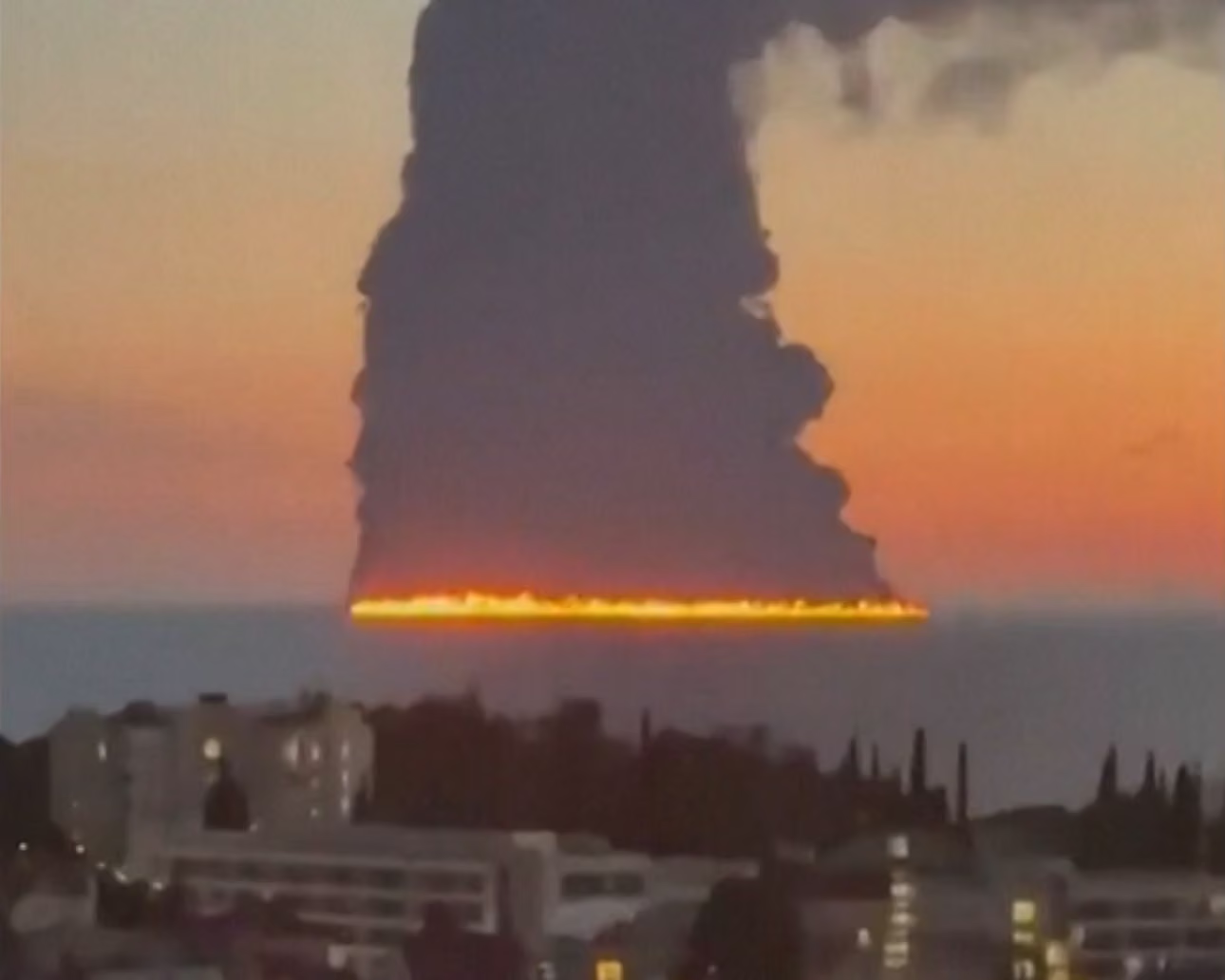
A Liberian-flagged oil tanker was struck by a naval drone off Russia’s Black Sea coast near the resort city of Sochi, triggering a major fire and sending a thick column of black smoke into the sky, according to Russia’s transport ministry.
The ministry said crude oil was burning openly in the waters of the Black Sea after the attack. A crew of 23 people, all Indian nationals, was rescued, officials said.
The incident adds to growing concerns over the risks faced by commercial Shipping in the Black Sea, where both Russia and Ukraine have targeted maritime and port-related infrastructure during the war. The attack also came as fighting intensified elsewhere, including Russian strikes on Kyiv and other Ukrainian cities.
Oil Tanker Attacked Near Sochi
The tanker was attacked off the coast of Sochi, one of Russia’s best-known Black Sea resort cities. The city has a population of almost 500,000 and is a major destination on Russia’s southern coast.
Videos and photographs circulating from the area showed bright orange flames burning on the sea while a large cloud of dark smoke rose above the tanker.
Russia’s transport ministry said the vessel was flying the Liberian flag and that crude oil had caught fire following the attack.
Officials said firefighting operations could not immediately begin because the intensity of the flames made it unsafe for rescue and firefighting vessels to approach the tanker.
“Crude oil is burning openly in the waters of the Black Sea,” the ministry said, describing the situation after the attack.
The decision to delay firefighting operations highlights the danger posed by a tanker carrying combustible fuel while flames continue to spread across the vessel and surrounding waters.
23 Indian Crew Members Rescued
One of the most significant details of the incident was the nationality of the crew.
Russian authorities said 23 crew members, all Indian citizens, were rescued after the tanker was attacked.
The successful evacuation meant that the immediate priority shifted from rescuing those aboard the vessel to dealing with the fire and preventing further danger in the surrounding maritime area.
The incident nevertheless places renewed attention on the risks faced by international crews working aboard commercial vessels operating in or around the Black Sea conflict zone.
Commercial shipping in the region has continued despite the war, but attacks involving Drones, missiles and other military systems have created additional hazards for civilian vessels and their crews.
Fire Forces Restrictions Around Sochi Coast
The blaze was visible from parts of Sochi, with images showing smoke rising above the Black Sea and flames burning offshore.
Local authorities restricted access to sections of the coastline and beaches following the incident.
The restrictions were intended to keep people away from potentially dangerous areas while the tanker remained on fire and authorities assessed the situation.
The presence of burning crude oil at sea also raises concerns about the potential environmental consequences of the incident. The immediate challenge for emergency teams, however, was to determine when conditions would become safe enough for firefighting vessels to approach.
Russia’s transport ministry said firefighting efforts would begin once the intensity of the fire had declined sufficiently to allow rescue vessels to reach the tanker safely.
Black Sea Shipping Increasingly Caught in the War
The tanker attack is part of a broader pattern of military activity affecting commercial shipping in the Black Sea.
Since Russia’s full-scale invasion of Ukraine began, commercial vessels have increasingly operated in an environment where military attacks, naval operations and drone strikes can affect civilian maritime traffic.
Both Russia and Ukraine have targeted shipping and maritime infrastructure during the conflict, although the circumstances and targets of individual incidents have varied.
Russia has also recently attacked grain vessels carrying Ukrainian goods near the coast of Romania, underscoring the wider risks facing ships operating around the western and northern parts of the Black Sea.
There was no immediate comment from Kyiv on the attack on the tanker off Sochi.
Without an immediate Ukrainian claim of responsibility, the circumstances surrounding the specific strike remain subject to investigation.
Separate Drone Attacks Hit Ships Near Bulgaria
The Sochi tanker fire was reported on the same day as another major maritime security incident in the Black Sea.
Bulgaria’s prime minister said two commercial vessels were struck by drones in what he described as the first such attack on shipping inside Bulgaria’s exclusive economic zone in the Black Sea.
Bulgarian authorities said they were investigating the origin of the drones.
Ukrainian President Volodymyr Zelenskyy, however, blamed Russia for the attacks. Bulgarian Prime Minister Rumen Radev condemned the strikes following an emergency government meeting.
Radev said the incident represented an unacceptable attack inside Bulgaria’s exclusive economic zone and described it as a violation of international and maritime law.
The vessels were reportedly attacked by sea and aerial drones about 80 miles, or 128 kilometres, off Bulgaria’s coast.
The incident is particularly significant because Bulgaria is a member of NATO. Any attack affecting commercial vessels in the country’s maritime economic zone therefore carries implications beyond the immediate damage to the ships involved.
Why Commercial Shipping Has Become a Major Risk Zone
The Black Sea has become one of the most heavily contested maritime environments in Europe since the war began.
Ukraine has used naval drones and other long-range systems to challenge Russian military and maritime capabilities, while Russia has carried out attacks against Ukrainian ports and shipping-related infrastructure.
Commercial vessels can become exposed to these operations even when they are not directly involved in military activity.
Tankers carrying oil face additional risks because a strike can ignite their cargo, creating a fire that is difficult to contain at sea. A damaged commercial ship can also create environmental, navigation and rescue challenges for nearby authorities.
The Sochi incident demonstrates how a single drone attack can quickly become a major emergency involving civilian crews, coastal communities, maritime authorities and emergency services.
Russia Warns of Further Strikes on Ukraine
The maritime incidents came amid a wider escalation in attacks between Russia and Ukraine.
Ukrainian President Volodymyr Zelenskyy warned in his nightly address that Russia was likely to launch a “massive strike”. Hours later, Kyiv came under attack.
Russian strikes damaged buildings and warehouses across the Ukrainian capital, according to Kyiv Mayor Vitali Klitschko.
Agence France-Presse reported multiple explosions in Kyiv, while Reuters reported that two people were killed in the Russian strikes.
The attacks added to an already tense period for residents of the Ukrainian capital as the winter season approaches.
Kyiv Faces Growing Pressure Ahead of Winter
Russian airstrikes have increasingly targeted infrastructure across Ukraine, including energy facilities and transportation networks.
Rail and road links have also faced attacks, including bridges connecting parts of Kyiv across the Dnipro River.
The objective and impact of individual strikes can vary, but repeated attacks on infrastructure create additional pressure as Ukraine prepares for the colder months.
Air raid sirens have sounded frequently across Kyiv, prompting residents to seek protection in basements, shelters and underground subway stations.
For civilians, the continuing attacks mean that the threat is not limited to the battlefield. Infrastructure damage can affect electricity, transportation, logistics and access to essential services far from the immediate front lines.
Dnipro Also Hit by Russian Strike
A separate Russian strike targeted the south-eastern Ukrainian city of Dnipro, where officials said an industrial facility was damaged.
Authorities did not immediately provide further details about the facility or the extent of the damage.
The strike formed part of a broader series of attacks reported as Russia increased pressure on Ukrainian targets across multiple locations.
Taken together with the attacks on Kyiv, the developments illustrated the geographic reach of the latest wave of Russian strikes while the maritime incidents highlighted the continuing expansion of the conflict’s risks beyond Ukrainian territory.
Black Sea Security Becomes Increasingly International
The tanker attack near Sochi and the separate incidents near Bulgaria demonstrate how the consequences of the war can extend beyond the immediate combatants.
Commercial ships operating under foreign flags can carry multinational crews and cargoes while traveling through waters affected by military activity. In the Sochi incident, all 23 crew members were Indian nationals even though the tanker was registered in Liberia.
The Bulgarian incidents further underline the international dimension of Black Sea security. Bulgaria is a NATO member, while its Black Sea waters are connected to one of the world’s most important maritime trading regions.
As drone warfare becomes more sophisticated, distinguishing between military and civilian maritime environments becomes increasingly important for governments and shipping companies.
What Happens to the Damaged Tanker?
The immediate challenge following the Sochi attack is to extinguish the fire and secure the tanker.
Authorities must balance the need to begin firefighting operations against the danger posed to rescue vessels approaching a burning oil tanker.
The longer the fire continues, the greater the potential risks to the vessel and surrounding waters. Emergency teams may also need to assess whether oil has spilled into the sea and whether additional measures are required to protect the coastline.
For Sochi, the incident also brings a direct safety concern to a major coastal population and tourist destination. Restrictions around beaches and the waterfront could remain necessary until officials determine that the area is safe.
Black Sea War Raises New Risks for Civilian Vessels
The tanker fire near Sochi comes at a time when the Black Sea is becoming an increasingly dangerous operating environment for commercial shipping.
The rescue of the 23 Indian crew members prevented the incident from becoming an even greater human tragedy, but the attack demonstrates how quickly military drone operations can threaten civilian vessels.
The simultaneous reports of attacks near Bulgaria and Russian strikes across Ukraine show that the conflict continues to affect areas well beyond traditional battlefield positions.
For governments around the Black Sea, shipping companies and international crews, the latest incidents reinforce the importance of maritime security as the war continues.
The immediate focus remains on controlling the tanker fire off Sochi, while authorities investigate WHO launched the attack and assess its consequences for the surrounding waters. With fighting intensifying elsewhere in Ukraine, the latest incidents suggest that the risks facing civilian infrastructure and commercial shipping remain a significant part of the wider conflict.
For breaking news and live news updates, like us on Facebook or follow us on Twitter and Instagram. Read more on Latest World on thefoxdaily.com.




COMMENTS 0