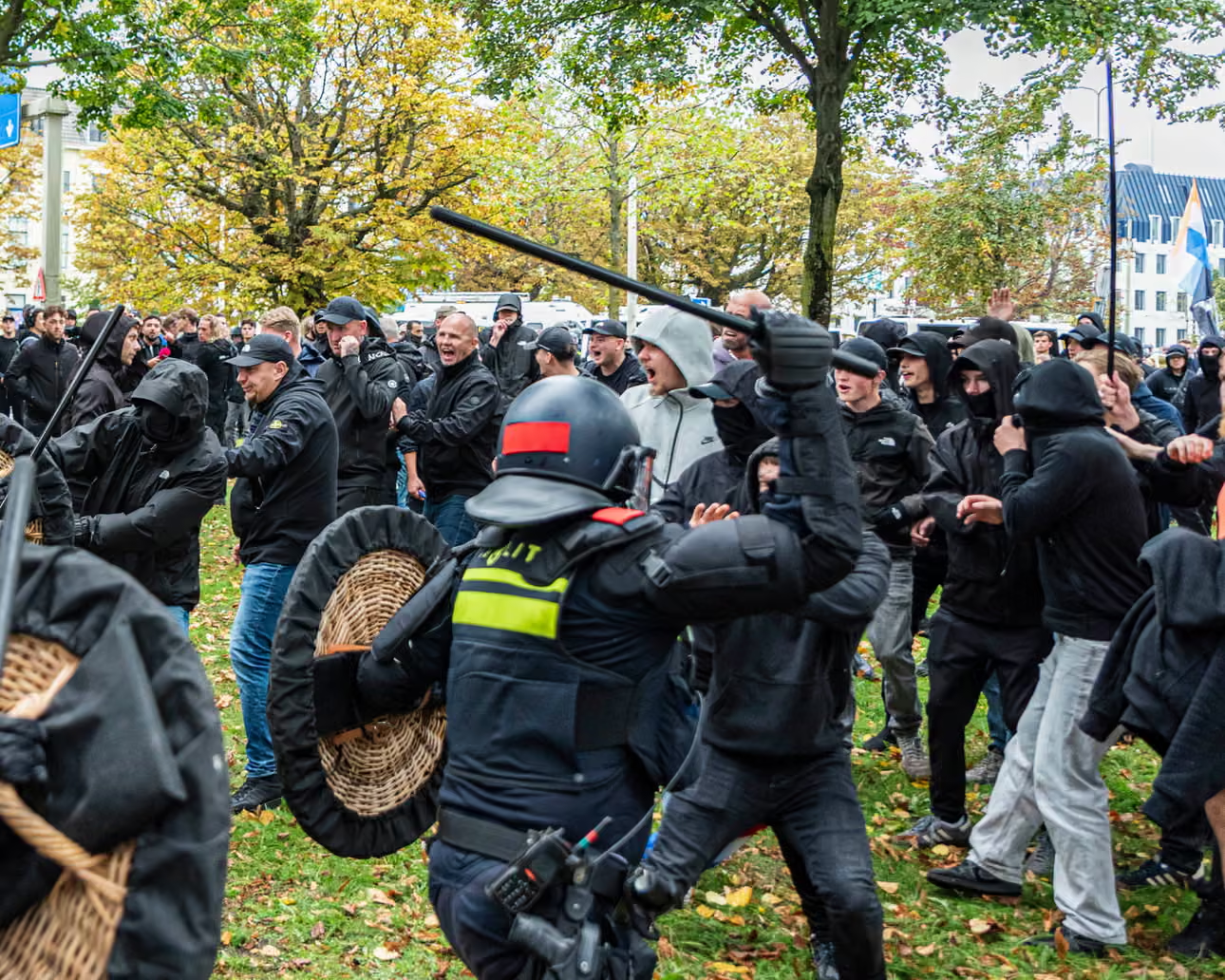
Dutch riot police dispersed several hundred far-right protesters in The Hague on Saturday after violence erupted during a demonstration against Immigration and asylum policies. Authorities banned the planned march after protesters clashed with police and ordered the crowd to leave the city-centre park where the gathering had taken place.
The unrest involved protesters throwing fireworks and other projectiles at officers. Dutch public broadcaster NOS reported that 24 people were arrested during the disturbances, with police making arrests for several alleged offences, including failing to comply with official orders and illegally possessing weapons.
The demonstration was organised by the far-right group We Are the People and had been intended as an anti-immigration protest. The violence forced authorities to halt the planned march and move toward dispersing the crowd.
Violence Erupts at The Hague Protest
Protesters gathered at the Malieveld, a large park in central The Hague, for the demonstration. Tensions escalated as some participants began throwing fireworks and other objects toward police officers deployed to maintain order.
The Hague municipality responded by banning the planned march and subsequently ordering demonstrators to disperse. Riot police moved in as the situation deteriorated, using crowd-control measures to clear the area.
Police reportedly used pepper spray and a water cannon against rioters. The deployment reflected the authorities’ decision that the gathering could no longer proceed as planned after violence broke out.
The arrests included people accused of failing to obey the dispersal order as well as individuals allegedly found carrying weapons illegally. The reported number of arrests may change as authorities continue processing those detained during the protest.
Justice Minister Calls for Firm Response
Dutch Justice Minister David van Weel condemned the scenes and called for a strong response from authorities. In a post on X, he described the events as “disgusting scenes” and thanked police officers for protecting the country’s democratic rule of law.
Van Weel also said demonstrators had made Nazi salutes, chanted antisemitic slogans and attacked police officers with fireworks.
His comments came as officials faced the task of balancing the right to protest with the need to protect police, bystanders and public property when demonstrations become violent.
The reported incidents also brought attention to the political character of the protest. The demonstration was organised by We Are the People, a far-right organisation campaigning against immigration and asylum policies.
Why Authorities Banned the March
The municipality’s decision to ban the march followed violence among demonstrators gathered at the Malieveld. Once the situation became disorderly, officials ordered participants to disperse rather than allowing the planned demonstration to continue through the city.
A dispersal order gives police the authority to clear an area when officials determine that a gathering presents a significant public-order problem. People WHO remain after such an order can face arrest, which helps explain why some of Saturday’s reported arrests were connected to failure to comply with police instructions.
For authorities, the immediate priority was controlling the violence and preventing the unrest from spreading beyond the demonstration area. The use of riot police, water cannon and pepper spray formed part of that effort.
The events also illustrate the difficulties faced by police during large demonstrations where a peaceful gathering can quickly become confrontational. Once projectiles or fireworks are directed at officers, police must respond while attempting to prevent further escalation and protect people nearby.
Protesters Accused of Attacking Police
The most serious incidents reported during Saturday’s protest involved attacks on police officers. Protesters reportedly threw fireworks and other projectiles toward police, prompting officers to use crowd-control equipment.
Van Weel said some demonstrators had directly attacked police. He also highlighted reports of Nazi salutes and antisemitic chanting, adding another dimension to the controversy surrounding the protest.
Such conduct is separate from the broader political issue of immigration policy. People have a legal right to express opposition to government policies and participate in demonstrations, but that right does not extend to violence against police or other people or to unlawful possession of weapons.
The distinction is particularly important when demonstrations involve highly polarised political subjects. The government’s response to the protest therefore focused not simply on the views expressed by demonstrators but on conduct that authorities said created a public-order threat.
The Hague Has Seen Similar Far-Right Unrest
Saturday’s violence was not an isolated episode in The Hague. The city experienced significant unrest a year earlier during another right-wing demonstration.
During those clashes, a police car was set on fire as black-clad protesters confronted police. The headquarters of the centrist D66 party was also attacked.
The earlier unrest has added context to the latest confrontation, particularly because The Hague is the Netherlands‘ political centre and regularly hosts demonstrations connected to national political issues.
The recurrence of disorder at right-wing demonstrations has also placed additional pressure on authorities to determine how large protests should be managed while protecting both the right to peaceful assembly and public safety.
Prime Minister Rob Jetten Condemns Demonstrators
Prime Minister Rob Jetten also criticised the behaviour reported during Saturday’s protest. Writing on X, Jetten said the demonstrators had deliberately sought confrontation with police and had used what he described as abhorrent far-right and antisemitic slogans.
Jetten’s comments carry particular significance because D66, the political party whose headquarters was attacked during the previous year’s unrest, is led by him.
The attack on the party’s headquarters during the earlier clashes and the violence against police during the latest demonstration have contributed to a wider discussion about political extremism and public order in the Netherlands.
However, the government’s condemnation of violent behaviour does not eliminate the underlying Political Debate over immigration and asylum policy. Those issues remain subjects of political disagreement in the Netherlands, as they are across much of Europe.
Immigration Remains a Divisive Political Issue
Immigration and asylum policy have become major political issues in the Netherlands, with political groups holding sharply different views over the number of asylum seekers the country should accept, border controls and the responsibilities of the government toward refugees.
Far-right groups have made opposition to immigration a central part of their political messaging. Demonstrations such as the one in The Hague provide a platform for those views, but violent incidents can shift public attention from the policy arguments themselves to questions about public safety and extremism.
For Dutch authorities, this creates a difficult balance. Peaceful political demonstrations are a normal feature of democratic life, while violence, intimidation and attacks on police can require immediate intervention.
The events in The Hague show how quickly that balance can be disrupted when a demonstration becomes violent. The municipality ultimately decided that the planned march could not proceed after clashes broke out at the Malieveld.
Police Face Pressure During Political Demonstrations
Police deployments at politically sensitive demonstrations often require officers to prepare for several possible scenarios. Authorities must account for crowd size, potential counter-protests, the presence of vulnerable people and the possibility that isolated incidents could escalate.
The use of riot police is generally intended to create a barrier between officers and crowds and to restore control when ordinary policing becomes difficult. Water cannon and pepper spray can be used as crowd-control measures in circumstances where police determine that intervention is necessary.
Saturday’s events demonstrate the operational challenges involved when fireworks and other projectiles are thrown at officers. Police must simultaneously protect themselves, prevent further attacks and manage the wider crowd.
The reported arrests also indicate that authorities sought to identify individuals accused of specific offences rather than treating every person at the demonstration as responsible for the violence.
Previous Violence Adds to Concerns
The fact that The Hague experienced another violent right-wing demonstration a year earlier has increased the significance of Saturday’s events. The earlier incident included the burning of a police vehicle and an attack on the D66 headquarters.
That history provides a backdrop for the latest confrontation between demonstrators and police. It also explains why officials are closely focused on public-order measures when far-right groups organise demonstrations in the city.
At the same time, each protest must be assessed according to the conduct taking place at the time. The decision to ban Saturday’s march followed the violence that had already occurred at the Malieveld rather than simply the political identity of the organisers.
What Happens After the Protest
The immediate aftermath of the demonstration is likely to focus on the people arrested, the circumstances surrounding the reported attacks on police and the wider investigation into the violence.
Those detained can face different legal consequences depending on the allegations against them. Failing to comply with a dispersal order and possession of weapons are distinct allegations from attacking police officers, and authorities will determine the relevant offences based on individual circumstances and available evidence.
The incident is also likely to renew discussion about how the Netherlands handles politically charged demonstrations. Officials must balance freedom of expression and assembly with the responsibility to protect public safety and maintain order.
The Hague Protest Highlights Wider European Debate
The violence in The Hague comes amid broader political debates across Europe over immigration, asylum and the rise of far-right movements. Governments in several European countries have faced pressure to tighten immigration policies, while civil society groups and political opponents have raised concerns about discrimination, extremism and the treatment of asylum seekers.
The Netherlands has its own long-running debate over these issues, with political parties offering significantly different approaches. Demonstrations allow supporters of competing positions to make their views public, but confrontations with police can transform political gatherings into public-order emergencies.
Saturday’s events therefore have two distinct dimensions. The first concerns the immediate policing operation and the arrests following violence at the Malieveld. The second concerns the political environment in which an anti-immigration demonstration organised by a far-right group took place.
For Dutch authorities, the challenge will be to ensure that future demonstrations can take place peacefully while responding firmly when participants engage in violence or other unlawful behaviour. The events in The Hague show how quickly that balance can be tested when political protest turns into confrontation.
For breaking news and live news updates, like us on Facebook or follow us on Twitter and Instagram. Read more on Latest World on thefoxdaily.com.





COMMENTS 0