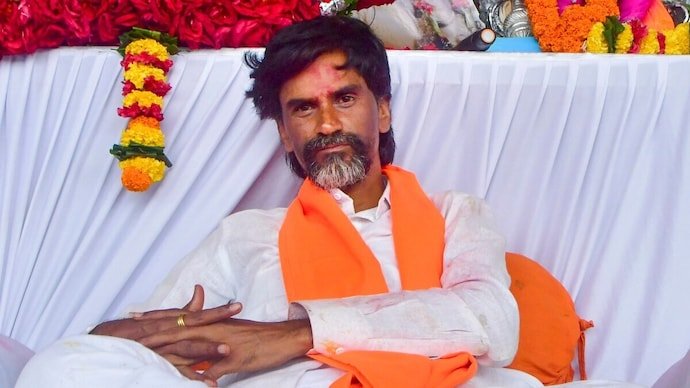
Maratha reservation activist Manoj Jarange has resumed his indefinite Hunger Strike over a series of demands linked to caste certificates and reservation benefits for eligible members of the Maratha Community. On the second day of the agitation, Jarange warned that he could lead supporters to Mumbai if the Maharashtra government fails to respond to the demands.
Jarange began his 11th indefinite fast on Saturday at Antarwali Sarati in Jalna district, his native village, where thousands of supporters have gathered. The latest protest centres on the demand that Marathas who meet the required historical criteria should be recognised as Kunbis and issued Kunbi caste certificates.
The issue is politically sensitive because Kunbis are included within the Other Backward Class category and receive reservation benefits in Education and government employment. Jarange argues that eligible Marathas should receive recognition as Kunbis on the basis of historical records, while his wider list of demands includes changes related to reservation, protesters facing criminal cases, financial assistance and pending government benefits.
His warning of a possible Mumbai march has increased pressure on the Maharashtra government to address the issue before the September 12 deadline set by Jarange’s core committee.
Why Manoj Jarange has resumed his hunger strike
Jarange’s latest agitation is focused primarily on the recognition of eligible Marathas as Kunbis. He has demanded the immediate issuance of Kunbi certificates based on what he describes as 58 lakh historical records.
Speaking to reporters on Sunday, Jarange reiterated his position that the government should recognise Marathas covered by the relevant historical records as Kunbis.
He also argued that additional caste-certificate verification should be stopped in cases where the historical records already establish eligibility.
The demand is part of the larger and long-running Maratha reservation movement in Maharashtra. For supporters of the agitation, access to reservation benefits is closely connected to educational opportunities, government employment and economic Security.
Jarange’s latest fast therefore goes beyond a single administrative demand. It is an attempt to push the state government to address several unresolved issues simultaneously.
What are Kunbi certificates and why are they important?
The Kunbi question is at the heart of the current confrontation between Jarange and the Maharashtra government.
Kunbis are an agrarian community covered under the Other Backward Class category. A valid Kunbi Caste Certificate can therefore provide access to reservation benefits available under the OBC framework, subject to the applicable eligibility requirements.
Jarange’s position is that historical records can establish that some members of the Maratha community have Kunbi ancestry or classification and should therefore be able to obtain the corresponding certificates.
His current demand is not limited to asking the government to consider individual applications. He wants the process for eligible Marathas to be accelerated and has called for certificates to be issued on the basis of the historical documentation he cites.
This distinction is important because the dispute concerns both the interpretation of historical records and the administrative process used to establish eligibility.
Jarange sets September 12 as a key deadline
The next major point in the agitation is September 12.
Jarange said the Maratha community’s core committee will meet at Antarwali Sarati on that date to decide whether to launch a hunger strike in Mumbai. He made clear that the proposed Mumbai action could be avoided if the government accepts the demands before the meeting.
“If the government accepts our demands by September 12, there will be no need to hold the proposed fast in Mumbai,” he said.
The deadline gives the government a limited window to engage with the protest leadership and attempt to prevent the agitation from moving to the state capital.
A shift from Antarwali Sarati to Mumbai would potentially give the protest greater visibility and put the issue directly before the state administration and political leadership.
The 58 lakh historical records at the centre of the demand
One of Jarange’s most specific demands concerns 58 lakh historical records that he says should form the basis for issuing Kunbi certificates to eligible Marathas.
His position is that where the relevant historical documentation establishes eligibility, authorities should not impose an additional verification process.
This is one of the areas where the government’s administrative approach and the protesters’ expectations could determine how quickly the dispute develops.
The government must ultimately establish how historical records are interpreted and how certificates can be issued while maintaining the applicable legal and administrative requirements. Jarange, however, is calling for immediate action and has said the community will not give the government additional time.
Jarange’s demands go beyond Kunbi certificates
The latest hunger strike includes several other demands connected to the Maratha reservation movement.
Among them is a demand for reservation based on the Satara Gazette. Jarange has also called for the withdrawal of police cases registered against people who participated in quota Protests across Maharashtra.
He is additionally seeking government jobs and financial compensation for families of people who died during earlier agitations.
Another demand involves creating a dedicated state portfolio for the Maratha and Kunbi communities, along with immediate appointments of staff to administer it.
Jarange has also raised economic and educational issues affecting members of the communities. His demands include payment of interest on loans provided through the Annasaheb Patil Arthik Vikas Mahamandal and the release of pending SARTHI scholarships for students.
He is also seeking immediate appointment letters for candidates selected under the SEBC and EBC quotas.
Key demands in the current agitation
- Immediate issuance of Kunbi certificates to eligible Marathas based on the cited historical records.
- An end to caste-certificate verification in cases covered by the relevant historical documentation.
- Reservation based on the Satara Gazette.
- Withdrawal of police cases filed against quota protesters across Maharashtra.
- Government jobs and financial compensation for families of people who died during earlier agitations.
- A dedicated state portfolio for the Maratha and Kunbi communities with staff appointments.
- Payment of interest on loans provided through the Annasaheb Patil Arthik Vikas Mahamandal.
- Release of pending SARTHI scholarships.
- Appointment letters for candidates selected under SEBC and EBC quotas.
Why the threat of a Mumbai march matters
Jarange’s warning to march to Mumbai is significant because the location of a protest can influence its political impact.
Antarwali Sarati has become closely associated with the Maratha reservation movement, but a large mobilisation in Mumbai would place the issue closer to Maharashtra’s political and administrative centre.
For the government, the challenge is to respond to the substantive demands while also managing the possibility of a larger mobilisation.
For Jarange and his supporters, moving the protest to Mumbai could be a way of increasing pressure if discussions fail to produce a satisfactory response.
The September 12 meeting is therefore more than a routine organisational gathering. It could determine whether the present agitation remains centred in Jalna or develops into another major mobilisation in Mumbai.
The wider Maratha reservation issue
The current protest needs to be viewed against the background of Maharashtra’s prolonged debate over Maratha reservation.
The community has repeatedly demanded greater access to reservation benefits, particularly in education and public employment. Different proposals and legal approaches have been pursued over the years, making the issue one of the most persistent questions in Maharashtra’s social and political landscape.
Jarange has emerged as one of the most prominent voices in the recent phase of the movement, particularly through hunger strikes and mass mobilisation.
The Kunbi certificate demand adds another layer to the reservation debate because it focuses on eligibility under an existing OBC framework rather than simply asking for a new reservation category.
That makes the historical-record question especially important. The practical issue is how authorities determine which individuals qualify for Kunbi certificates and what documentation should be accepted.
Why the historical-record issue is difficult
Historical records can be important evidence in establishing caste identity, but translating old documentation into modern administrative certificates involves a verification process.
Jarange wants that process simplified or bypassed where the relevant records already establish eligibility. His argument is that requiring further verification creates unnecessary delays for people who can demonstrate their status through historical documentation.
The government, meanwhile, must administer certificates according to the applicable rules and ensure that the benefits are provided to people who meet the relevant criteria.
This creates a practical challenge: protesters are demanding speed and recognition, while the administrative system must determine eligibility consistently.
The way this issue is handled could therefore have consequences beyond the current protest. Any process adopted for historical records could affect how similar applications are examined in the future.
Education and employment remain central concerns
Reservation demands are closely connected to access to education and government employment, which explains why several of Jarange’s demands involve scholarships, recruitment and appointment letters.
The demand for pending SARTHI scholarships reflects the importance of financial support for students from the affected communities. Similarly, the request for appointment letters for candidates selected under SEBC and EBC quotas focuses on people who have already reached the recruitment stage.
These issues give the agitation a practical dimension beyond the broader political debate over reservation.
For affected families and candidates, delays in scholarships, recruitment or other benefits can have immediate consequences. That helps explain why administrative implementation is an important part of the movement.
Economic demands add another dimension
Jarange’s demands also include financial measures involving the Annasaheb Patil Arthik Vikas Mahamandal.
He is seeking payment of interest on loans extended through the organisation, alongside other measures intended to support the economic interests of the Maratha and Kunbi communities.
This broadens the scope of the agitation from caste certificates and reservation to economic assistance. It also indicates that the movement is being used to raise concerns that supporters see as connected to employment, education and economic opportunity.
For the government, addressing such a wide list of demands may be more complicated than resolving a single administrative issue. Some demands concern certificates, others involve legal cases, welfare payments, recruitment and institutional arrangements.
What could happen next
The immediate focus will remain on the Maharashtra government’s response and Jarange’s continued fast at Antarwali Sarati.
If the government reaches an understanding with the protest leadership before September 12, the proposed Mumbai hunger strike could be avoided. Jarange has explicitly linked the Mumbai action to whether his demands are accepted.
If no agreement is reached, the core committee is expected to consider intensifying the movement, including a possible hunger strike in Mumbai.
The next phase will therefore depend heavily on negotiations, the government’s willingness to address the specific demands and the response of the wider Maratha community.
Another important factor will be how the authorities handle the historical-record issue. The question of which Marathas qualify for Kunbi certificates and how eligibility is established is likely to remain central to any attempted resolution.
A fresh test for Maharashtra’s government
Manoj Jarange’s decision to resume his indefinite fast puts the Maharashtra government under renewed pressure over an issue that has repeatedly returned to the centre of state Politics.
The immediate demand is clear: Jarange wants eligible Marathas to receive Kunbi certificates on the basis of historical records and wants the process to move quickly. But the wider list of demands covers reservation, police cases, employment, scholarships, financial assistance and administrative representation.
That breadth makes the dispute more difficult to resolve through a single announcement.
The September 12 meeting could become the next turning point. If the government can make progress on the demands before then, the threat of a Mumbai mobilisation may recede. If not, the protest could enter a more confrontational phase.
For now, Jarange’s hunger strike has once again put the Maratha reservation issue firmly in the spotlight. The immediate test for the government will be whether it can find a workable response to the Kunbi certificate demand while addressing the broader concerns that have brought thousands of supporters back to Antarwali Sarati.
For breaking news and live news updates, like us on Facebook or follow us on Twitter and Instagram. Read more on Latest India on thefoxdaily.com.






COMMENTS 0