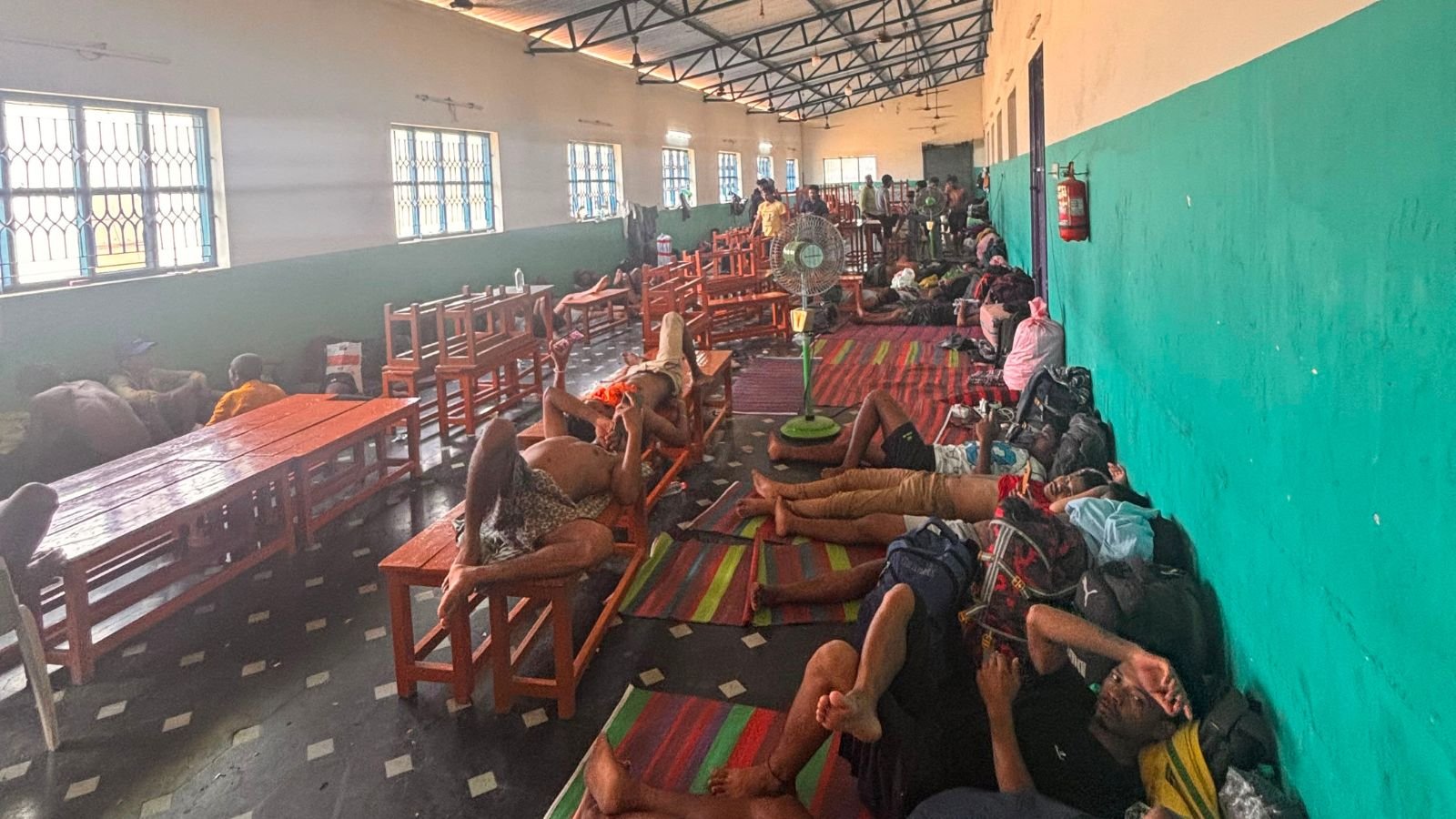
The aftermath of the deadly ammonia gas leak at a seafood export processing unit in Tamil Nadu has evolved beyond an industrial accident into a broader debate over worker welfare, labour protections and interstate coordination. Around 40 migrant workers from Jharkhand employed at the factory have alleged that they have been confined to a private marriage hall under police supervision since the day of the incident, claiming they are desperate to return home after surviving one of the state’s worst recent industrial disasters.
While district authorities have assured that the workers are being cared for and that arrangements are underway to send them back safely, the workers’ accounts have raised fresh questions about emergency response protocols, migrant Labour Rights and the responsibilities of employers and state administrations following industrial accidents.
The incident has once again highlighted the vulnerabilities faced by India‘s millions of interstate migrant workers, many of whom leave their home states in search of employment but often find themselves navigating unfamiliar legal, linguistic and administrative systems during emergencies.
What Happened at the Tamil Nadu Seafood Factory?
The tragedy unfolded on June 21 when an ammonia gas leak occurred at St Peter’s Paul Seafoods Exports Private Limited in Tiruvallur district, Tamil Nadu. The facility, engaged in seafood processing and exports, employed workers from several states including Jharkhand, Odisha and Assam.
Ammonia is widely used in industrial refrigeration systems because of its cooling efficiency. However, accidental leaks can become life-threatening when workers are exposed to high concentrations without adequate protective measures or timely evacuation.
The gas leak affected dozens of employees working inside the facility, leading to multiple hospitalisations and fatalities.
Casualties and Current Situation
| Category | Status |
|---|---|
| Total workers affected | 83 |
| Workers discharged | 28 |
| Workers still hospitalized | 40 |
| On ventilator support | 2 |
| Receiving oxygen support | 9 |
| Reported stable | 29 |
| Total confirmed deaths | 15 |
The death toll increased after one of the injured workers from Jharkhand succumbed to injuries several days after the accident, underscoring the severity of ammonia exposure in industrial environments.
Workers Allege They Are Being Prevented From Leaving
The most controversial development following the accident involves allegations made by surviving workers that they have been housed in a private marriage hall under police watch and are not free to leave.
Several workers claim they have remained there since the day of the gas leak despite not requiring hospitalization.
According to their accounts, Food and basic necessities are being provided, but movement outside the premises has been restricted. Some workers also alleged that even visits to hospitalized family members are accompanied by police personnel before they are brought back to the accommodation.
These allegations have drawn attention because restrictions on personal movement following industrial accidents raise important legal and humanitarian questions, particularly when the affected individuals are interstate migrant workers.
District Administration Responds
Authorities in Tiruvallur district have acknowledged that the administration is coordinating with the Jharkhand government regarding the safe return of workers.
Officials have also confirmed that arrangements are being made to transport the body of the deceased worker to her native state after completion of required formalities.
According to district authorities, the workers will be sent back home once coordination with the concerned state government is completed.
The administration has not publicly accepted the workers’ characterization of the accommodation arrangements as confinement.
Why Interstate Coordination Matters
Industrial accidents involving migrant workers often require close coordination between multiple state governments.
Authorities must address several issues simultaneously:
- Medical treatment for injured workers.
- Identification of deceased victims.
- Transportation arrangements.
- Compensation procedures.
- Communication with families.
- Labour department coordination.
- Legal investigation into the accident.
These administrative processes frequently become more complicated when workers belong to different states and speak different languages.
Who Are India’s Interstate Migrant Workers?
India has one of the world’s largest internal migrant workforces. Millions of workers move annually from states such as Jharkhand, Odisha, Bihar, West Bengal, Assam and Uttar Pradesh to industrial hubs in Tamil Nadu, Karnataka, Gujarat, Maharashtra and other manufacturing centers.
Many are employed in sectors including:
- Food processing.
- Seafood exports.
- Construction.
- Textiles.
- Manufacturing.
- Warehousing.
- Logistics.
These workers play a critical role in India’s industrial economy while often facing challenges related to housing, language barriers, Healthcare access and legal awareness.
Understanding the Risks of Ammonia Gas
Ammonia is commonly used in industrial refrigeration because it is highly efficient and environmentally preferable to several older refrigerants.
However, exposure to high concentrations can be extremely dangerous.
| Potential Effect | Possible Impact |
|---|---|
| Eye exposure | Severe irritation and burns |
| Respiratory exposure | Breathing difficulties and lung injury |
| High concentration exposure | Loss of consciousness and potentially fatal complications |
| Skin contact | Chemical burns in severe cases |
Industrial facilities using ammonia are generally expected to maintain leak detection systems, emergency shutdown procedures, protective equipment and evacuation protocols to minimize risk.
Compensation and Pending Wages Become Key Concerns
Beyond returning home, workers have raised another important issue: compensation.
Several affected employees reportedly want assurances that those injured or the families of those WHO died receive financial compensation before workers leave Tamil Nadu. They have also sought payment of pending wages.
Industrial accidents often create financial uncertainty for families because injured workers may be unable to earn income for extended periods while medical expenses increase.
Legal Responsibilities After an Industrial Accident
When serious industrial accidents occur, multiple legal and administrative processes usually follow.
These commonly include:
- Investigation into the cause of the accident.
- Assessment of workplace safety compliance.
- Medical support for injured workers.
- Compensation under applicable labour laws.
- Review of employer safety practices.
- Implementation of preventive measures.
The findings of official investigations often determine whether safety lapses contributed to the accident and whether additional regulatory action becomes necessary.
The Bigger Issue: Migrant Worker Welfare
The incident has revived a broader national conversation about migrant worker protections.
The COVID-19 pandemic previously exposed how dependent many industries are on interstate labour while simultaneously revealing gaps in worker protection, social security portability and emergency support systems.
Although several reforms have been introduced over recent years, implementation continues to vary across sectors and states.
Experts frequently argue that improving registration systems, labour databases and interstate coordination could help governments respond more effectively during emergencies involving migrant workers.
Industrial Safety Cannot Be Treated as a Compliance Exercise
One important lesson emerging from the tragedy is that Industrial Safety should extend beyond meeting minimum regulatory requirements.
Facilities handling hazardous substances require continuous monitoring, employee training, emergency drills and maintenance of safety equipment.
Regular inspections, transparent reporting and rapid emergency response mechanisms remain essential for preventing accidents involving dangerous industrial chemicals.
Comparison: Immediate Priorities After Industrial Disasters
| Priority | Why It Matters |
|---|---|
| Medical treatment | Saves lives and reduces long-term health complications. |
| Worker communication | Prevents confusion and panic among affected families. |
| Safe accommodation | Provides temporary support without restricting personal rights. |
| Compensation processing | Supports affected families financially. |
| Safety investigation | Helps prevent similar accidents in future. |
The Economic Importance of the Seafood Processing Industry
India’s seafood export industry is a major contributor to agricultural exports and provides employment to thousands of workers across coastal states.
Seafood processing plants often operate around the clock using large refrigeration systems, making strict adherence to industrial safety standards especially important.
Any major accident not only affects workers and families but can also impact production, exports, regulatory oversight and investor confidence.
What Happens Next?
Authorities from Jharkhand and Tamil Nadu are expected to complete arrangements for transporting the workers back to their home state.
Meanwhile, investigations into the ammonia leak are likely to continue, focusing on the circumstances surrounding the accident, workplace safety procedures and compliance with industrial regulations.
Families of the victims and injured workers will also be closely watching how compensation claims, pending wages and rehabilitation measures are handled.
Future Outlook
The Tiruvallur tragedy may become another important reference point in discussions on industrial safety and migrant labour welfare in India.
There is likely to be increased scrutiny of hazardous industrial facilities, especially those employing large numbers of interstate migrant workers. Governments may also examine whether emergency response protocols adequately protect workers while respecting their rights and dignity during post-disaster management.
For industries relying heavily on migrant labour, stronger coordination between employers, labour departments and state governments could become an increasingly important aspect of workforce management.
Conclusion
The ammonia gas leak in Tamil Nadu is no longer only an industrial accident—it has become a wider story about workplace safety, migrant worker rights and administrative accountability. While authorities maintain that efforts are underway to safely return affected workers to Jharkhand, the workers’ allegations of restricted movement have added another layer of concern to an already tragic incident.
As investigations continue, attention will remain focused not only on determining how the gas leak occurred but also on ensuring that affected workers receive medical care, compensation, pending wages and dignified treatment throughout the recovery process. The lessons learned from this tragedy could shape future industrial safety practices and strengthen protections for India’s vast migrant workforce.
For breaking news and live news updates, like us on Facebook or follow us on Twitter and Instagram. Read more on Latest India on thefoxdaily.com.



COMMENTS 0