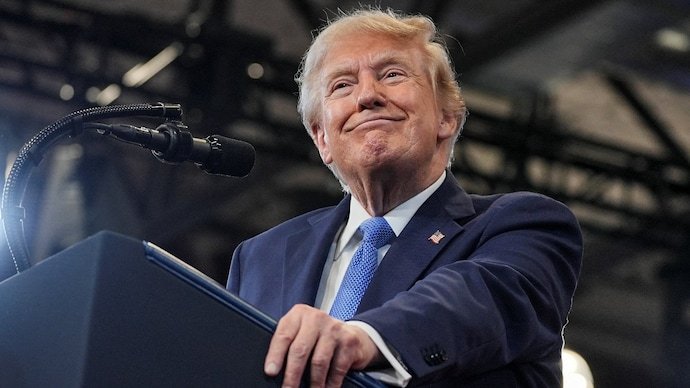
US President Donald Trump has threatened further strikes against Iran while describing the six-month-old conflict as a “relatively little war” for the United States, even as the latest exchange of attacks has revived fears of a wider escalation across the Middle East.
Trump’s comments came after US forces struck Iranian rocket launchers on Larak Island near the Strait of Hormuz, followed by Iranian missile attacks against US military positions in the region. The exchange marked the first direct US-Iran military escalation in about a month and pushed the strategic waterway back to the centre of the conflict.
Asked in the Oval Office about concerns that a prolonged operation could reduce the US military’s ability to respond to threats elsewhere, Trump rejected the suggestion that the conflict was placing a serious burden on Washington.
“This is a relatively little war for us. This is not a big war,” Trump said.
He nevertheless warned that the United States could launch additional attacks, describing Iran as a failed nation and saying Washington would decide what happens next.
The contradictory messages capture the difficult position of the conflict after six months. Trump is attempting to portray the war as manageable for the United States while simultaneously maintaining the threat of greater military action against Tehran.
Why the Iran war has reached the six-month mark
The conflict began on February 28, when the United States and Israel launched a major campaign against Iran. The attacks targeted Iranian military and nuclear-related infrastructure and resulted in the killing of Supreme Leader Ayatollah Ali Khamenei and other senior figures.
Iran responded with attacks against US military assets and infrastructure in the region, while the conflict expanded beyond the immediate battlefield.
Six months later, the Iranian government remains in place and the conflict has evolved from an initial large-scale military campaign into a combination of military pressure, economic sanctions, maritime restrictions and intermittent direct attacks.
That evolution is important because the war has not followed the short timeline Trump initially envisaged. The conflict has instead developed into a prolonged confrontation with no clear settlement in sight.
Recent assessments have described the situation as a costly stalemate. Iran has suffered major military and economic damage, but its government has not collapsed and Tehran continues to retain the ability to threaten regional security and disrupt shipping.
Trump says the conflict is manageable for the US
Trump’s description of the war as a relatively small conflict appears intended to counter concerns about the wider military consequences of keeping American forces engaged in the region.
A prolonged conflict can consume ammunition, air-defence interceptors, intelligence resources, aircraft, naval assets and personnel even when the number of American troops directly involved is limited compared with a large ground war.
The question is therefore not simply how many US troops are deployed. It is also whether the resources required in the Middle East could restrict Washington’s ability to respond to another crisis elsewhere.
Trump rejected that concern and argued that the United States was not being significantly strained by the conflict.
But the latest escalation demonstrates why the issue remains complicated. American forces continue to protect military installations and shipping routes, while Iran retains the ability to launch missiles and threaten strategic infrastructure.
Trump threatens to “smack” Iran again
While playing down the scale of the war, Trump used notably aggressive language when discussing the possibility of another attack.
He described Iran as a “failed nation” and warned that the United States could “smack” the country again.
The comments came after Iran retaliated for the US strike on Larak Island, raising the possibility of another cycle of attack and counterattack.
Trump has also refused to completely remove the nuclear option from consideration. Asked whether he had ruled out using nuclear weapons against Iran, he said there was no reason to do so while arguing that Iran had already been militarily defeated.
That position adds another layer of uncertainty to an already volatile confrontation. Even if the immediate objective is to avoid a full-scale war, leaving open the possibility of further military escalation can make miscalculation more dangerous.
What happened on Larak Island?
The latest escalation began when US forces attacked two Iranian rocket launchers on Larak Island on August 30.
US Central Command said the launchers were being prepared by forces belonging to Iran’s Islamic Revolutionary Guard Corps to fire rockets carrying sea mines into the Strait of Hormuz.
Washington described the operation as limited and precise, arguing that the Iranian activity represented an imminent threat to shipping in one of the world’s most important energy corridors.
Iran reported casualties from the attack and condemned the US operation.
The location of the strike was strategically important. Larak Island lies close to the Strait of Hormuz, a narrow waterway through which a major share of global Oil Trade normally passes.
Any attempt to place mines in the waterway could create serious risks for commercial vessels and require extensive mine-clearing operations.
For Washington, preventing such an operation is therefore closely linked to maintaining freedom of navigation. For Tehran, however, American military operations near Iranian territory represent another direct challenge to its ability to control events around its coastline.
Iran retaliates with missile attacks
Iran responded to the Larak strike with missile attacks aimed at US military positions in the region.
Tehran said it targeted American forces at two bases in Jordan and also targeted US personnel at an air base in the United Arab Emirates.
Iran’s Revolutionary Guards claimed that its ballistic missile attack caused heavy damage at two US bases in Jordan.
The United States and its regional partners gave a different account of the effectiveness of the attack. Trump said American air defences intercepted missiles capable of causing damage, apart from one that was assessed as posing no threat.
Jordan’s military separately said it had intercepted eight missiles, without identifying their origin.
The conflicting accounts illustrate one of the recurring features of the conflict: both sides have strong incentives to present their military operations as successful while minimising the effectiveness of the opposing side.
Why the Strait of Hormuz matters so much
The Strait of Hormuz has become one of the most important pressure points in the Iran war.
The waterway connects the Persian Gulf with the Gulf of Oman and the wider Arabian Sea. Its importance to international energy markets means that any sustained disruption can affect far more than the countries directly involved in the conflict.
Iran has previously used its geographic position around the strait as a source of strategic leverage. The United States, meanwhile, has sought to maintain navigation and protect commercial shipping.
The latest Larak Island operation shows how quickly a dispute over maritime security can turn into direct military confrontation.
A mine-laying operation could force ships to slow or avoid the waterway and could require dangerous clearance operations. Even the perception that the route is unsafe can raise shipping costs, insurance premiums and energy prices.
The economic war has become almost as important as the military one
The conflict is no longer defined solely by missiles and airstrikes.
Washington has increasingly relied on sanctions and economic pressure to weaken Iran and force its leadership to accept US demands.
The Trump administration has expanded sanctions against Iranian entities and businesses linked to the country’s economy. It has also used secondary sanctions to pressure companies and countries that continue doing business with Iran, particularly in the oil sector.
This strategy is intended to reduce Tehran’s access to foreign currency and make it more difficult for Iran to sustain its economy during the conflict.
For Iran, however, economic pressure creates a different set of risks. A weakened economy can increase domestic hardship, but it can also strengthen arguments within the leadership for resisting external pressure rather than conceding to it.
Six months of war have changed the original US strategy
The course of the conflict shows how significantly Washington’s strategy has evolved.
The war began with a major military campaign intended to damage Iran’s military capabilities and nuclear infrastructure. Later, diplomatic efforts and temporary arrangements created hopes that the fighting could move toward negotiations.
Those efforts did not produce a durable end to the confrontation.
The United States has increasingly turned toward economic pressure and maritime restrictions, while Iran has continued to demonstrate that it can impose costs on American forces and regional partners.
The result is a conflict that is less straightforward than the opening weeks suggested.
Iran has suffered severe damage, but military pressure has not produced a decisive political settlement. At the same time, Washington has not been willing to simply withdraw and declare the confrontation finished.
Iran says it does not want another full-scale war
Iranian President Masoud Pezeshkian has sought to draw a distinction between Tehran’s stated preference and its willingness to retaliate.
Pezeshkian said Iran does not seek war but would respond with strength and decisiveness to aggression.
He also warned that instability in the region would not serve the interests of any country and called on regional governments to cooperate on security and development.
The message reflects Tehran’s broader effort to present itself as willing to avoid an uncontrolled escalation while maintaining a credible threat of retaliation.
That balance is difficult to maintain. If Iran responds too weakly, it risks encouraging further US attacks. If it responds too strongly, Washington could use the retaliation to justify a broader military campaign.
Why another escalation could become dangerous
The immediate exchange of attacks does not necessarily mean that the United States and Iran are returning to the level of fighting seen earlier in the war.
Both sides have reasons to avoid an uncontrolled escalation.
For the United States, a larger war could require more military resources, increase risks to American personnel and potentially disrupt other strategic priorities. For Iran, another major US campaign could deepen the destruction of its military and economic infrastructure.
But limited conflicts can still escalate through miscalculation.
A missile strike that causes unexpected casualties, an attack on a commercial vessel, an incident involving American troops or a serious disruption in the Strait of Hormuz could quickly create pressure for retaliation.
The latest Larak Island episode demonstrates how such a cycle can begin: one side identifies an imminent threat, conducts a limited strike, and the other side responds in order to restore deterrence.
The global economic consequences remain significant
The Iran conflict has also become a global economic issue because of its impact on energy supplies and shipping.
The Strait of Hormuz is particularly sensitive because oil and other energy products moving through the region serve markets far beyond the Middle East.
When shipping through the waterway is disrupted or perceived as unsafe, the consequences can spread through fuel prices, transportation costs and Inflation.
Higher energy prices can also complicate efforts by governments and central banks to manage inflation.
For countries that depend heavily on imported crude oil, prolonged instability around the Persian Gulf creates an additional economic vulnerability.
The conflict therefore affects consumers and businesses far beyond the immediate military theatre.
What could happen next?
The next phase of the conflict will depend heavily on whether the latest exchange remains contained or develops into another sustained cycle of attacks.
If Washington limits its response and Tehran avoids another major strike, the confrontation could return to the combination of sanctions, economic pressure and intermittent military incidents that has characterised recent months.
If the United States launches a larger attack, however, Iran could respond against American bases, regional partners or maritime interests, potentially widening the conflict.
The Strait of Hormuz will remain one of the clearest indicators of the direction the crisis is taking. Any renewed attempt to mine or close shipping routes would raise the stakes sharply.
Diplomacy also remains a potential route out, although the current political environment makes a quick breakthrough difficult.
A “little war” with consequences far beyond the battlefield
Trump’s description of the Iran conflict as a relatively little war may reflect the scale of the American military commitment compared with previous major US wars. But six months of fighting have demonstrated that a conflict does not need to resemble a large ground invasion to create substantial strategic and economic consequences.
Iran has endured severe military and economic pressure while retaining the ability to threaten American interests and disrupt regional stability. The United States has demonstrated overwhelming military capabilities but has yet to secure a clear political end to the confrontation.
The latest exchange around Larak Island is a reminder that the conflict remains active even after periods of relative calm.
For now, Washington and Tehran both have incentives to prevent the confrontation from becoming an uncontrolled regional war. Yet both also want to preserve their ability to respond forcefully to attacks.
That makes the situation inherently unstable.
Trump’s latest threat to strike Iran again, combined with Tehran’s warning that it will respond to aggression, leaves the region facing the same central question it has confronted for months: whether military pressure can eventually produce a settlement, or whether another round of retaliation will push the six-month-old conflict into an even more dangerous phase.
For breaking news and live news updates, like us on Facebook or follow us on Twitter and Instagram. Read more on Latest World on thefoxdaily.com.



COMMENTS 0