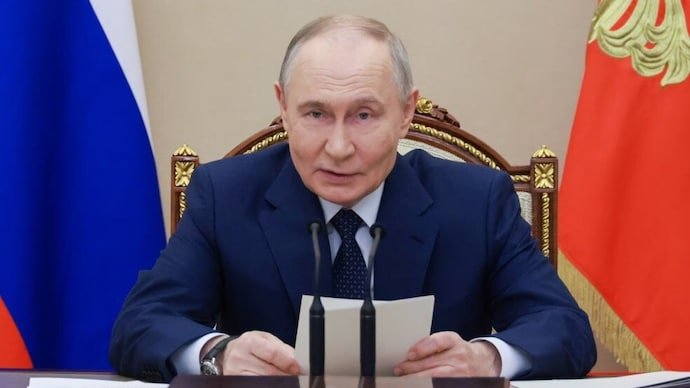
Nearly four years into the Russia-Ukraine War, the battlefield is no longer confined to trenches and frontlines. Increasingly, the conflict is being fought hundreds of kilometres behind enemy lines, with strategic infrastructure becoming a primary target. Russian President Vladimir Putin has now publicly admitted that repeated Ukrainian strikes on energy facilities have disrupted fuel supplies, highlighting the effectiveness of Ukraine’s expanding long-range drone operations.
Although Putin insisted that the shortages are “not critical,” his remarks represent a significant acknowledgment that attacks on refineries, fuel depots and logistics hubs are beginning to affect Russia’s domestic supply chain. The comments come as both countries intensify efforts to weaken each other’s military capabilities by targeting infrastructure that supports the war effort rather than focusing solely on conventional battlefield engagements.
The latest developments also underline how modern warfare increasingly depends on disrupting logistics, energy networks and industrial capacity rather than simply capturing territory.
Putin Acknowledges Fuel Supply Problems
In an interview published by the Kremlin, Vladimir Putin admitted that Ukrainian attacks on Russian energy infrastructure have created operational difficulties.
According to the Russian president, repeated strikes on critical infrastructure have led to localized fuel shortages, though he maintained that authorities have the situation under control.
The acknowledgment is noteworthy because Russian officials have generally sought to minimize the domestic impact of Ukrainian attacks throughout the conflict.
Putin emphasized that strengthening air defence systems and maintaining stable fuel supplies have become immediate priorities, particularly in strategically important regions.
What Putin Actually Said
Putin stated that attacks against Russia’s critical infrastructure, especially energy facilities, have created problems that authorities are actively addressing.
While recognizing a “certain shortage” of fuel, he stressed that the situation has not reached a level that threatens national stability.
He also assured that Russia would continue strengthening border security and protecting strategic assets from future attacks.
Crimea Faces Additional Pressure
One of the regions receiving particular attention is Crimea, which Russia annexed in 2014 but which remains internationally recognized by most countries as part of Ukraine.
Authorities in Crimea recently declared an emergency after disruptions to fuel supplies and electricity were reported following attacks on logistics facilities and energy infrastructure.
Because Crimea serves as a major logistical hub for Russian military operations in southern Ukraine, maintaining uninterrupted fuel deliveries has become increasingly important.
Ukraine Expands Its Long-Range Strike Campaign
Over the past year, Ukraine has significantly expanded its ability to strike targets far inside Russian territory using domestically developed long-range drones.
Rather than focusing exclusively on military bases, Ukrainian forces have increasingly targeted:
- Oil refineries.
- Fuel storage facilities.
- Logistics centres.
- Energy infrastructure.
- Industrial production sites.
- Transportation networks supporting military operations.
This strategy aims to increase the economic and logistical costs of the war while reducing Russia’s capacity to sustain prolonged military operations.
Why Oil Refineries Have Become Strategic Targets
Modern armed forces rely heavily on uninterrupted fuel supplies.
Military vehicles, aircraft, naval vessels and supply convoys all depend on refined petroleum products. Even localized disruptions can complicate logistics, increase transportation costs and slow operational planning.
By targeting refineries rather than crude oil production itself, Ukraine seeks to disrupt the final stages of fuel availability without necessarily affecting Global energy production.
Recent Ukrainian Strikes Highlight Growing Reach
Recent attacks have demonstrated Ukraine’s ability to strike increasingly distant targets inside Russian territory.
According to Ukrainian officials, recent operations included strikes on:
- The Slavyansk oil refinery in Russia’s Krasnodar region.
- An oil refinery in the Yaroslavl region.
- Additional industrial facilities supporting Russia’s energy sector.
These attacks occurred hundreds of kilometres from Ukrainian-controlled territory, illustrating improvements in Ukraine’s long-range strike capabilities.
Timeline of Recent Escalation
| Period | Major Development |
|---|---|
| 2022 | Russia launches its full-scale invasion of Ukraine. |
| 2024–2026 | Ukraine steadily expands long-range drone capabilities. |
| Recent weeks | Multiple oil refineries inside Russia come under attack. |
| Latest development | Putin publicly acknowledges fuel shortages caused by infrastructure strikes. |
Russia’s Response
Russian authorities have responded by increasing investments in air defence systems around strategic industrial sites.
Officials have also indicated that protecting fuel infrastructure has become a higher operational priority as Ukrainian drones continue reaching deeper into Russian territory.
Putin has vowed that Moscow will continue responding to attacks while maintaining what he described as the country’s territorial security.
How Drone Warfare Is Changing Modern Conflicts
The Russia-Ukraine conflict has become one of the world’s most significant demonstrations of how relatively inexpensive drones can influence strategic military planning.
Instead of relying solely on traditional missile strikes, both countries increasingly use unmanned aerial systems to:
- Damage energy infrastructure.
- Disrupt logistics.
- Gather intelligence.
- Reduce operational mobility.
- Create economic pressure.
This evolution has prompted militaries around the world to reassess the role of drone technology in future conflicts.
Energy Infrastructure Has Become a Battlefield
Energy facilities have emerged as some of the most strategically valuable targets in the conflict.
Throughout the war, both Russia and Ukraine have accused each other of attacking power stations, fuel depots and electrical infrastructure.
These attacks often have consequences beyond military operations, affecting civilian electricity supplies, transportation systems and economic activity.
Putin Claims Ukraine Proposed Limiting the Conflict
In his latest remarks, Putin also claimed that Ukraine had proposed restricting long-range strikes and concentrating military operations within territories claimed by Russia.
According to Putin, he rejected the proposal because it would have allowed Ukrainian forces to reposition troops and strengthen defensive positions elsewhere.
No independent confirmation of these claims has been publicly presented.
Strategic Importance of Fuel During Wartime
Fuel remains one of the most critical resources in any prolonged military conflict.
| Military Requirement | Dependence on Fuel |
|---|---|
| Ground vehicles | High |
| Aircraft operations | Very High |
| Naval operations | Very High |
| Logistics convoys | High |
| Emergency services | High |
Even relatively small disruptions in fuel distribution can complicate military logistics, particularly during sustained operations across large geographic areas.
Economic Consequences Beyond the Battlefield
Attacks on refineries and energy infrastructure can have broader economic implications beyond military operations.
Potential effects include:
- Higher transportation costs.
- Temporary fuel shortages.
- Industrial production disruptions.
- Increased repair and security expenses.
- Greater pressure on logistics networks.
Governments often respond by strengthening infrastructure protection and diversifying supply chains to reduce vulnerability.
Why Putin’s Admission Matters
Public acknowledgments of wartime logistical challenges are relatively uncommon from national leaders engaged in active conflict.
Putin’s admission does not necessarily indicate a major fuel crisis, but it does demonstrate that Ukraine’s strategy of targeting infrastructure is having measurable effects significant enough to warrant public discussion.
The statement also illustrates how the conflict has expanded beyond conventional frontline combat into a sustained contest over industrial resilience and economic endurance.
Future Outlook
As the conflict continues, energy infrastructure is likely to remain a central focus for both Russia and Ukraine. Advances in drone technology, precision targeting and electronic warfare are expected to make long-range strikes an increasingly important component of military strategy.
Both sides are likely to invest further in air defence systems, infrastructure hardening and logistics resilience while continuing efforts to disrupt each other’s operational capabilities. At the same time, prolonged attacks on critical infrastructure could increase economic costs and complicate diplomatic efforts aimed at reducing hostilities.
Conclusion
Vladimir Putin’s acknowledgment of fuel shortages caused by Ukrainian strikes marks a significant moment in the ongoing Russia-Ukraine war. While Russian authorities insist the shortages remain manageable, the admission highlights the growing effectiveness of Ukraine’s campaign against energy infrastructure and logistics networks.
The conflict increasingly demonstrates that modern warfare extends far beyond traditional battlefields. Control over fuel supplies, industrial production and critical infrastructure has become as strategically important as territorial gains. As both countries continue adapting their military strategies, the struggle over Energy Security is likely to remain a defining feature of the war’s next phase.
For breaking news and live news updates, like us on Facebook or follow us on Twitter and Instagram. Read more on Latest World on thefoxdaily.com.






COMMENTS 0