Russia‘s parliamentary election has been extended to the Ukrainian regions that Moscow claimed to annex during its full-scale war against Ukraine, bringing residents of Donetsk, Luhansk, Kherson and Zaporizhzhia into the voting process for the first time since Russia declared the territories part of the country.
The move has triggered strong criticism from Ukraine, international organisations and human rights groups, which say the voting is illegal and argue that residents in Russian-held areas are being pressured to participate. Russia, however, is presenting the election as an important exercise of political rights in what its authorities call the country’s “new regions”.
Voting for Russia’s State Duma, the lower house of Parliament, began across the country on Friday and is scheduled to continue until Sunday. In the territories controlled by Russian forces, as well as some Russian border areas, voting had already been taking place since the end of August.
The election is taking place against the backdrop of an ongoing war, contested territorial claims and competing assertions over the political status of people living in areas under Russian military control.
Russia Says Millions of Voters Are in the Annexed Territories
Russian authorities say more than 3.5 million voters live across Donetsk, Luhansk, Kherson and Zaporizhzhia, the four Ukrainian regions that Moscow declared annexed in September 2022.
Russia announced the annexation after holding what it described as referendums in areas under its control. Moscow’s territorial claims were made despite Russian forces not controlling all of the four regions, and the annexations have not received international recognition.
The inclusion of these territories in the State Duma election extends Russia’s political and administrative claims over areas that Ukraine continues to regard as its own territory.
Voting is also taking place in Crimea, the Black Sea peninsula that Russia annexed in 2014. Crimea has remained under Russian control since that earlier annexation, which Ukraine and many other countries also do not recognise.
Putin Calls Voting in the Regions Important
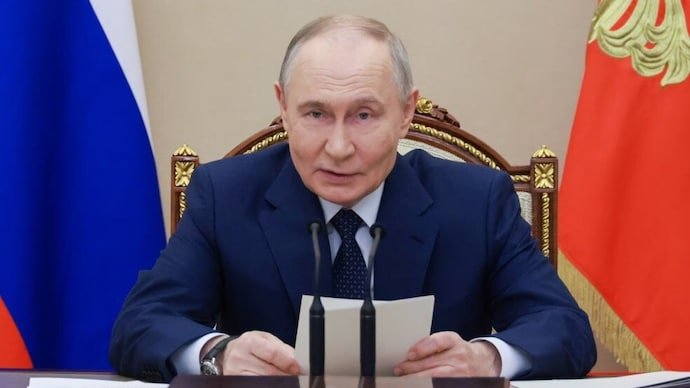
Russian President Vladimir Putin has highlighted the participation of residents in the regions Moscow says have joined Russia.
In a speech on Wednesday, Putin stressed the importance of voting there for the first time since what he described as their reunification with Russia. He also noted that Russian soldiers involved in the war would participate in the election.
Putin has framed participation as an expression of unity and support for Russian forces. He said voters’ choices would demonstrate that millions of people stood behind the country’s fighters and were connected by shared values and historical memory.
The Kremlin’s position contrasts sharply with the Ukrainian and European view of the election. While Moscow presents the voting as part of Russia’s normal political process, Kyiv and European officials say Russia cannot conduct legitimate elections in territories it occupies and claims to have annexed.
Ukraine Calls the Voting Illegal
Ukrainian authorities have rejected the organisation of Russian elections in the occupied territories and urged foreign governments and international organisations not to recognise either the voting process or its results.
Kyiv has also warned Ukrainians living in Russian-held areas that participation in organising the vote could result in criminal liability under Ukrainian law.
The Ukrainian position is based on its continued claim to sovereignty over Donetsk, Luhansk, Kherson, Zaporizhzhia and Crimea. From Kyiv’s perspective, Russia’s election activity in those territories represents an attempt to impose Russian political institutions on Ukrainian land under military occupation.
The issue therefore extends beyond the question of individual ballots. It is also connected to the wider dispute over Russia’s territorial claims and whether political processes organised by an occupying power can have any legal or democratic standing in territory internationally regarded as belonging to another country.
EU Rejects Russian Elections in Occupied Areas
The European Union has also rejected the voting in the Russian-held Ukrainian regions.
European Commission spokesperson Christian Wigand described the organisation of Russian elections there as a violation of international law and said the EU would not recognise either the holding of the elections or their results.
The EU’s position places the territorial issue at the centre of its response. While Russia considers the four regions part of its political system, European authorities continue to treat them as Ukrainian territories under Russian occupation.
This means that any parliamentary representation or electoral results derived from those areas face a fundamentally different interpretation in Russia and in Ukraine and EU member states.
Human Rights Groups Raise Coercion Allegations
Ukrainian human rights organisations have raised concerns about the conditions under which voting is taking place in Russian-controlled areas.
A coalition of nine Ukrainian human rights groups called on residents of the occupied territories to avoid participating in the election, arguing that their safety should take priority.
The groups said the organisation of Russian elections in the territories was intended to legitimise Russia’s occupation and its attempted annexation of Ukrainian land. Their statement urged residents to protect their lives and Health rather than participate in the voting process.
Human rights advocates have also alleged that Russian-appointed local authorities are using pressure to encourage participation. These claims are particularly significant because residents in occupied areas may have limited ability to refuse demands from authorities or security personnel.
Claims of Door-to-Door Voting and Pressure
Violeta Artemchuk, coordinator of the Donbas SOS human rights group and one of the signatories to the human rights statement, alleged that local election commission members were visiting homes accompanied by Russian troops and security personnel.
According to Artemchuk, the presence of armed personnel and officials was being used to pressure residents to vote. She also alleged that public-sector employees were being threatened with dismissal if they refused to participate.
Artemchuk further claimed that access to pensions and other social assistance could be linked to participation in the voting process.
She gave the example of pensioners and people with disabilities who depend on social assistance. According to her account, residents who did not participate could potentially be classified as disloyal to the authorities and face the loss of benefits or humanitarian assistance.
These claims have been made by Ukrainian human rights organisations and representatives of civil society groups. The conditions in Russian-controlled areas can be difficult to independently assess because of the ongoing war, restrictions on access and the competing accounts provided by Russian and Ukrainian authorities.
Armed Presence at a Polling Station
The circumstances surrounding voting have also drawn attention because of reports and footage from polling stations in Russian-held territory.
At one polling station in the Russian-controlled part of Donetsk, voters were seen depositing ballots while an armed Russian soldier stood nearby and watched.
The presence of armed personnel at a voting location has contributed to concerns raised by Ukrainian officials and rights groups about whether residents can freely participate or refuse to participate.
In a normal electoral environment, voters are expected to be able to make political choices without intimidation or coercion. The allegations surrounding the occupied territories have therefore become an important part of the international criticism of the election.
Criticism From Ukrainian Political Analysts
Volodymyr Fesenko, a political analyst at the Kyiv-based Penta Center, criticised the election process in the Russian-held territories and questioned its democratic character.
Fesenko argued that conducting elections amid continuing fighting undermines the credibility of the process. He also said that procedures organised by Russian occupation authorities could not be considered democratic Ukrainian elections.
His assessment reflects a broader Ukrainian argument that elections cannot provide legitimate political representation when the territory is under foreign military control and residents may face pressure from occupying authorities.
Russia rejects the characterisation of its administration in the regions as an occupation and instead describes the territories as part of the Russian Federation following the 2022 annexation declarations.
Why the Election Matters Beyond Russia’s Parliament
The inclusion of the four Ukrainian regions has implications beyond the composition of Russia’s State Duma.
By allowing residents of the territories to vote in a Russian national election, Moscow is incorporating the areas more deeply into Russia’s political system. Electoral participation can be used by authorities as evidence that residents are being integrated into the country’s institutions.
Ukraine and its international partners, however, argue that such a process cannot change the legal status of the territories. Their rejection of the election results means the vote is unlikely to resolve the underlying territorial dispute.
The election consequently becomes another point of disagreement between Moscow and Kyiv over the status and future of the occupied regions.
Voting Takes Place During an Ongoing War
The election is also unusual because Russia is conducting its first State Duma vote since the full-scale invasion of Ukraine began in 2022 while the war remains ongoing.
The conflict has affected large parts of the political and security environment in which the election is taking place. The annexed regions are among the areas most directly affected by military operations, while some Russian border regions have also experienced attacks and security restrictions.
Putin has linked the election to national unity and support for Russian soldiers. Ukrainian officials and rights groups, meanwhile, have focused on the circumstances faced by residents under Russian control.
These competing narratives demonstrate how the election has become intertwined with the broader political and military conflict.
What Russia’s Inclusion of the Regions Means
Russia’s decision to include Donetsk, Luhansk, Kherson and Zaporizhzhia in the State Duma election represents another stage in Moscow’s effort to incorporate the territories it claims into its political system.
For Russian authorities, the participation of millions of residents is presented as evidence that the regions are part of the Russian Federation. For Ukraine, the EU and human rights organisations, the same process is viewed as an attempt to normalise or legitimise an occupation and annexation that they reject.
The disagreement is unlikely to be settled by the election itself. The international legal status of the territories remains contested, while Russia’s military control does not extend uniformly across all of the regions it claims to have annexed.
The allegations of coercion add another layer to the dispute. Ukrainian rights groups say residents face pressure from Russian-appointed authorities and security personnel, while Russia presents the voting as an ordinary exercise of political participation.
Election Results Face International Rejection
Whatever results Russian authorities announce from the occupied Ukrainian territories, Ukraine and the European Union have already made clear that they will not recognise the voting there as legitimate.
That position means the election is unlikely to alter the international dispute over sovereignty, even if Moscow uses the results domestically to reinforce its claim over the territories.
The voting therefore carries significance primarily as a reflection of Russia’s approach to integrating the occupied regions into its state institutions and of the continuing divide between Moscow’s claims and the position held by Ukraine and much of the international community.
As the State Duma election continues through Sunday, the participation of the annexed Ukrainian territories is likely to remain one of its most contested features. The competing claims over legality, coercion, political representation and territorial sovereignty ensure that the vote is being viewed not simply as a parliamentary election, but as another part of the wider conflict over Ukraine’s territory and Russia’s future relationship with the regions it claims to have absorbed.
For breaking news and live news updates, like us on Facebook or follow us on Twitter and Instagram. Read more on Latest World on thefoxdaily.com.



COMMENTS 0