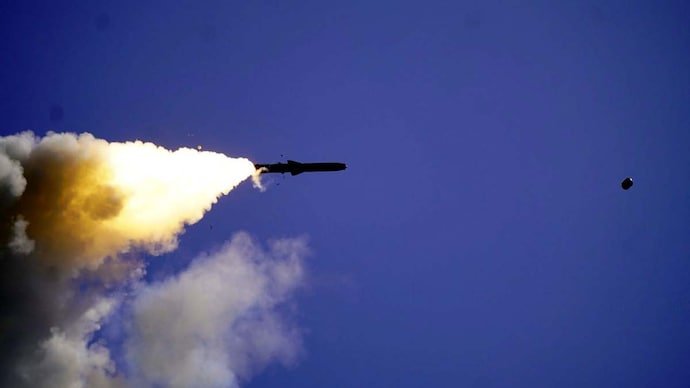
The future of warfare is increasingly being shaped by unmanned systems. From the battlefields of Eastern Europe to the Middle East and the Indo-Pacific, military planners have witnessed how drones are changing the nature of combat, intelligence gathering and precision targeting.
Recognising this shift, India is accelerating the development of indigenous unmanned combat capabilities through the Defence Research and Development Organisation’s (DRDO) Archer-NG programme. What began as a Medium-Altitude Long-Endurance (MALE) surveillance drone is now evolving into a sophisticated combat platform designed to perform intelligence, surveillance, reconnaissance and precision strike missions within a single operational framework.
The Archer-NG represents more than just another military drone. It reflects India’s broader ambition to reduce dependence on foreign defence systems, strengthen indigenous aerospace manufacturing and prepare its armed forces for the realities of modern network-centric warfare.
As the platform progresses through advanced development stages, defence experts increasingly view it as one of India’s most strategically important unmanned systems.
What Is Archer-NG?
Archer-NG, short for Archer Next Generation, is an indigenous unmanned aerial vehicle being developed by DRDO to provide long-endurance surveillance and combat capabilities for India’s armed forces.
The platform belongs to the MALE drone category, a class of aircraft designed to operate at medium altitudes for extended periods while carrying sophisticated sensors, communication equipment and increasingly, weapon systems.
MALE drones have become a critical component of military operations worldwide because they can remain airborne for hours, monitor vast geographic areas and conduct missions without placing pilots at risk.
Initially envisioned primarily as an intelligence-gathering platform, Archer-NG is now being transformed into a multi-role asset capable of detecting, tracking and engaging threats across multiple domains.
Why Modern Militaries Are Investing Heavily in Combat Drones
The growing importance of platforms like Archer-NG can be understood by examining recent conflicts around the world.
Modern battlefields increasingly demand persistent surveillance, rapid target identification and precision engagement capabilities.
Traditional aircraft can perform many of these tasks, but they often come with higher operational costs, greater logistical requirements and increased risk to human pilots.
Combat drones offer several advantages:
- Long-duration surveillance over contested areas.
- Lower operational costs compared to fighter aircraft.
- Reduced risk to military personnel.
- Rapid deployment in high-risk environments.
- Real-time intelligence sharing across multiple military units.
- Precision engagement with minimal collateral damage.
As a result, unmanned systems are no longer viewed as supplementary assets. They are increasingly becoming central components of military doctrine.
The Evolution from ISR Platform to Combat UAV
The most significant development in the Archer-NG programme is its transition from a dedicated surveillance platform to a fully capable combat drone.
In its original configuration, the UAV was focused on Intelligence, Surveillance and Reconnaissance (ISR) missions.
Its primary role involved gathering battlefield information, monitoring troop movements, identifying potential threats and providing commanders with real-time situational awareness.
While these functions remain essential, modern military requirements increasingly favour platforms that can not only detect targets but also neutralise them immediately.
This shift is driving the transformation of Archer-NG into what defence analysts often call a “sensor-to-shooter” platform.
Instead of relaying information to another aircraft or ground-based missile unit, the drone itself will be capable of conducting precision strikes once a target is identified.
Advanced Surveillance Capabilities at the Core
Despite its growing combat role, surveillance remains the foundation of Archer-NG’s operational design.
The UAV is being equipped with a range of advanced sensors intended to provide comprehensive battlefield awareness.
These include:
- High-resolution electro-optical imaging systems.
- Infrared sensors for night operations.
- Synthetic Aperture Radar (SAR).
- Secure high-bandwidth communication links.
- Real-time data transmission systems.
Together, these technologies allow the drone to detect and monitor targets in challenging weather conditions, during darkness and across difficult terrain.
The ability to continuously collect and transmit intelligence is increasingly viewed as a decisive advantage in modern warfare.
Military commanders depend on accurate real-time information to make rapid decisions, and platforms like Archer-NG are designed to deliver that capability.
Performance Specifications and Operational Reach
One of the defining characteristics of MALE drones is endurance, and Archer-NG is being designed with long-duration missions in mind.
| Capability | Expected Performance |
|---|---|
| Platform Type | Medium-Altitude Long-Endurance (MALE) UAV |
| Mission Profile | ISR, Precision Strike, Counter-UAV Operations |
| Endurance | More than 18 hours |
| Service Ceiling | Above 30,000 feet |
| Sensor Suite | EO/IR Sensors, SAR, Data Links |
| Future Technologies | AI Target Recognition, Swarming Capabilities |
These performance characteristics enable the drone to monitor vast operational zones for extended periods without requiring frequent refuelling or replacement.
This capability is particularly valuable for border surveillance, maritime security and long-range reconnaissance missions.
Weaponisation: The Next Major Leap
The transition from surveillance drone to combat platform depends largely on weapon integration.
DRDO is currently working to equip Archer-NG with precision-guided weapons capable of engaging multiple categories of targets.
Potential weapon systems include:
- Precision-guided munitions.
- Anti-tank guided missiles.
- Air-to-air weapons.
- Counter-drone interception systems.
This weaponisation significantly expands the drone’s mission profile.
Rather than merely observing enemy movements, Archer-NG could eventually conduct precision strikes against hostile vehicles, fortified positions, radar systems and even airborne threats.
The integration of precision-guided munitions also aligns with global military trends favouring accuracy over mass firepower.
Artificial Intelligence and the Future Battlefield
Perhaps the most transformative aspect of the programme is the planned incorporation of Artificial Intelligence.
Modern militaries increasingly view AI as a force multiplier capable of accelerating decision-making and improving operational efficiency.
For Archer-NG, AI-enabled systems are expected to assist with:
- Automatic target recognition.
- Threat prioritisation.
- Mission planning.
- Object tracking.
- Battlefield data analysis.
Artificial intelligence could dramatically reduce the time between target detection and engagement, allowing commanders to respond faster in high-intensity combat environments.
As warfare becomes increasingly data-driven, platforms capable of processing information autonomously will likely gain significant operational advantages.
The Strategic Importance of Swarm Technology
Another future capability under development is swarming technology.
Drone swarms involve multiple unmanned systems operating collaboratively to accomplish shared objectives.
Rather than functioning independently, drones exchange information, coordinate movements and adapt to changing battlefield conditions.
Swarming is widely regarded as one of the most disruptive military technologies currently emerging worldwide.
Large numbers of coordinated drones can overwhelm traditional air defence systems, perform distributed reconnaissance and conduct simultaneous attacks on multiple targets.
If successfully integrated, Archer-NG could become part of a broader ecosystem of interconnected unmanned systems.
Manned-Unmanned Teaming: The Future of Air Combat
One of the most significant trends in Military Aviation is the concept of manned-unmanned teaming.
Under this model, drones operate alongside fighter aircraft, sharing intelligence, identifying threats and executing missions collaboratively.
Instead of replacing human pilots, advanced drones act as force multipliers.
A fighter aircraft supported by multiple unmanned systems gains greater situational awareness, expanded operational reach and increased survivability.
DRDO’s vision for Archer-NG appears closely aligned with this evolving doctrine.
The ability to integrate seamlessly with manned aircraft could significantly enhance India’s future air combat capabilities.
How Archer-NG Fits into India’s Defence Modernisation Strategy
The development of Archer-NG comes at a time when India is prioritising defence self-reliance under its broader indigenous manufacturing initiatives.
For decades, India has relied heavily on imported military platforms and technologies.
However, changing geopolitical realities and Supply Chain uncertainties have strengthened the case for domestic defence production.
Indigenous systems provide several advantages:
- Greater strategic autonomy.
- Reduced dependence on foreign suppliers.
- Lower lifecycle costs.
- Enhanced technology development capabilities.
- Growth of the domestic aerospace ecosystem.
Archer-NG represents a significant milestone within this long-term strategy.
Global Comparison: Why Indigenous Combat Drones Matter
The world’s leading military powers are investing heavily in advanced unmanned systems.
The United States, china, Türkiye and Israel have demonstrated how combat drones can influence battlefield outcomes while reducing risks to personnel.
Countries possessing indigenous drone ecosystems gain strategic advantages because they can adapt platforms to national requirements without external restrictions.
For India, developing Archer-NG domestically ensures greater flexibility, operational security and technological control.
It also positions the country to compete in a rapidly expanding global defence technology market.
Conclusion
The Archer-NG programme represents far more than the development of another military drone. It reflects India’s transition toward a future where artificial intelligence, precision weapons, network-centric warfare and autonomous systems play a central role in national defence.
By evolving from a surveillance-focused UAV into a sophisticated combat platform, Archer-NG embodies the changing nature of warfare itself. Its combination of long-endurance intelligence gathering, precision strike capability, AI-enabled operations and future swarm integration could make it one of the most significant indigenous defence projects of the coming decade.
As global militaries increasingly embrace unmanned systems, Archer-NG positions India not merely as an observer of this transformation but as an active participant shaping the future battlefield. The success of the programme could become a defining chapter in India’s journey toward defence self-reliance and next-generation military capability.
For breaking news and live news updates, like us on Facebook or follow us on Twitter and Instagram. Read more on Latest India on thefoxdaily.com.



COMMENTS 0