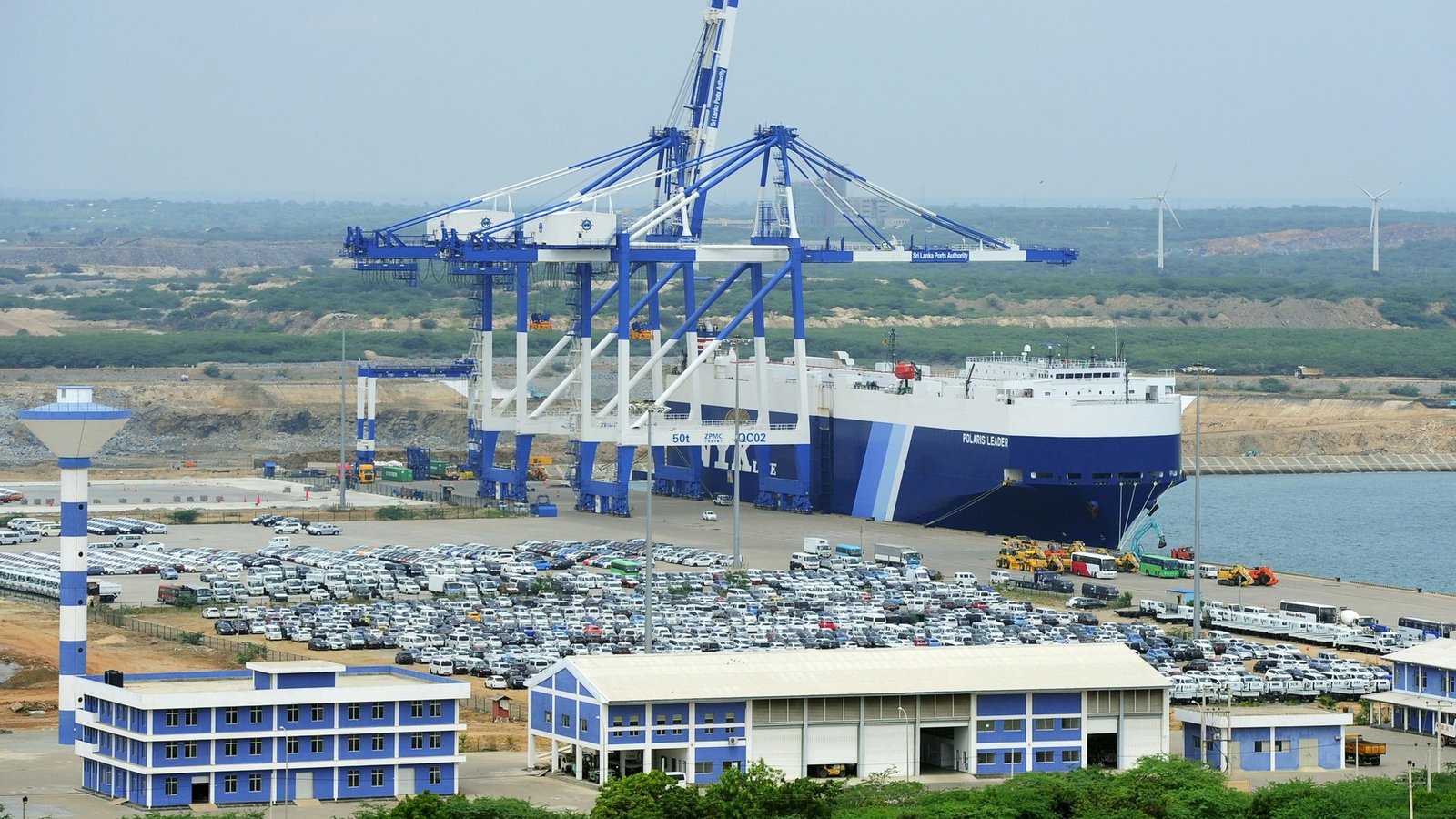
Hambantota international Port Group (HIPG), the operator of Sri Lanka‘s Hambantota Port, has issued a detailed clarification following reports that a large number of imported vehicles remain parked at the facility. The port operator stressed that its operations continue to function efficiently and that the accumulation of long-stay vehicles stems from importer-side administrative issues rather than operational shortcomings.
According to HIPG, Hambantota Port continues to serve as one of South Asia‘s leading roll-on/roll-off (RoRo) transshipment hubs, handling more than 50,000 vehicles while facilitating rapid cargo movement for international shipping lines. The company emphasized that ports are designed to move cargo efficiently—not to act as long-term storage facilities for vehicles awaiting documentation or financial clearance.
Why Hambantota Port Is in the Spotlight
The clarification follows media reports claiming that more than 1,000 imported vehicles had remained uncleared at the port because importers were unable to complete documentation and pay associated charges. Questions were raised over whether the growing number of parked vehicles indicated congestion or operational bottlenecks at Hambantota.
HIPG rejected that interpretation, explaining that the overwhelming majority of delayed vehicles belong to Sri Lanka’s domestic import sector and are awaiting action from importers rather than the port itself.
The operator noted that while some vehicles have remained at the port for extended periods, these cases represent administrative and commercial delays occurring after the cargo has already been successfully handled by port operations.
Hambantota Port Vehicle Backlog at a Glance
| Category | Details |
|---|---|
| Port Operator | Hambantota International Port Group (HIPG) |
| Total Vehicles Currently Handled | More than 50,000 |
| Vehicles Stored Over 3 Months | 1,278 |
| Vehicles Stored Over 1 Year | 581 |
| Primary Cause of Delay | Importer documentation, banking, financing and administrative procedures |
| Port Position | Operational efficiency remains unaffected |
What Is a Roll-on/Roll-off (RoRo) Port?
Hambantota Port is recognized primarily as a Roll-on/Roll-off (RoRo) transshipment hub. Unlike conventional cargo terminals where containers are lifted using cranes, RoRo ports are specifically designed for wheeled cargo such as:
- Passenger cars
- Commercial trucks
- Buses
- Construction equipment
- Agricultural machinery
- Heavy vehicles
Vehicles are driven directly onto specialized ships and later driven off at destination ports, making the process faster, safer, and more cost-effective for automotive logistics.
This specialized Infrastructure has helped Hambantota become an important regional gateway for automobile transshipment across the Indian Ocean.
Why Are Some Vehicles Remaining at the Port?
HIPG explained that the prolonged stay of certain imported vehicles is linked to issues outside the port’s operational control. These include:
- Incomplete import documentation.
- Banking and financing delays.
- Pending customs procedures.
- Administrative processing by importers.
- Commercial decisions affecting vehicle clearance.
Because the port has already unloaded and processed these vehicles, their continued presence primarily reflects delays in completing import formalities rather than problems with cargo handling.
The operator emphasized that every vehicle occupying storage space for months reduces the capacity available for newly arriving shipments, making timely clearance important for maintaining efficient logistics operations.
The Impact of Sri Lanka’s Vehicle Import Restrictions
Many of the long-stay vehicles are linked to Sri Lanka’s vehicle import policies implemented during the COVID-19 pandemic.
To preserve foreign exchange reserves during the economic crisis, Sri Lanka suspended the import of many categories of vehicles for several years. These restrictions significantly altered import patterns and affected the movement of automotive cargo through the country’s ports.
Vehicle imports resumed in 2025 after nearly five years, but the transition created a complex environment in which some older shipments remained unresolved while new imports entered the system.
According to HIPG:
- Around 400 long-stay vehicles were imported before imports resumed in 2025.
- Approximately 175 vehicles date back to the period before the pandemic-era import restrictions.
- Some vehicles have remained at the port since before HIPG assumed management in December 2017.
This historical context helps explain why some vehicles have been stored for exceptionally long periods.
Storage Policy at Hambantota Port
HIPG noted that its storage policy provides importers with a reasonable period to complete customs and administrative formalities before storage charges begin.
Current policy includes:
- Imported vehicles: 10 days of free storage.
- Transshipment vehicles: 21 days of free storage.
The operator pointed out that prior to its management of the port, customers received only three days of complimentary storage, indicating that the current policy already offers greater operational flexibility for importers.
HIPG Says It Has Granted Concessions
The company also highlighted that it has provided significant demurrage waivers and storage concessions over the years for thousands of vehicles that remained at the port for extended periods.
These concessions have reportedly been extended regardless of whether the vehicles were eventually:
- Cleared into Sri Lanka’s domestic market.
- Re-exported to other destinations.
Such measures, according to HIPG, were intended to support importers facing exceptional circumstances while minimizing disruption to port operations.
Why Efficient Cargo Turnaround Matters
Modern ports depend on rapid cargo movement rather than long-term storage. Efficient turnaround allows shipping companies to maintain schedules, reduce logistics costs, and maximize available capacity.
When cargo remains inside a port for extended periods, several operational challenges can emerge:
- Reduced storage capacity.
- Higher congestion risk.
- Slower handling of incoming shipments.
- Increased operational costs.
- Reduced efficiency across Supply Chains.
HIPG therefore argues that timely importer clearance benefits both businesses and the broader logistics ecosystem.
Comparison: Port Operations vs Importer Responsibilities
| Stage | Port Responsibility | Importer Responsibility |
|---|---|---|
| Ship Arrival | Berthing and unloading | Provide shipment documentation |
| Cargo Handling | Vehicle movement and storage | Arrange customs clearance |
| Documentation | Operational coordination | Complete regulatory paperwork |
| Financial Processing | Apply storage policies | Complete payments and financing |
| Final Delivery | Release cleared vehicles | Take possession after approval |
Hambantota Port’s Strategic Importance
Located along one of the world’s busiest east-west shipping lanes in the Indian Ocean, Hambantota Port occupies a strategically important position for global Maritime Trade.
Its location allows shipping companies to efficiently transfer automotive cargo between Asia, the Middle East, Africa, and Europe without requiring major route deviations. This has helped establish Hambantota as an increasingly important transshipment center for vehicle logistics.
The port is managed through a public-private partnership between the Sri Lanka Ports Authority and china Merchants Port Holdings, with the Chinese company holding the majority stake.
The Broader Economic Context
Hambantota Port has frequently been at the center of international discussions regarding infrastructure Investment and maritime trade. Built with significant overseas financing, the port was leased under a long-term agreement in 2017 after Sri Lanka faced mounting external debt obligations.
The arrangement has attracted both support and criticism internationally. Supporters view the port as an important logistics asset capable of strengthening regional trade, while critics have cited it during debates over global infrastructure financing. Regardless of these differing perspectives, Hambantota continues to play an increasingly significant role in regional shipping and automotive transshipment.
Expert Insight: Efficient Ports Depend on Efficient Supply Chains
Port operations represent only one component of the broader logistics chain. Even highly efficient ports can experience prolonged cargo stays when customs clearance, financing, documentation, or importer decisions create delays.
Logistics experts generally note that modern supply chains function most effectively when shipping companies, customs authorities, financial institutions, freight forwarders, and importers all complete their respective responsibilities within coordinated timelines.
In this context, HIPG’s clarification highlights an important distinction between operational efficiency inside the port and administrative processes that occur after cargo has already been unloaded.
Future Outlook
As Sri Lanka’s vehicle import market continues to recover following the lifting of pandemic-era restrictions, cargo volumes through Hambantota Port are expected to remain strong. Continued improvements in customs procedures, digital documentation, financing processes, and importer coordination could help reduce long-term vehicle storage while maximizing available operational space.
For Hambantota, maintaining rapid cargo turnover will be essential to strengthening its position as one of South Asia’s leading RoRo transshipment hubs amid growing regional competition in maritime logistics.
Conclusion
Hambantota International Port has made it clear that the recent buildup of imported vehicles reflects delays within the domestic import process rather than shortcomings in port operations. According to the operator, documentation issues, financing arrangements, customs procedures, and administrative requirements are the primary reasons some vehicles remain stored for extended periods.
With more than 50,000 vehicles passing through its facilities, the port continues to emphasize efficient cargo movement and rapid turnaround as its core operational priorities. As Sri Lanka’s automotive import sector stabilizes, smoother coordination between importers, regulators, and logistics providers will be key to ensuring that Hambantota continues to strengthen its role as a major regional automotive shipping hub.
For breaking news and live news updates, like us on Facebook or follow us on Twitter and Instagram. Read more on Latest World on thefoxdaily.com.





COMMENTS 0