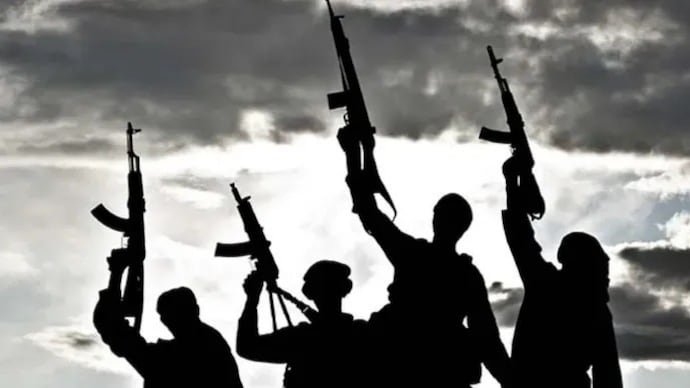
India launched a sharp rebuttal against Pakistan at the United Nations, rejecting Prime Minister Shehbaz Sharif’s remarks on Jammu and Kashmir and Terrorism while warning that continued cross-border terrorism would have consequences for bilateral relations.
Exercising its Right of Reply after Sharif addressed the UN General Assembly, India accused Pakistan of spreading what it described as “falsehoods” and “deceit”. New Delhi also criticised Pakistan’s political system, raised concerns about the treatment of minorities and defended its position that Jammu and Kashmir is an integral part of India.
The exchange added another tense chapter to the long-running diplomatic confrontation between the two neighbours, with both sides using the UN platform to present sharply different positions on Kashmir, terrorism and regional security.
India Calls Pakistan a “Puppet” Regime at UN
Petal Gahlot, First Secretary in India’s Permanent Mission to the UN, delivered New Delhi’s response on Friday night after Sharif’s General Assembly speech.
Gahlot described Pakistan as a “puppet” regime and questioned the country’s claims about democracy and human rights. She said India believed that Pakistan’s military establishment continued to exercise decisive influence over the country’s political system.
“We heard some hypocritical homilies about democratic rights and human values from a regime whose capital at this very moment is being fortified against its own people,” Gahlot said.
She further described the Pakistani system as one “of the army, by the army, and for the army”, arguing that political leadership changes did not alter what India portrayed as the underlying power structure.
Gahlot linked that argument to Pakistan’s 27th Constitutional Amendment, which was passed by the Shehbaz Sharif government in November 2025. India pointed to provisions that it says grant lifelong legal immunity to Chief of Defence Forces and Chief of Army Staff Field Marshal Asim Munir.
India’s comments on the amendment were part of a broader effort to challenge Pakistan’s presentation of itself at the UN as a defender of democratic rights and human values.
New Delhi Rejects Pakistan’s Kashmir Claims
Kashmir remained one of the central issues in the exchange after Sharif again raised the dispute during his approximately 23-minute address to the General Assembly.
Sharif argued that a just and fair resolution of the Kashmir issue was necessary if South Asia was to avoid returning to the brink of conflict. He also referred to the 2025 confrontation between India and Pakistan and thanked US President Donald Trump for what he described as timely intervention.
India rejected that framing and restated its position on Jammu and Kashmir.
Gahlot said the Union Territory of Jammu and Kashmir is “an integral and inalienable part” of India and would remain so. She then shifted attention to Pakistan-administered areas of Kashmir, raising allegations of violence, political repression and denial of basic rights there.
“But if we must talk about Kashmir, let us turn our attention to the Pakistan-occupied Jammu and Kashmir,” Gahlot said, referring specifically to Rawalakot and allegations of killings, violence and restrictions on basic rights.
India’s position contrasts directly with Pakistan’s longstanding description of Kashmir as a disputed territory requiring a political settlement. The two countries have maintained fundamentally different positions on the territory for decades, and the issue has repeatedly surfaced during their diplomatic exchanges at the United Nations.
Protests and Political Tensions in Pakistan-Administered Kashmir
India also referred to political unrest in Pakistan-administered Kashmir, where protests have taken place over political representation and other contentious issues.
The Indian response pointed to demonstrations, a security crackdown and allegations of irregularities surrounding elections to the region’s legislative assembly. These issues were presented by New Delhi as evidence contradicting Pakistan’s criticism of India on democratic rights.
Such references reflect a recurring feature of India-Pakistan diplomacy. Each country frequently uses conditions in the other’s administered territory to challenge its rival’s claims about governance, rights and political legitimacy.
At the UN, those arguments are rarely limited to the immediate dispute. They form part of a broader contest over how each country seeks to portray itself before the international community.
India Links UN Exchange to Terrorism
The strongest warning in India’s response concerned terrorism.
Gahlot said India had demonstrated through its actions that terrorists would have “nowhere to run, nowhere to hide”. She referred to Operation Sindoor, launched by India on May 7, 2025, after the April 22 Pahalgam terror attack in which 26 civilians were killed.
India has described Operation Sindoor as a response targeting terrorist infrastructure in Pakistan and Pakistan-administered Kashmir. The operation became one of the most significant military developments in India-Pakistan relations in recent years and was followed by a period of intense confrontation between the two countries.
At the UN, Gahlot used the episode to reinforce India’s argument that its response to terrorism would not be limited to diplomatic statements.
“Our right to defend ourselves against terrorism will be exercised. And continued terrorism by Pakistan will have consequences,” she said.
She added that continued terrorism could affect the assumptions of friendship and goodwill underlying bilateral relations.
The statement leaves the central message of India’s response clear: New Delhi says future engagement with Pakistan cannot be separated from the issue of cross-border terrorism.
India Raises 9/11 and Osama Bin Laden
India also challenged Pakistan’s position by referring to the history of militant groups operating in the region.
Gahlot noted that Sharif’s comments came shortly after the world marked the 25th anniversary of the September 11, 2001 terrorist attacks in the United States. She argued that the anniversary provided a relevant context for assessing Pakistan’s claims regarding terrorism and human values.
India specifically referred to Osama Bin Laden, the founder of al-Qaeda and mastermind of the September 11 attacks, who was found and killed in Abbottabad, Pakistan, in 2011.
Gahlot said Bin Laden had been living near Pakistan’s premier military academy, using the location to question Pakistan’s record and credibility on counterterrorism.
The reference was intended to connect the broader history of international terrorism with India’s accusations against Pakistan. Pakistan has repeatedly rejected allegations that its state institutions support terrorism and has itself highlighted the costs it has suffered from militancy.
India Accuses Pakistan of Double Standards on Minorities
India also used its Right of Reply to challenge Sharif’s references to religious tolerance and human values.
Gahlot said the remarks from Pakistan were difficult to reconcile with what India described as Pakistan’s record on religious minorities and its use of blasphemy laws.
“The world knows how minorities are treated in Pakistan; no pious platitude can mislead it,” she said.
India’s criticism was part of a broader argument that Pakistan should not present itself internationally as a defender of minority rights while facing allegations and criticism over the treatment of religious minorities within the country.
Pakistan, meanwhile, has frequently made its own allegations concerning religious freedom, minority rights and political conditions in India. The competing claims have become a regular part of the diplomatic rhetoric between the two countries.
Sharif Thanks Trump for 2025 Intervention
Sharif’s UN speech had also focused on the 2025 India-Pakistan confrontation and the role of the United States.
The Pakistani prime minister thanked US President Donald Trump for what he called “resolute and visionary leadership” and described his intervention during the 2025 conflict as timely.
Sharif argued that the intervention helped prevent a potentially wider crisis and said a durable solution to the Kashmir issue was necessary to prevent South Asia from again approaching the brink of conflict.
India rejected that presentation in its Right of Reply, instead emphasising terrorism and its own account of the events that led to Operation Sindoor.
The contrasting statements demonstrate the continuing disagreement between New Delhi and Islamabad over both the causes of military confrontation and the role of outside powers in managing tensions between the two nuclear-armed neighbours.
Why India’s Terrorism Warning Matters
India’s warning that continued terrorism would have consequences carries significance beyond the immediate exchange at the General Assembly.
New Delhi has repeatedly maintained that dialogue with Pakistan cannot progress in an environment it considers affected by cross-border terrorism. The latest statement reinforces that position and places security concerns at the centre of any discussion about future bilateral engagement.
The language used by Gahlot also suggests that India wants the international community to view terrorism as the central issue in assessing relations with Pakistan rather than allowing the Kashmir question to dominate the diplomatic narrative.
For Pakistan, the Kashmir dispute remains a core foreign-policy issue, and Sharif’s decision to raise it before the General Assembly reflects Islamabad’s continuing effort to keep the matter on the international agenda.
The two positions therefore remain sharply divided: Pakistan calls for a resolution of the Kashmir dispute, while India maintains that Jammu and Kashmir is an integral part of the country and focuses its diplomatic messaging on terrorism and Pakistan-administered Kashmir.
UN Becomes Another Stage for India-Pakistan Dispute
The latest confrontation illustrates how the India-Pakistan dispute continues to play out not only through bilateral channels but also through international institutions.
The Right of Reply mechanism gives countries an opportunity to respond to statements made against them during UN proceedings. In India and Pakistan’s case, those exchanges have frequently involved competing allegations over terrorism, Kashmir, human rights, democracy and minority rights.
Rather than narrowing the disagreement, the latest exchange exposed how far apart the two governments remain on the fundamental questions defining their relationship.
India’s response was particularly focused on challenging Pakistan’s credibility, linking its criticism to the country’s military influence, treatment of minorities and terrorism record. Pakistan’s earlier intervention, meanwhile, sought to place Kashmir and the 2025 conflict at the centre of the discussion.
India’s Position on Future Relations With Pakistan
The most consequential element of India’s UN response was its warning that terrorism would affect the future of bilateral ties.
Gahlot said continued terrorism from Pakistan would have consequences and could call into question Relationships previously premised on friendship and goodwill.
That position indicates that New Delhi continues to view security as a fundamental condition for any improvement in relations. The warning also follows India’s stated justification for Operation Sindoor, which it described as a response to the Pahalgam attack.
Whether relations improve will therefore depend not only on diplomatic statements but also on developments involving terrorism, security and political engagement between the two countries.
India-Pakistan Divide Remains Deep at the UN
The latest UN exchange offered little indication of a narrowing gap between India and Pakistan over Kashmir or terrorism.
Pakistan continues to raise Kashmir as a central unresolved issue and has sought international attention to what it describes as the rights and aspirations of people in the region. India rejects Pakistan’s position on Jammu and Kashmir and instead focuses heavily on terrorism, Pakistan-administered Kashmir and Islamabad’s domestic political record.
At the same time, India has made clear that its response to terrorism will remain a central part of its security policy. The warning delivered at the UN places further emphasis on the consequences New Delhi says could follow if cross-border attacks continue.
The exchange at the General Assembly therefore reflects a wider diplomatic divide that remains unresolved. For India, terrorism and national security remain central to the relationship; for Pakistan, Kashmir continues to occupy a prominent place in its international messaging.
With PTI Inputs
For breaking news and live news updates, like us on Facebook or follow us on Twitter and Instagram. Read more on Latest World on thefoxdaily.com.






COMMENTS 0