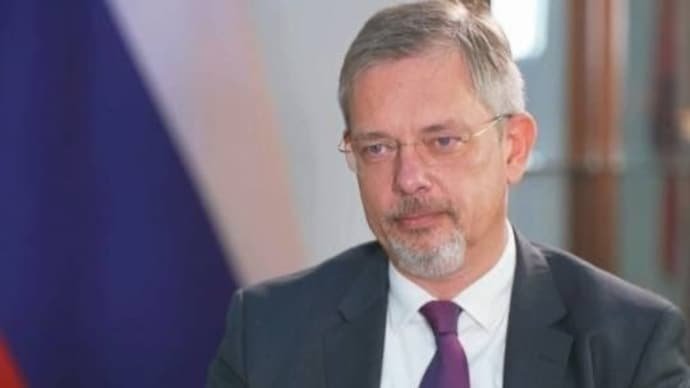
India‘s purchases of Russian Oil are driven by its own energy needs and national development, not an attempt to support Moscow, Russian Ambassador to India Denis Alipov has said, as pressure from the United States and other Western countries over the trade continues to intensify.
Alipov argued that India is making its energy decisions based on affordability, supply security and the welfare of its population. His remarks come at a sensitive moment for India-Russia energy ties, with Washington considering additional measures against countries that continue buying Russian oil and gas.
India sharply increased purchases of discounted Russian crude after Russia’s full-scale invasion of Ukraine in 2022. The move allowed Indian refiners to secure large quantities of oil at attractive prices while helping Moscow maintain access to one of the world’s biggest energy markets despite Western sanctions.
Russia has since become India’s largest source of imported crude for significant periods, although Indian purchases have fluctuated substantially from month to month depending on prices, refinery requirements, shipping costs and sanctions-related risks.
Russian envoy says India buys oil for its own interests
Speaking in an interview with DD News, Alipov rejected the argument that India’s continued purchases of Russian crude should be interpreted as assistance to Moscow.
He said India was buying Russian oil because it needed energy for its own development and because maintaining affordable supplies was connected directly to the welfare of its population.
The argument reflects India’s longstanding position that Energy Security is a national interest issue. The country has a huge population and depends heavily on imported crude to meet domestic fuel and industrial demand.
From New Delhi’s perspective, the source of imported oil is determined by factors such as price, availability, quality, shipping routes and geopolitical risk rather than simply by the political preferences of other countries.
That approach has allowed Indian refiners to take advantage of changes in the global oil market, particularly the availability of discounted Russian barrels after Western restrictions transformed Moscow’s traditional export routes.
Why Russian crude became so important to India
Before the Ukraine war, Russia was not India’s dominant crude supplier. The market was more heavily divided among producers in the Middle East and other regions.
The situation changed dramatically after 2022.
Western sanctions and the restructuring of global energy trade pushed Russian producers to offer crude to buyers willing and able to keep purchasing it. Indian refiners moved quickly to take advantage of the discounts.
Imports surged because the economics were attractive. Buying cheaper crude can increase refinery margins and reduce the cost of petroleum products moving through the domestic economy.
For India, that became particularly important during periods of elevated global oil prices. Cheaper Russian crude provided refiners with another source of supply and reduced dependence on any single region.
For Russia, India became an increasingly important destination for barrels that were no longer moving as freely into European markets.
India says affordable energy matters to 1.4 billion people
External Affairs Minister S Jaishankar has repeatedly defended India’s energy choices by stressing the size of the country’s population and the importance of keeping energy supplies affordable.
After meeting Ukrainian President Volodymyr Zelenskyy in Kyiv, Jaishankar argued that the continuation or reduction of India’s purchases of Russian oil would not determine whether the Ukraine war ends.
His broader point was that the conflict must ultimately be resolved through dialogue, diplomacy and negotiations, rather than by expecting individual countries to change their energy purchases to bring the fighting to an end.
That position reflects India’s attempt to separate its economic interests from the diplomatic demands created by the war.
India has maintained relationships with Russia while also expanding strategic ties with the United States, Europe, Japan and other countries that have imposed sanctions on Moscow.
India is under growing pressure from Washington
The Russian oil issue has become increasingly difficult for India because the United States is considering stronger measures against countries that continue purchasing Russian energy.
A proposed US Senate bill would give Washington the ability to impose tariffs of up to 100% on imports from countries that are among the largest buyers of Russian crude oil or natural gas.
India, which remains one of the world’s biggest purchasers of Russian crude, could therefore face additional economic pressure if such legislation becomes law.
The threat creates a complicated calculation for New Delhi. Continuing to purchase discounted Russian oil supports energy security and potentially lowers costs for Indian refiners, but doing so could increase trade tensions with Washington.
India must therefore balance the immediate economic benefits of cheap crude against the possibility of wider consequences for exports, tariffs and its strategic relationship with the United States.
Alipov says India can “stand its ground”
Alipov has expressed confidence that India will continue defending its own national interests despite external pressure.
Speaking to ANI, he said India had demonstrated in the past that it could withstand pressure and make decisions based on its own security and economic priorities.
The message reflects Moscow’s expectation that the India-Russia energy relationship will remain resilient even as Western governments attempt to make purchases of Russian oil more expensive or politically difficult.
For Russia, the continued participation of large buyers such as India is critical because energy exports remain a central source of revenue.
For India, maintaining multiple suppliers provides greater flexibility when the global oil market becomes unstable.
Russia says Western countries should offer India a better deal
Alipov also criticised sanctions and tariff threats, arguing that Western countries were relying on pressure rather than competition.
His argument was that countries objecting to India’s purchase of Russian crude should offer India a better commercial deal instead of attempting to penalise it for buying cheaper oil.
From a purely commercial perspective, the logic is straightforward: if another supplier can provide comparable crude at a competitive price with reliable delivery, Indian refiners have an incentive to consider it.
The political reality is more complicated because oil contracts, refinery configurations, shipping arrangements and long-term supply relationships all influence purchasing decisions.
Replacing Russian crude entirely would therefore not necessarily be as simple as switching suppliers from one day to the next.
India’s Russian oil purchases have already fallen sharply
India’s dependence on Russian crude is significant, but the monthly numbers show that purchases are not fixed.
According to Kpler data cited in the supplied reports, India imported roughly 2.08 million barrels per day of Russian crude in August.
That represented a decline of about 26.3% from July, when imports reportedly reached a record 2.82 million barrels per day.
Even after the August decline, Russian crude accounted for approximately 45% of India’s total crude imports, keeping Russia ahead of other suppliers.
The monthly fluctuations demonstrate that India’s purchases respond to market conditions rather than following a simple political commitment to Russia.
Refiners can adjust cargoes depending on pricing, refinery maintenance, freight costs, availability of alternative grades and the risks associated with sanctions compliance.
Why Russian oil purchases can fluctuate so quickly
Crude imports are influenced by several factors beyond international diplomacy.
Indian refiners operate large and complex plants capable of processing different crude grades, but not every barrel is economically interchangeable. Refiners consider the chemical characteristics of crude, expected product yields and the price after transportation and other costs.
Shipping also matters.
Russian oil travelling longer distances to India can remain economical when discounts are sufficiently large. But changes in freight rates, insurance costs or restrictions on specific vessels can reduce the advantage.
Similarly, if Middle Eastern or other crude becomes cheaper relative to Russian supplies, Indian refiners can adjust their purchasing patterns.
That helps explain why Russian imports can surge to record levels in one month and decline significantly the next without representing a fundamental change in India’s overall foreign policy.
What Washington is concerned about
US pressure on India is largely based on the argument that revenue from Russian oil helps Moscow finance its war effort.
Washington and other Western governments have imposed sanctions on Russian energy companies and sought to restrict the revenue Russia earns from exports.
When major countries continue purchasing Russian crude, however, Russia retains an important source of income and can redirect exports away from markets that have imposed restrictions.
India’s position is that it should not be expected to carry the economic cost of geopolitical sanctions designed by other countries.
That disagreement lies at the heart of the current diplomatic tension.
India’s argument: energy policy cannot be dictated from abroad
New Delhi’s position is rooted in strategic autonomy.
India has repeatedly argued that major countries should not expect it to choose its energy suppliers based solely on geopolitical preferences.
Energy costs affect transportation, electricity generation, manufacturing, agriculture and household expenses. A country that imports most of its crude has strong incentives to diversify its sources and buy competitively priced supplies.
That argument has allowed India to continue purchasing Russian oil while also maintaining close political and defence relationships with Western countries.
India has also increased energy ties with producers in the Middle East, the United States and other regions, reducing the risk of becoming dependent on any one supplier.
Russia benefits from India’s growing role as an oil buyer
India’s importance to Russia goes beyond the volume of crude it purchases.
Indian refining companies have become an important route through which Russian crude reaches international markets in the form of refined petroleum products.
This has attracted Western scrutiny because crude originating in Russia can undergo processing in third countries before products are sold elsewhere.
The legality of individual transactions depends on the applicable sanctions, origin rules and the exact nature of the trade.
Nevertheless, India’s expanding role in global refining has made the country increasingly important to the reshaping of the international oil market.
Discounted Russian crude has helped Indian refiners
One of the clearest commercial advantages of Russian oil has been its pricing.
After the introduction of Western restrictions and the loss of much of Russia’s European market, Russian exporters had a strong incentive to offer competitive prices to alternative buyers.
Indian refiners could capture part of that discount, potentially improving margins compared with buying equivalent crude at global benchmark prices.
The benefit can vary depending on freight, insurance, payment arrangements and other costs, but the overall economics have often remained attractive enough to sustain large imports.
That economic incentive is one reason India’s Russian oil purchases continued even as political pressure increased.
Could US tariffs change India’s calculations?
Potentially, yes.
India’s energy decisions are ultimately based on a broader economic equation. Russian crude may be cheaper at the refinery gate, but if buying it triggers substantial US Tariffs on unrelated Indian exports, the total economic benefit could become smaller.
That is why proposed tariff measures are being watched closely in New Delhi.
An indirect cost on Indian exporters could affect sectors that have little connection to the oil trade.
The government would then have to compare the savings from discounted Russian crude with the potential cost of reduced access to the US market.
This calculation is much more complicated than simply deciding whether Russian oil itself is cheap.
India has alternatives, but switching is costly
India does not depend exclusively on Russian oil.
The country continues to import substantial quantities from Iraq, Saudi Arabia, the United Arab Emirates, the United States and other producers.
That gives Indian refiners some flexibility if Russian supplies become less attractive.
However, completely replacing more than two million barrels per day of Russian crude would be a major logistical adjustment, particularly if alternative suppliers charge more or cannot immediately provide equivalent volumes.
Any rapid shift could therefore affect refinery economics and potentially increase the cost of imported energy.
Indian policymakers are consequently likely to prefer diversification and flexibility rather than a sudden total break with Moscow.
The Russia-India relationship is larger than oil
The energy relationship exists within a much broader strategic partnership.
India and Russia maintain long-standing ties in defence, nuclear energy, space cooperation, technology and diplomacy.
Russia remains an important supplier of military equipment to India, although New Delhi has been gradually diversifying defence procurement over the past several years.
Both countries also cooperate within multilateral groups and platforms where India seeks a more multipolar international system.
That history makes it difficult to view the oil relationship as an isolated commercial transaction.
At the same time, India’s growing economic ties with the United States mean New Delhi has strong incentives to prevent the Russian oil issue from turning into a larger strategic confrontation with Washington.
India’s balancing act between Washington and Moscow
The Russian oil controversy illustrates the complexity of India’s foreign policy.
New Delhi wants strong relations with Washington because the US is an important trade, technology, investment and security partner. At the same time, India does not want to abandon its longstanding relationship with Russia or sacrifice access to affordable energy.
This produces a policy of balancing rather than choosing one side completely.
India can participate in strategic partnerships with the United States, cooperate with European countries, maintain defence ties with Russia and continue buying energy from multiple markets.
That flexibility is central to India’s concept of strategic autonomy.
Jaishankar rejects the idea that oil purchases decide the war
Jaishankar has also challenged the idea that India’s crude purchases could determine the outcome of the Russia-Ukraine war.
He argued that the conflict has become too complex to be resolved simply by changing who buys Russian oil, minerals, metals or fertilisers.
From India’s perspective, a war of this scale ultimately requires diplomacy and negotiation between the principal parties.
The position allows New Delhi to reject pressure to abandon Russian crude while continuing to publicly support a negotiated solution to the conflict.
It also reflects India’s broader effort to maintain dialogue with both Russia and Ukraine.
Could India reduce Russian oil imports further?
India could reduce purchases if economic, regulatory or geopolitical conditions change.
The August decline demonstrates that imports can fall sharply from record levels without ending the broader trade relationship.
A reduction could occur if Russian discounts narrow, freight costs rise, sanctions become more restrictive or alternative crude becomes commercially more attractive.
Indian refiners may also choose to diversify more aggressively to reduce exposure to geopolitical risk.
That does not necessarily mean India would accept pressure to completely stop buying Russian oil. More likely, purchasing decisions would continue to be driven by a combination of economics, availability and risk.
What would a major US tariff mean for India?
A large additional tariff from Washington could create pressure well beyond India’s oil industry.
Indian exporters in manufacturing, pharmaceuticals, textiles, engineering goods and other sectors depend heavily on access to the US market.
If punitive tariffs were imposed because of Russian energy purchases, New Delhi would face a difficult policy choice between maintaining cheaper energy imports and protecting export competitiveness.
The impact would depend on how the measure is structured, whether exemptions are available and how long it remains in force.
It could also encourage India to accelerate trade diversification and expand relations with other major markets.
Russia’s challenge is keeping India interested
Moscow also has a commercial challenge.
India will continue buying Russian oil only when the economics remain competitive and the transaction can be conducted within the relevant legal and sanctions framework.
Russia therefore needs to keep its crude attractive while ensuring that shipping and payment channels remain workable.
If discounts disappear or logistical obstacles become too expensive, Indian refiners have alternatives.
That means Russia’s relationship with India is not unconditional. It is increasingly based on a combination of strategic ties and commercial value.
The global oil market is being reshaped by geopolitics
The India-Russia oil relationship is part of a larger transformation of global energy trade.
Before the Ukraine war, Europe was one of the principal destinations for Russian crude. After sanctions and the reorganisation of trade routes, more Russian oil moved toward Asia.
India and china became key buyers, while Russian energy companies developed new shipping, insurance and trading arrangements.
The result is a more fragmented oil market in which geography is no longer the only factor determining trade flows.
Sanctions, tariffs, geopolitical alliances, shipping risks and refinery economics now play an equally important role.
Why India will keep watching the price gap
For Indian refiners and policymakers, the central question remains economic: how much does it cost to secure reliable crude from each supplier after all expenses are included?
If Russian oil remains substantially cheaper, there is a strong commercial incentive to keep buying it.
If the discount narrows while the political and trade risks increase, the calculation could change.
That is why future Russian oil imports will likely continue to fluctuate rather than follow a fixed political target.
India’s strategy is more likely to be one of maintaining multiple options and adjusting purchases according to changing market conditions.
Why the oil dispute matters for Indian consumers
The debate in Washington and Moscow ultimately has implications for Indian households.
Crude oil affects the cost of transportation, logistics, plastics, chemicals, aviation and numerous industrial products. Cheaper imported crude can therefore provide benefits throughout the economy.
Conversely, a sharp increase in India’s oil import costs can worsen inflationary pressure and increase the country’s import bill.
That gives policymakers a strong reason to seek the lowest reliable supply available while avoiding excessive dependence on any one source.
From this perspective, India’s decision to purchase Russian oil is not simply a diplomatic statement. It is part of a much larger strategy for managing the economic consequences of global energy volatility.
What happens next in the India-US-Russia oil dispute?
The future of India’s Russian oil purchases will depend on several moving parts.
Washington’s proposed tariff measures are a major variable. If the United States introduces extremely high penalties, India will have to reassess the full economic cost of continuing current purchase levels.
Global oil prices will also matter. If crude prices rise sharply, discounts on Russian oil may become even more valuable to Indian refiners.
Sanctions enforcement and shipping arrangements will be another factor.
At the same time, India will continue seeking alternative suppliers to preserve flexibility.
The most likely outcome is therefore continued adjustment rather than an immediate and complete break with Russian crude.
India’s energy policy remains driven by national interest
Denis Alipov’s defence of India’s Russian oil purchases reflects the central argument New Delhi has made throughout the geopolitical dispute: energy policy is ultimately determined by India’s own national requirements.
Russia argues that India buys its crude because it is commercially attractive and important for domestic development, not because New Delhi is attempting to finance Moscow’s war effort.
India itself has maintained that it must secure affordable energy for its population while pursuing an independent foreign policy.
The numbers show that Indian purchases have already fluctuated significantly, falling from a record level in July to around 2.08 million barrels per day in August. Yet Russian oil still represented roughly 45% of India’s crude imports, keeping Moscow at the top of India’s supplier list.
That combination high but flexible dependence will likely define the relationship in the months ahead.
Russia oil purchases put India’s strategic autonomy to the test
The dispute over Russian crude is becoming a test of how far India can pursue strategic autonomy while managing pressure from its most important partners.
Washington wants to reduce the revenue Russia earns from energy exports. Moscow wants to preserve India as a major buyer. New Delhi wants affordable and reliable oil without allowing any foreign government to dictate its economic choices.
Those objectives do not naturally align.
India’s response so far has been to keep buying Russian oil while simultaneously diversifying suppliers and maintaining diplomatic engagement with both Western governments and Moscow.
That approach is likely to continue unless US penalties become sufficiently large to alter the commercial calculation.
For now, Alipov’s central message is straightforward: India is buying Russian oil because India needs oil. Whether that argument remains economically persuasive will depend on the size of future Russian discounts, the cost of alternative supplies and, above all, how far Washington is prepared to go with its tariff threats.
The oil dispute is therefore about much more than crude shipments. It is a test of India’s room for manoeuvre in a world where energy, trade and geopolitics are becoming increasingly difficult to separate.
For breaking news and live news updates, like us on Facebook or follow us on Twitter and Instagram. Read more on Latest World on thefoxdaily.com.






COMMENTS 0