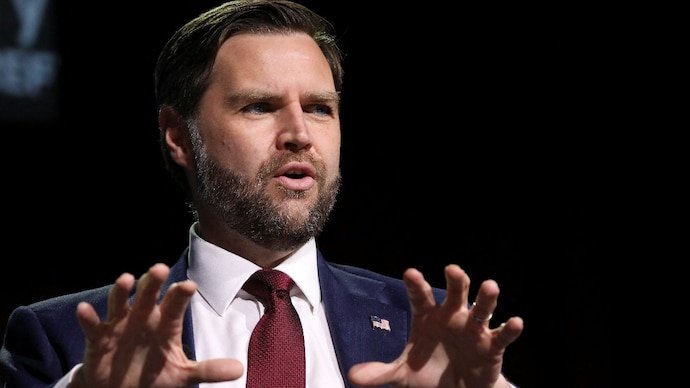
US Vice President JD Vance has publicly endorsed fellow Republican Vivek Ramaswamy in the Ohio governor’s race, giving the GOP nominee a fresh boost after a difficult appearance before a conservative and libertarian audience in Cincinnati.
Vance made the endorsement during a campaign rally in Ohio, describing Ramaswamy as a “great friend” and saying he would “make a great Governor.” The intervention comes at an important point in the 2026 campaign, with Ramaswamy now preparing for the November general election after securing the Republican nomination in May.
The endorsement also highlights the close political relationship between Ramaswamy, President Donald Trump and Vance. All three have become prominent figures within the modern Republican coalition, although Ramaswamy’s campaign has faced moments of resistance from some conservative and libertarian voters.
That tension was visible in late July, when Ramaswamy was loudly booed and repeatedly heckled during a Young Americans for Liberty conference at Xavier University in Cincinnati, the city where he was born. He was scheduled to speak for about 30 minutes but left after roughly 14 minutes as the hostile reception continued.
JD Vance throws his support behind Ramaswamy
Vance’s endorsement was direct and personal rather than simply a routine expression of Republican support.
Speaking at an Ohio rally, Vance introduced Ramaswamy as a “great gubernatorial candidate” and said he believed his friend would become a strong governor for the state. Vance also praised Ramaswamy’s willingness to participate in the political process and urged Ohio Republicans to support him at the ballot box.
The timing matters because Ramaswamy has already secured the most important Republican milestone in the contest: the party nomination. Ohio’s May 5 Republican primary placed Ramaswamy on the general-election ballot alongside his running mate, Robert A. McColley. The Ohio Secretary of State’s office lists the Ramaswamy-McColley ticket among the certified statewide candidates for the 2026 election.
Ramaswamy therefore does not need to fight another Republican primary battle. His challenge now is broader: building a coalition capable of winning a statewide election and maintaining Republican support while reaching voters beyond the party’s most committed base.
Why Vance’s endorsement matters after the Cincinnati incident
The Cincinnati episode created an uncomfortable moment for a candidate whose political identity has been closely associated with conservative and pro-Trump voters.
Ramaswamy appeared at the Young Americans for Liberty national conference on July 29 at Xavier University. Videos from the event showed him being booed as he took the stage, while attendees repeatedly interrupted his remarks.
Among the issues raised during the confrontation were political and policy disagreements, including questions surrounding Israel and other subjects that have become contentious among younger conservatives and libertarians.
One of Ramaswamy’s remarks about generational responsibility generated particularly strong reactions. He argued that people in his generation had already secured their future while younger Americans would ultimately bear the consequences of choices made today.
The crowd responded with further heckling, and Ramaswamy ultimately ended his appearance well before the scheduled finish.
The incident should not automatically be treated as evidence that the broader Ohio Republican electorate has rejected Ramaswamy. A Young Americans for Liberty conference is a specific political audience, not a representative sample of all Ohio voters. But the episode does illustrate a challenge for Ramaswamy: winning support from voters WHO may share some of his conservative views while disagreeing with his tone, priorities or individual policy proposals.
Ramaswamy already has Trump’s backing
Vance’s endorsement adds to a support network that was established well before the Republican primary.
President Donald Trump backed Ramaswamy’s Ohio gubernatorial campaign, while the Ohio Republican Party also endorsed him. The state party formally backed Ramaswamy in May 2025, giving him an early advantage over potential Republican rivals.
That support proved politically significant as the Republican field developed. Ramaswamy eventually won the Republican nomination on May 5, 2026, defeating Casey Putsch. Democrat Amy Acton also won her party’s nomination and entered the general election without a Democratic primary challenger.
Ohio’s Republican establishment has therefore largely consolidated behind Ramaswamy. The Ohio Republican Party currently lists Ramaswamy and McColley among its endorsed statewide candidates.
For Ramaswamy, the combination of Trump’s endorsement, the state GOP’s support and Vance’s public backing creates a clear political message: the Republican leadership wants the party unified around his candidacy.
From presidential candidate to Ohio gubernatorial nominee
Ramaswamy is not new to national Politics.
He became a prominent Republican figure during the 2024 presidential campaign, when he sought the GOP nomination for president. Although he ultimately ended his campaign and endorsed Trump, the campaign gave him a national profile that extended well beyond Ohio.
After Trump returned to the White House, Ramaswamy was initially selected to co-lead the Department of Government Efficiency, commonly known as DOGE, with Elon Musk. He later left that role as he focused on his campaign for Ohio governor.
His path is unusual for a gubernatorial candidate. Rather than spending years building a traditional political career in Ohio state government, Ramaswamy arrived in the race with national name recognition, Business experience and an established relationship with Trump’s political movement.
That background has helped him attract attention and endorsements, but it has also made his campaign more nationalized than a conventional state-level race.
Who is Vivek Ramaswamy?
Ramaswamy was born in Cincinnati to Indian immigrant parents and grew up in Ohio. He attended Harvard University and later Yale Law School before entering business and finance.
He became best known in the business world as the founder of Roivant Sciences, a biotechnology company. He served as the company’s chief executive from 2014 to 2021.
His business background became a central part of his political identity. During his presidential campaign, Ramaswamy presented himself as an outsider who could challenge established political assumptions and reduce the influence of institutions and policies he considered ineffective.
His political rise also gave him a distinctive position inside the Republican Party. He is a relatively young national figure who combines business credentials, strong conservative messaging and a close relationship with Trump.
Ohio governor race now moves to the general election
Ramaswamy’s Republican nomination means the November contest is now centered on a direct competition with Democrat Amy Acton.
Acton is a former director of the Ohio Department of Health who became nationally known during the COVID-19 pandemic. She entered the 2026 governor’s race as the Democratic nominee after facing no primary challenger.
Republican Governor Mike DeWine is unable to seek another term because of Ohio’s term limits, making the 2026 election an open-seat contest.
That changes the political dynamics. Ramaswamy is not defending an existing administration, while Acton is attempting to persuade Ohio voters that Democrats should regain the governor’s office.
The Republican Party nevertheless begins the general election with significant political infrastructure and a strong statewide organization. Trump’s continuing influence in Ohio politics also gives Ramaswamy a powerful national ally.
The challenge of turning endorsements into votes
High-profile endorsements can help a campaign generate attention, fundraising and organizational energy. They do not, however, guarantee that every voter who likes Trump or Vance will automatically support the Republican gubernatorial nominee.
That distinction may become particularly important for Ramaswamy.
His political profile is highly recognizable, but recognition can cut both ways. Supporters see him as an energetic outsider willing to challenge established political thinking. Critics argue that some of his proposals and rhetoric are too confrontational or difficult to translate into state-level governing policy.
The Cincinnati incident demonstrated the difference between broad partisan alignment and agreement on individual issues. The audience was generally conservative, yet that did not prevent substantial opposition to Ramaswamy’s appearance.
For a statewide candidate, the practical question is whether such incidents remain isolated moments or become part of a larger narrative about his ability to connect with voters.
What Vance’s support signals for the Republican campaign
Vance’s intervention can be read as an effort to reinforce Republican unity around Ramaswamy at a time when the campaign is shifting from nomination politics to the general election.
Vance himself has deep political roots in Ohio. He previously represented the state in the US Senate before becoming vice president, giving his endorsement additional local significance.
His appearance also places Ramaswamy alongside a national Republican message centered on Trump-aligned politics and economic concerns affecting working-class voters.
That alignment could help Ramaswamy present his candidacy as part of a broader Republican effort rather than as an individual campaign built around his personal political brand.
Ramaswamy’s next test is broader than the Republican base
The Republican primary and the November election present very different challenges.
Winning a party nomination requires defeating or outlasting Republican rivals. Winning the general election requires attracting enough support across the broader electorate.
Ramaswamy now has several advantages: the Republican nomination, Trump’s endorsement, backing from the Ohio GOP and the public support of Vance. He also enters the general election with substantial national recognition.
But the Cincinnati episode highlights why endorsements alone cannot resolve every campaign problem. Ramaswamy still has to explain his policies to voters, defend his record and demonstrate that his political style can work in a statewide governing role.
The campaign will also have to distinguish between enthusiastic support from national Republican figures and the concerns of Ohio voters dealing with state-specific issues.
What happens next in the Ohio governor race
The central focus now shifts toward the November general election, when Ramaswamy and Acton will compete for the governorship.
For Ramaswamy, the immediate objective is likely to keep Republican voters consolidated while expanding his appeal beyond the activists and political audiences that have defined much of his national career.
Vance’s endorsement helps with the first part of that task. It reinforces the message that leading Trump-aligned Republicans are standing behind the nominee.
The more difficult question is whether Ramaswamy can translate that political backing into broader voter support. The Cincinnati heckling incident does not answer that question by itself, but it serves as a reminder that even within conservative politics, there is no single unified audience.
The November contest will ultimately be decided by Ohio voters rather than national endorsements. Ramaswamy has already secured the Republican nomination and the backing of some of the party’s most influential figures. His next challenge is to turn that support into a statewide governing mandate.
For breaking news and live news updates, like us on Facebook or follow us on Twitter and Instagram. Read more on Latest World on thefoxdaily.com.





COMMENTS 0