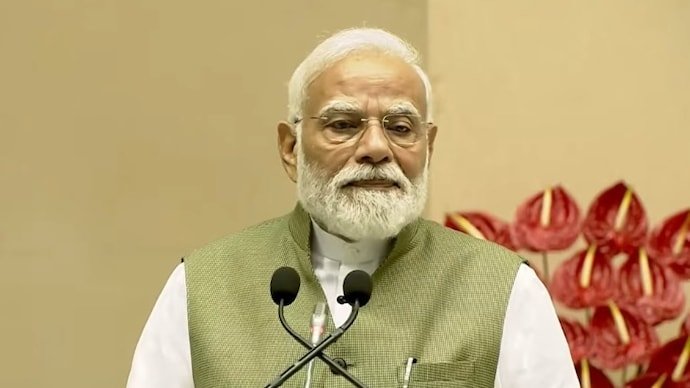
Prime Minister Narendra Modi joined a yoga session in Tashkent on Sunday during his two-day state visit to Uzbekistan, bringing a cultural dimension to a trip otherwise centred on strengthening the strategic partnership between the two countries.
The session was hosted by the Yoga Federation of Uzbekistan and was attended by yoga enthusiasts in the Uzbek capital. India‘s Ministry of External Affairs said the event demonstrated the growing appeal of yoga in Uzbekistan and its ability to bring people and cultures closer together.
Modi’s participation came a day after he arrived in Tashkent at the invitation of Uzbek President Shavkat Mirziyoyev. The visit is his fourth to Uzbekistan and includes ceremonial engagements, interaction with the Indian community and high-level discussions on areas ranging from trade and investment to defence, energy and digital connectivity.
While yoga was not the central diplomatic issue of the visit, the event offered a visible example of how cultural exchanges can complement formal government-to-government relations. For India and Uzbekistan, which share historical connections across Central Asia, such people-to-people engagement forms an important part of the broader relationship.
Why Modi’s Tashkent yoga session matters
The yoga session provided more than a symbolic moment during Modi’s visit. It placed cultural Diplomacy alongside discussions about strategic and economic cooperation.
The Ministry of External Affairs said yoga has significant appeal in Uzbekistan and is helping strengthen people-to-people ties between the two countries. The ministry also shared photographs of Modi interacting with participants and observing the session.
Yoga has become one of India’s most recognisable cultural practices internationally, and its appeal provides an avenue for engagement that is separate from Politics and trade. A public yoga event can bring together local participants, Indian representatives and wider communities around an activity that is associated with Health, discipline and traditional Indian knowledge.
For Uzbekistan, participation in such an event also reflects the country’s cultural engagement with India. The significance of the session lies partly in its simplicity: while strategic partnerships are built through agreements and official meetings, public interaction can give those relationships a more visible human dimension.
Modi’s fourth visit to Uzbekistan
Modi is visiting Uzbekistan from August 29 to 30 at the invitation of President Shavkat Mirziyoyev. It is his fourth visit to the country.
The visit comes as India seeks to deepen its strategic partnerships across Central Asia. Uzbekistan is an important partner in that effort because of its position in the region and the range of areas in which the two countries cooperate.
During the visit, Modi is scheduled to hold delegation-level talks with Mirziyoyev. The discussions are expected to review bilateral cooperation and identify areas where the relationship can be expanded further.
The agenda includes trade and investment, defence, digital connectivity, energy, education and people-to-people ties. These subjects cover both traditional areas of diplomatic cooperation and sectors that are increasingly important to India’s engagement with Central Asia.
The yoga session therefore fits into a wider visit in which political, economic, cultural and community connections are being addressed together.
Yangi Uzbekistan Park and Independence Monument visit
Modi’s first engagements in Tashkent included visits that carried strong national and symbolic significance for Uzbekistan.
After arriving on Saturday, he was received at the airport by President Mirziyoyev. Modi subsequently visited Yangi Uzbekistan Park and laid a wreath at the Independence Monument alongside the Uzbek president.
Such ceremonial engagements are an established part of state visits, but they also communicate respect for the host country’s history and national identity.
The Independence Monument, in particular, provides a setting for acknowledging Uzbekistan’s statehood and national journey. The joint appearance of the two leaders reinforced the diplomatic nature of the visit before their more substantive discussions on bilateral cooperation.
The sequence of events also demonstrated the breadth of the visit. Alongside formal diplomacy, Modi’s schedule included cultural sites, public interaction and engagement with the Indian community.
Indian diaspora event adds another cultural layer
Modi also met members of the Indian community in Tashkent during his visit.
The gathering featured a series of cultural performances that brought Indian and Uzbek traditions together. Modi watched a Kathak performance as well as Andijan Polka, reflecting the cultural traditions of both countries.
Uzbek children also performed a dance to the Indian song “Ude Jab Jab Zulfe Teri”, while another performance combined tabla with traditional Uzbek instruments including the Doira and Chang.
These performances were significant because they went beyond simply showcasing Indian culture abroad. The participation of Uzbek children and the fusion of Indian and Uzbek musical traditions illustrated how cultural interaction can work in both directions.
Such exchanges can help build familiarity between communities without requiring formal political messaging. Music, dance and shared cultural events can create connections that endure independently of individual diplomatic meetings.
Yoga and people-to-people diplomacy
The Tashkent yoga session is best understood as part of this wider cultural engagement.
India’s relationship with Uzbekistan is not limited to government institutions. Educational exchanges, cultural programmes, tourism, community connections and traditional practices can all contribute to public familiarity between the two countries.
Yoga is particularly suited to this kind of engagement because it can be practised without requiring participants to share the same language or cultural background.
In Tashkent, the participation of local practitioners gave Modi an opportunity to engage directly with people interested in an Indian-origin practice. The event also allowed the Uzbek side to demonstrate its interest in yoga as part of its own cultural and wellness landscape.
That makes the session relevant to diplomacy even though it did not involve a formal agreement.
India-Uzbekistan ties extend beyond culture
The cultural events during Modi’s visit should not obscure the larger strategic agenda.
India and Uzbekistan are expected to discuss cooperation in several areas with direct economic and Security implications. Trade and investment are among the key subjects, reflecting India’s interest in expanding commercial relations with Central Asia.
Defence is another important area on the agenda. Cooperation in this field forms part of India’s wider engagement with regional partners as it seeks stronger security relationships across its extended neighbourhood.
Digital connectivity and energy also feature in the expected discussions. These areas have become increasingly important to international partnerships because digital Infrastructure can support trade and services, while energy cooperation can strengthen economic resilience.
Education and people-to-people ties complete the agenda by adding a longer-term social dimension to the strategic relationship.
Why Central Asia is important to India’s foreign policy
Modi’s Uzbekistan visit is also part of India’s broader effort to deepen relations with Central Asian countries.
Central Asia has significance for India because of its geographic position, economic potential, energy resources and security Environment. Strengthening bilateral relationships with countries in the region gives India additional channels for economic and diplomatic engagement.
Uzbekistan, as one of the region’s key states, is therefore an important component of that outreach.
The emphasis on connectivity is especially relevant because Central Asia is landlocked, making transportation routes and access to wider markets important economic considerations. For India, improving connectivity with the region has long been connected to the larger objective of developing stronger commercial and strategic links.
At the same time, cultural engagement provides a relatively low-risk way to strengthen relationships at the public level while governments work on more complicated economic and geopolitical issues.
From yoga mats to strategic talks
The contrast between the yoga session and the expected diplomatic discussions illustrates the range of modern bilateral relations.
On one side, the two countries are discussing defence, investment, energy and digital connectivity. On the other, their leaders are highlighting cultural practices, music, dance and community ties.
These areas may appear unrelated, but they can reinforce one another. Stronger public familiarity can create a broader foundation for official relationships, while stronger economic and political ties can create more opportunities for cultural exchanges.
The Tashkent visit consequently presents India-Uzbekistan relations as a relationship with several layers rather than one based solely on strategic interests.
What the Modi-Mirziyoyev talks are expected to cover
The delegation-level discussions between Modi and Mirziyoyev are expected to focus on strengthening cooperation across the main areas identified by both sides.
Trade and investment
Economic cooperation is expected to be a major part of the discussions. Greater trade and investment links can provide businesses in both countries with opportunities to expand their presence in each other’s markets.
Defence and security
Defence cooperation is another important component of India’s engagement with Uzbekistan. The discussions are expected to examine ways to strengthen bilateral cooperation in this area.
Digital connectivity
Digital connectivity has become an increasingly important part of international economic relations. Cooperation in digital areas can support business, services and wider institutional connections.
Energy
Energy cooperation is also expected to feature in the talks. For both India and Central Asian countries, energy remains closely connected to economic development and long-term strategic interests.
Education and people-to-people ties
Education and people-to-people contacts provide a foundation for longer-term relations. Student exchanges, cultural programmes and community engagement can build familiarity that extends beyond the lifespan of individual governments or agreements.
Modi’s Central Asia tour continues in Kyrgyzstan
Uzbekistan is the first stop on Modi’s two-country Central Asia tour. After completing his Tashkent visit, he is scheduled to travel to Kyrgyzstan from August 31 to September 1.
There, he will participate in the 26th Shanghai Cooperation Organisation summit.
The SCO summit provides a broader multilateral setting for India’s engagement with Central Asia. Modi is expected to meet regional leaders and discuss issues linked to security, connectivity and economic opportunity.
The transition from a bilateral state visit in Uzbekistan to a multilateral summit in Kyrgyzstan gives the overall tour a wider diplomatic purpose.
India can use bilateral meetings to address country-specific priorities while using the SCO platform to discuss issues involving several countries across the region.
Cultural diplomacy is becoming part of the wider relationship
The Tashkent yoga event also illustrates how cultural diplomacy can support India’s wider foreign-policy objectives.
Culture does not replace negotiations over trade, defence or investment, but it can help create a more familiar and positive environment for bilateral engagement.
The Indian community event reinforced that message through music and dance, while the yoga session demonstrated direct participation in an Indian cultural practice by people in Uzbekistan.
For Uzbekistan, these activities provide opportunities to showcase its own cultural traditions alongside its engagement with India. The presence of Andijan Polka, traditional Uzbek instruments and Uzbek children participating in an Indian song highlighted this two-way exchange.
The result is a form of diplomacy that is less formal but potentially valuable in strengthening public connections.
What Modi’s Uzbekistan visit could mean for bilateral ties
The immediate significance of the visit lies in the opportunity for the two governments to review their existing cooperation and identify areas for deeper engagement.
The broader significance is that the relationship is being developed simultaneously across several fronts: strategic cooperation, economic engagement, digital connectivity, energy, education and culture.
The yoga session in Tashkent offered a particularly visible example of that multidimensional approach.
Whether cultural engagement eventually contributes to deeper bilateral cooperation cannot be measured through a single event. Its value is cumulative, developing through repeated exchanges between institutions and communities.
The same principle applies to the wider strategic relationship. Trade discussions, defence cooperation, digital partnerships and educational links require sustained engagement rather than one-off meetings.
A visit combining culture with strategic diplomacy
Modi’s participation in a yoga session in Tashkent placed culture and people-to-people ties at the centre of one of the most visible moments of his Uzbekistan visit.
But the event was only one part of a much broader diplomatic programme. His engagements with President Mirziyoyev, visits to significant Uzbek sites, interaction with the Indian community and expected discussions on trade, investment, defence, energy, digital connectivity and education all point to a relationship being developed across multiple sectors.
The visit also comes ahead of Modi’s participation in the SCO summit in Kyrgyzstan, giving India’s Central Asia outreach both bilateral and multilateral dimensions.
For India and Uzbekistan, the significance of the Tashkent yoga session ultimately lies in what it represents: an effort to connect strategic diplomacy with public and cultural engagement. While formal negotiations determine agreements and partnerships, events involving yoga, music, dance and community participation can give those relationships a human face.
As Modi moves from Uzbekistan to Kyrgyzstan, the focus will shift from bilateral ties to the wider regional agenda. Yet the message from Tashkent remains relevant: India’s engagement with Central Asia is being pursued not only through governments and institutions, but also through the cultural and people-to-people connections that help make diplomatic partnerships more durable.
For breaking news and live news updates, like us on Facebook or follow us on Twitter and Instagram. Read more on Latest World on thefoxdaily.com.



COMMENTS 0