Russia has begun three days of voting for its parliamentary election, with United Russia expected to retain its overwhelming control of the State Duma. While the result is widely regarded as unlikely to significantly alter the balance of power, the election is taking place under considerably more difficult conditions than previous parliamentary contests.
The war in Ukraine has entered a period in which its economic and security consequences are increasingly visible inside Russia. Ukrainian long-range drone attacks have struck oil refineries, logistics facilities and other infrastructure, while disruption to fuel supplies and rising government spending have added to economic pressures.
At the same time, the Kremlin has tightened restrictions on political opposition, particularly voices that openly challenge the war. The result is an election designed to demonstrate political stability and public support for President Vladimir Putin‘s policies while allowing limited space for competition within the political system.
United Russia currently controls more than two-thirds of the Duma’s 450 seats. Other parliamentary parties are also expected to retain their positions, but analysts say the Kremlin’s main focus is likely to be the overall political message created by the election, particularly turnout and the appearance of continued public support for the government’s wartime policies.
Putin presents the election as a demonstration of unity
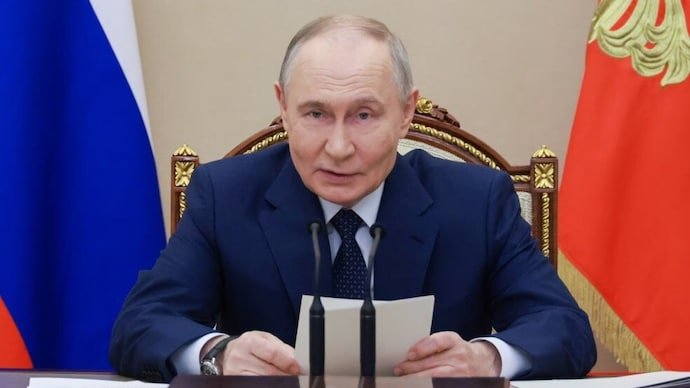
President Vladimir Putin has framed the vote as another opportunity for Russians to demonstrate national unity and support for those fighting in Ukraine.
In an address before voting began, Putin said the choice made by voters would demonstrate that millions of people stand behind Russian soldiers and remain united by shared values, historical memory and patriotism.
The message reflects the Kremlin’s broader effort to present the war as a national cause rather than simply a military campaign. The parliamentary election provides an institutional setting in which the government can point to participation and electoral results as evidence of continued domestic backing.
Analysts, however, argue that the political environment surrounding the election makes direct competition over the war itself extremely limited.
Yabloko removed from the ballot
The political space available to anti-war candidates has narrowed significantly.
Yabloko, the only party described in the supplied election context as openly critical of the war, was initially cleared by Russia’s Central Election Commission in July along with 10 other parties. It was subsequently removed from the ballot after the Supreme Court considered an appeal by the nationalist Motherland party.
The appeal argued that Yabloko’s opposition to the war amounted to a position comparable to calling for a violation of Russia’s territorial integrity.
The decision illustrated a broader tension within Russia’s political system. Allowing limited competition can help create the appearance of a competitive election and potentially encourage participation, but allowing direct challenges to the war carries greater political risks for the Kremlin.
Tatyana Stanovaya of the Carnegie Russia Eurasia Center said the possibility that the campaign could turn into a confrontation between supporters and opponents of the war was considered too risky and was not part of the Kremlin’s plan.
Pressure on anti-war politicians has increased
Several politicians associated with opposition to the war have faced imprisonment, restrictions or exile.
Yabloko deputy chairman Maxim Kruglov was sentenced in June to seven years in prison for spreading what authorities described as false information about the Russian army. Another Yabloko member, Lev Shlosberg, was sentenced by a court in the Pskov region to more than 11 years in prison for speaking out against the war, according to the supplied account.
Authorities have also prevented a number of Yabloko members from contesting elections for the Duma and regional legislatures.
Liberal politician Boris Nadezhdin, who sought to challenge Putin in the 2024 presidential election, left Russia after being designated a foreign agent, barred from holding office and fined over allegations involving extremist symbols.
These developments have substantially reduced the ability of openly anti-war politicians to use electoral campaigns as a platform for challenging the Kremlin’s position.
Drone attacks bring the war closer to everyday life
The election is also being held after a summer of increasingly significant Ukrainian long-range drone attacks inside Russia.
The strikes have targeted infrastructure including oil refineries and logistics hubs. Beyond their immediate physical damage, the attacks have created economic and psychological effects by demonstrating that the consequences of the war can reach deep into Russian territory.
The attacks on oil infrastructure contributed to a serious fuel crisis that peaked in June, eased temporarily and then returned in August. Damage to other facilities has added further disruption to supply chains.
Warehouses operated by online retailers Wildberries and Ozon were also hit, according to the supplied account, with large numbers of sellers reportedly losing goods.
The economic consequences have come as Russia continues to devote substantial resources to the war. Military spending has provided an important source of economic activity, but the earlier boost from wartime spending has become less powerful as other pressures increase.
Russia faces growing economic pressure
The government has raised taxes and increased domestic borrowing as it manages a growing budget deficit.
At the same time, damage to energy infrastructure creates additional complications for an economy heavily connected to oil and gas production, processing and transportation.
Andrei Klepach, chief economist at state-owned VEB.RF bank, publicly expressed concern about the sustainability of the economic pressure. He warned that Russia could face a social crisis and argued that the country could not prevail in a prolonged war of economic attrition.
Klepach was dismissed one day after his comments were published, according to the supplied account.
The episode illustrated the sensitivity surrounding public discussion of Russia’s economic position during wartime. While the Kremlin has acknowledged that attacks on oil refineries and logistics infrastructure have caused significant damage, Putin has maintained that the Russian economy can withstand the pressure.
Putin warns of retaliation after infrastructure strikes
Putin has described Ukraine’s attacks on Russian infrastructure as a dangerous escalation and said they had opened what he called a “Pandora’s box” by inviting a larger Russian response.
Russia has subsequently increased missile and drone attacks against Kyiv and other Ukrainian cities. It has also expanded strikes against Odesa and other Black Sea ports.
The attacks on Black Sea infrastructure have consequences beyond the immediate military conflict because the region plays an important role in the movement of agricultural products. Disruption to ports can affect exports of grain and other farm goods.
Russia has also used new jet-powered drones alongside other weapons in its attacks, while Ukraine has faced pressure on its stock of defensive interceptors.
Could another mobilisation follow the election?
The combination of continued battlefield losses, slowing recruitment and the economic burden of the war has revived concerns about whether Russia could eventually order another large-scale mobilisation.
Russia’s partial mobilisation in 2022 called up approximately 300,000 reservists and was followed by the departure of hundreds of thousands of Russians from the country.
Since then, the Kremlin has relied heavily on volunteers, offering comparatively high wages and other benefits to attract recruits.
Military experts have nevertheless warned that the flow of volunteers has slowed while battlefield losses remain substantial.
Ukrainian President Volodymyr Zelenskyy has repeatedly suggested that the Kremlin could consider another mobilisation after the election. Putin has rejected those claims as “nonsense”.
In meetings with US representatives and in a subsequent conversation with US President Donald Trump, Putin said Russia had the upper hand on the battlefield. His position suggested that Moscow continued to pursue its existing objectives and was not preparing to significantly soften its demands in potential peace negotiations.
United Russia is expected to remain dominant
Despite the economic pressures and growing visibility of the war inside Russia, United Russia is expected to retain its dominant position in the State Duma.
The party already controls more than two-thirds of the chamber’s 450 seats. Some Russian reports have suggested that the Kremlin may be prepared to accept a slightly lower result for United Russia, but the broader expectation remains that the party will maintain full political dominance.
Analyst Mark Galeotti, who heads the Mayak Intelligence consultancy, said the Kremlin might allow United Russia’s declared share to fall somewhat so that the result appears closer to its underlying level of support. He nevertheless said the party would remain dominant inside the Duma.
Galeotti described elections under the current system as “legitimating rituals” intended to create the impression that mass consensus remains behind the Kremlin.
Systemic opposition parties expected to keep their seats
Russia’s other major parliamentary parties are also expected to retain their positions.
These include the Communist Party, the Liberal-Democratic Party and A Just Russia. Although they represent distinct political traditions, they remain within what analysts commonly describe as Russia’s “systemic opposition” and have generally supported Putin’s broader political line and the war.
Their continued presence allows the election to retain a degree of party competition without creating a serious challenge to the Kremlin’s control of the political system.
Analysts also suggest that the drone attacks could strengthen demands for a tougher response against Ukraine among some Russian voters and political groups, provided they do not personally bear the costs of an intensified war effort.
Public approval remains high despite economic concerns
The independent Levada Center put Putin’s approval rating at 76% in August, down from 87% in September 2025 according to the figures provided in the election analysis.
The decline indicates that public approval has weakened from the previous year’s level, but the reported figure remains high.
Chris Weafer, chief executive of Macro-Advisory Ltd., said the drone attacks had affected public morale but did not pose an immediate threat to the Kremlin’s hold on power.
He argued that a rally-around-the-flag effect had existed since the beginning of the conflict and that opinion polling continued to show high levels of support.
For the Kremlin, this makes the election less about whether United Russia will remain in power and more about the scale and appearance of public participation.
Why turnout matters to the Kremlin
Even when the overall political outcome is widely expected, turnout can carry considerable symbolic importance.
A strong turnout allows the government to argue that citizens continue to participate in the political system despite the war, economic difficulties and restrictions on opposition.
Weafer said that while the result was effectively predetermined, the public narrative and particularly turnout were important because they could be presented as evidence of broad support for the government’s actions.
This helps explain why the Kremlin continues to organise elections even when the balance of parliamentary power is not seriously in question.
Russia’s Duma vote takes place under wartime pressure
The parliamentary election is therefore unfolding at the intersection of several pressures.
Russia’s military campaign in Ukraine continues to consume significant resources. Ukrainian drone strikes have damaged infrastructure and disrupted fuel and logistics networks. The government is dealing with fiscal pressures through higher taxes and domestic borrowing. At the same time, political restrictions have narrowed the space for openly anti-war opposition.
Yet none of these developments has so far fundamentally challenged United Russia’s dominance or the Kremlin’s control over the political system.
The three-day vote is consequently expected to reinforce the existing balance of power rather than produce a major political shift. The more significant question is how the Kremlin will use the election result to present the country’s political mood at a time when the costs of the war are increasingly visible at home.
The outcome is likely to preserve United Russia’s control of the Duma and maintain the position of the established parliamentary parties. But beneath that predictable political structure, Russia is confronting a more complicated reality: a prolonged war, recurring drone attacks, economic strain, concerns about mobilisation and increasingly restricted political competition.
The election can therefore confirm the Kremlin’s parliamentary dominance while also providing a measure of how effectively the Russian political system can maintain the appearance of stability as the war’s consequences become harder to keep outside everyday life.
For breaking news and live news updates, like us on Facebook or follow us on Twitter and Instagram. Read more on Latest World on thefoxdaily.com.



COMMENTS 0