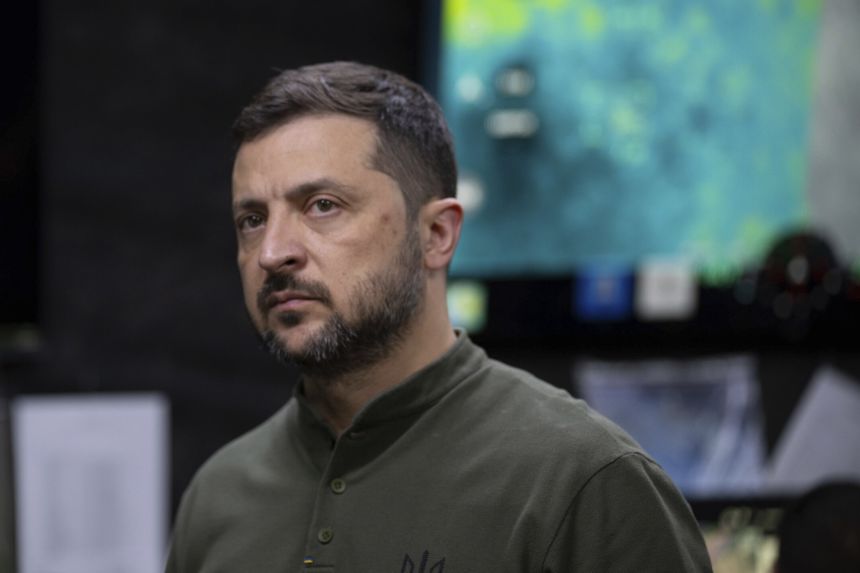
The relationship between Ukraine and Poland has been one of the defining alliances in Europe since Russia’s invasion of Ukraine. Poland has emerged as one of Kyiv’s strongest supporters, providing military assistance, humanitarian aid, diplomatic backing, and refuge to millions of Ukrainians displaced by war.
However, a fresh diplomatic dispute has demonstrated how historical memory can still influence modern geopolitics. Ukrainian President Volodymyr Zelenskyy’s decision to return Poland’s highest state honour has reignited a sensitive debate over World War II-era History and the legacy of the Ukrainian Insurgent Army (UPA), a movement celebrated by some Ukrainians as freedom fighters but condemned by many Poles for atrocities committed during the war.
The Controversy arrives at a particularly sensitive moment. While both nations remain united against Russian aggression, the latest disagreement shows that unresolved historical issues continue to have the power to strain even the strongest strategic partnerships.
What Triggered the Diplomatic Dispute?
The immediate cause of the row was Zelenskyy’s decision to name a unit of Ukraine’s Special Operations Forces after the Ukrainian Insurgent Army (UPA).
The move sparked strong criticism in Poland, where the UPA remains associated with the killing of tens of thousands of Polish civilians during World War II. In response, Polish President Karol Nawrocki revoked the prestigious Order of the White Eagle that had been awarded to Zelenskyy in 2023.
Zelenskyy subsequently announced that he was returning the honour, stating that it belonged not merely to him but symbolically to the Ukrainian people and armed forces.
The exchange quickly escalated into a wider debate about history, national identity, and the limits of historical reconciliation between neighboring nations.
The Significance of the Order of the White Eagle
The Order of the White Eagle is Poland’s highest civilian honour and one of the country’s most prestigious distinctions.
It is traditionally awarded to heads of state, national leaders, and individuals who have made exceptional contributions to Poland or international cooperation.
Zelenskyy received the award in recognition of:
- Ukraine’s resistance against Russian aggression.
- Strengthening European Security.
- Promoting democratic values.
- Enhancing Polish-Ukrainian cooperation.
- Leadership during wartime.
The revocation of such a high-level honour is extremely rare and underscores the emotional and political significance of the UPA issue within Poland.
Who Were the Ukrainian Insurgent Army (UPA)?
The UPA emerged during World War II as an armed nationalist movement seeking an independent Ukrainian state.
Operating primarily during the 1940s and early 1950s, the organization fought against multiple adversaries, including Nazi Germany, Soviet forces, and various armed groups operating in Eastern Europe.
For many Ukrainians, the UPA represents resistance against foreign domination and a symbol of the long struggle for Ukrainian independence.
However, its legacy remains deeply controversial due to allegations of ethnic violence committed against Polish civilians during the war.
This conflicting interpretation has become one of the most difficult historical issues in Polish-Ukrainian relations.
Why Poland Views the UPA Differently
In Poland, the memory of the Volhynia massacres remains one of the most painful chapters of twentieth-century history.
During World War II, large numbers of Polish civilians were killed in territories that today lie within western Ukraine. Many Polish historians and political leaders attribute these killings primarily to the UPA.
In 2016, the Polish Parliament officially recognized the massacres as genocide.
This designation continues to shape public opinion and political discourse in Poland.
As a result, any attempt to honour the UPA often generates strong reactions from Polish leaders, historians, and the wider public.
Ukraine’s Perspective on the UPA
Ukraine’s interpretation of the UPA differs significantly.
Many Ukrainians view the movement as a symbol of national resistance against both Nazi and Soviet occupation. Supporters argue that the organization played a crucial role in preserving Ukrainian aspirations for independence during a period when the country lacked sovereignty.
Some Ukrainian historians contend that violence during the period involved multiple armed groups and affected both Polish and Ukrainian civilian populations.
This divergence in historical narratives explains why actions seen as patriotic in Ukraine can provoke controversy in Poland.
Why the Timing Matters
The dispute emerges at a time when unity between Poland and Ukraine is strategically important.
Since the beginning of the Russia-Ukraine conflict, Poland has become one of Kyiv’s most critical allies.
Its role includes:
- Facilitating military aid deliveries.
- Supporting sanctions against Russia.
- Hosting Ukrainian refugees.
- Advocating for Ukraine in European institutions.
- Strengthening NATO’s eastern flank.
Any deterioration in bilateral relations could complicate coordination on key security and economic issues.
A Strategic Alliance Tested by History
The latest disagreement highlights a challenge faced by many nations: balancing present-day strategic interests with historical memory.
Poland and Ukraine share common security concerns and a desire for regional stability. Yet both countries also maintain strong historical identities that influence domestic Politics.
Leaders often face pressure to defend national narratives, even when doing so risks creating diplomatic friction.
The current dispute illustrates how historical issues can resurface despite strong contemporary cooperation.
Responses from Political Leaders
Polish President Karol Nawrocki defended his decision by emphasizing the importance of historical memory and the suffering of Polish civilians during World War II.
At the same time, he stressed that Poland’s support for Ukraine against Russia would continue.
Zelenskyy responded by expressing gratitude for Poland’s assistance while reaffirming Ukraine’s right to honour figures and movements associated with its independence struggle.
Polish Prime Minister Donald Tusk also sought to lower tensions, warning that disputes between allies ultimately benefit those who wish to divide Europe.
Internal Debate Within Ukraine
Not all Ukrainian political figures supported the decision to return Polish honours.
Several prominent voices argued that escalating the dispute could damage an important strategic partnership.
Some critics suggested that symbolic gestures should not overshadow the practical cooperation required to address ongoing security challenges.
The debate reflects broader questions about how countries balance historical remembrance with contemporary diplomatic priorities.
Comparison: Poland and Ukraine’s Views of the UPA
| Ukraine’s View | Poland’s View |
|---|---|
| National resistance movement | Organization linked to wartime massacres |
| Symbol of independence | Source of historical trauma |
| Anti-Soviet struggle | Associated with ethnic violence |
| Honoured in some official narratives | Widely condemned politically |
| Part of national identity | Remembered through civilian losses |
The Geopolitical Dimension
The dispute carries implications beyond bilateral relations.
Russia has frequently sought to exploit divisions among countries supporting Ukraine. Public disagreements over historical issues can create narratives that undermine perceptions of unity among Western allies.
This explains why many observers have urged both governments to manage the dispute carefully and avoid allowing symbolic disagreements to overshadow strategic cooperation.
Progress Toward Reconciliation Before the Dispute
Despite longstanding disagreements, Poland and Ukraine had made meaningful progress on historical reconciliation in recent years.
Areas of cooperation included:
- Joint historical research projects.
- Exhumation of wartime victims.
- Cultural exchanges.
- Diplomatic dialogue on historical issues.
- Commemorative initiatives.
Many analysts viewed these efforts as important steps toward addressing difficult historical questions while preserving strong modern relations.
The current dispute risks slowing that progress but does not necessarily reverse it entirely.
An Important Insight Often Missed
The controversy reveals a broader truth about international relations: historical heroes are rarely viewed the same way across national borders.
Movements celebrated as symbols of freedom in one country may be remembered differently elsewhere due to the experiences of neighboring populations.
Managing these competing memories requires careful Diplomacy, mutual respect, and a willingness to engage with uncomfortable aspects of history.
This challenge extends far beyond Eastern Europe and remains relevant in many regions around the world.
What Happens Next?
Despite the tension, both Poland and Ukraine have strong incentives to maintain close cooperation.
Poland remains one of Ukraine’s most important allies, while Ukraine plays a central role in regional security.
Upcoming reconstruction initiatives, diplomatic meetings, and security consultations will likely provide opportunities for both governments to stabilize relations.
While historical disagreements may persist, practical cooperation is expected to continue.
Future Outlook
The dispute is unlikely to fundamentally alter Poland’s support for Ukraine, but it demonstrates how historical issues can still influence contemporary politics. Future progress will depend on both sides continuing dialogue, promoting historical research, and separating strategic cooperation from unresolved historical disagreements.
As Ukraine continues its fight against Russian aggression, maintaining strong relations with Poland will remain a priority. Likewise, Poland’s broader security interests are closely linked to Ukraine’s stability and independence.
Conclusion
Zelenskyy’s decision to return Poland’s highest honour has transformed a symbolic disagreement into a significant diplomatic episode. At the heart of the controversy lies the legacy of the Ukrainian Insurgent Army, a historical issue that continues to evoke strong emotions in both countries.
While the dispute has reopened old wounds, it has also highlighted the resilience of the broader Polish-Ukrainian partnership. Both nations understand the strategic importance of their relationship, particularly during a period of heightened regional uncertainty.
The coming months will reveal whether leaders in Warsaw and Kyiv can continue building a forward-looking partnership while addressing the difficult historical questions that remain unresolved. If managed carefully, the episode may ultimately strengthen efforts toward long-term reconciliation rather than derail them.
For breaking news and live news updates, like us on Facebook or follow us on Twitter and Instagram. Read more on Latest World on thefoxdaily.com.




COMMENTS 0