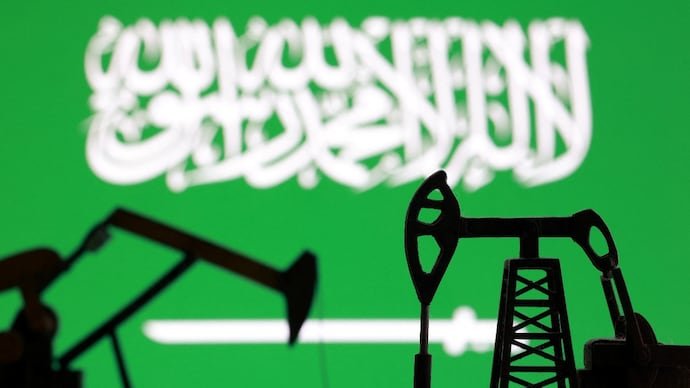
Saudi Arabia is exploring at least $8 billion in fresh borrowing as the economic fallout from the Iran War puts additional pressure on government finances, trade routes and the kingdom’s oil industry.
The potential financing, reported by Bloomberg, comes as Saudi Arabia faces an unusually complicated combination of pressures. Disruptions linked to the conflict have affected Shipping, increased import costs and strained supply chains, while attacks on energy infrastructure have created additional challenges for the kingdom’s oil sector.
At the same time, Riyadh has continued to pursue its long-term economic transformation strategy, which requires substantial investment in infrastructure, tourism, technology, manufacturing, Entertainment and other industries intended to reduce the economy’s dependence on oil.
Saudi Arabia’s National Debt Management Center, or NDMC, is sounding out banks about a possible loan of at least $8 billion, according to people familiar with the matter cited by Bloomberg. Saudi Aramco is separately discussing potential financing with lenders.
Both discussions remain at an early stage, meaning they may not ultimately result in completed transactions. Nevertheless, the search for additional funding provides an important insight into how the kingdom is responding to the financial consequences of the conflict while attempting to keep its broader investment programme moving.
Why Saudi Arabia is looking for more money now
The immediate issue is the growing gap between the kingdom’s financial requirements and the pressures affecting its economy.
Saudi Arabia entered the latest period with substantial spending commitments. The government is financing public projects, supporting economic diversification and maintaining investment through state-owned companies and the Public Investment Fund.
The war has added another layer of uncertainty.
Disruptions around major shipping routes have increased the cost and complexity of moving goods. The Strait of Hormuz is particularly important because it is a critical route for global energy shipments. Threats to shipping in the Red Sea have also complicated regional trade.
For Saudi Arabia, the consequences are not limited to oil exports. Higher transportation and insurance costs can affect imports, industrial activity and supply chains throughout the economy.
At the same time, attacks targeting energy infrastructure have increased risks for an economy in which oil remains a central source of revenue and foreign-exchange earnings.
Saudi Arabia’s economy has already taken a significant hit
The economic pressure is visible in the latest growth figures described in the Bloomberg report. Saudi Arabia recorded its steepest economic contraction since the pandemic in the second quarter, while the oil sector shrank by nearly 25%.
The oil contraction is particularly important because petroleum remains deeply connected to Saudi Arabia’s public finances even as Riyadh attempts to diversify its economy.
The impact of the conflict has been compounded by disruptions involving regional shipping and energy infrastructure. Iran has targeted Saudi energy infrastructure, while Iran-backed Houthis have threatened ships operating around the Red Sea.
Saudi Arabia has also faced complications in transporting oil through routes designed to bypass the Strait of Hormuz from its western coast.
This creates a difficult economic equation. The kingdom wants to maintain reliable oil production and exports while simultaneously dealing with a regional conflict that can disrupt both physical infrastructure and transportation networks.
Higher oil prices are providing some financial relief
There is, however, one major factor working in Saudi Arabia’s favour: higher crude prices.
Brent crude has averaged around $87 a barrel this year, according to the information in the source report. Higher oil prices can provide additional revenue for major oil producers and help offset some of the costs associated with lower production, disrupted trade and increased government spending.
But higher prices do not automatically eliminate fiscal pressure.
For Saudi Arabia, the effect depends on both the price of oil and the volume of crude that can actually be produced and exported. If infrastructure disruptions reduce production or logistical problems limit shipments, higher prices may only partially compensate for lost output.
There is also a broader issue. The kingdom’s spending ambitions have expanded considerably beyond the traditional oil economy. That means the government must consider not only current oil revenue but also how much financing is needed to maintain investment over several years.
A $9 billion quarterly deficit adds to the pressure
Saudi Arabia recorded a deficit of 34.3 billion riyals, equivalent to about $9.1 billion, in the second quarter.
The deficit helps explain why additional borrowing is being considered.
A government deficit is not necessarily a sign of a financial crisis. Countries routinely borrow to fund investment, manage temporary revenue shortfalls or smooth spending over economic cycles. Saudi Arabia has also deliberately developed a broader debt strategy as part of its financial management.
The more important question is how borrowing fits into the kingdom’s longer-term fiscal position.
Saudi Arabia has significant financial assets and access to domestic and international capital markets. It is therefore in a very different position from a government that has limited access to financing.
However, repeated borrowing can still become more expensive if investors demand higher returns or if geopolitical uncertainty increases financing costs. That makes the choice of funding source increasingly important.
Saudi Arabia had already secured most of its 2026 funding needs
The possible new loan is particularly notable because Saudi Arabia’s National Debt Management Center had already said in May that it had completed its annual borrowing plan.
The NDMC said it had secured approximately 90% of the kingdom’s funding requirements before the geopolitical events in the region. It also indicated that if additional financing were required, private financing channels and local markets would be used as primary sources.
This suggests that the potential $8 billion loan is not simply part of an ordinary borrowing schedule. It reflects the possibility that conditions have changed enough to create additional financing requirements after the original plan was prepared.
The distinction matters because it shows how quickly a geopolitical shock can alter the financial needs of an oil-producing government.
Riyadh is diversifying how it raises debt
Saudi Arabia has already been using several channels to raise capital.
The kingdom has raised around $6 billion through domestic and international bonds this year, according to the Bloomberg report. Aramco has separately raised another $4 billion.
The Public Investment Fund, Saudi Arabia’s powerful sovereign wealth fund, also raised $7 billion in May in one of its first public-market transactions since the Iran war began.
The potential new loan would therefore fit into a broader strategy in which Saudi Arabia is using multiple forms of financing rather than depending exclusively on traditional bond issuance.
| Funding activity | Reported amount | Significance |
|---|---|---|
| Potential NDMC loan | At least $8 billion | Possible additional government financing |
| Saudi government bonds this year | About $6 billion | Domestic and international debt raising |
| Aramco financing raised this year | About $4 billion | Corporate funding by the state-backed oil company |
| PIF transaction in May | $7 billion | Public-market financing by the sovereign wealth fund |
| NDMC syndicated loan last year | $13 billion | Seven-year syndicated financing |
The $13 billion loan shows Saudi Arabia has embraced syndicated financing
Saudi Arabia’s latest search for funding is not without precedent.
Late last year, the NDMC raised a $13 billion, seven-year syndicated loan. The transaction demonstrated the kingdom’s willingness to tap bank financing alongside conventional debt markets.
Syndicated loans can be particularly useful for large borrowers because several financial institutions participate in the same transaction. This can give the borrower access to substantial funding while broadening its relationships with international banks.
For Saudi Arabia, such financing also provides another option when market conditions make a large public bond issue less attractive.
The potential new loan should therefore be viewed within the kingdom’s wider effort to create a flexible funding structure rather than as evidence that Saudi Arabia has suddenly lost access to capital.
Why Aramco is also looking for outside capital
Saudi Aramco is separately discussing possible financing with banks, according to people cited in the Bloomberg report.
The oil giant has been exploring ways to broaden its funding sources while remaining active in debt markets. This is significant because Aramco is one of the most financially important companies in Saudi Arabia and has traditionally generated substantial cash through its oil operations.
Its financing strategy also has implications for the wider Saudi economy because dividends and other financial flows from the company are important to the state.
Aramco has previously explored different ways of bringing outside capital into its business. Bloomberg has also reported that the company is pursuing a privatisation plan that could eventually raise as much as $35 billion.
The broader objective is not necessarily to replace oil revenue with debt. Instead, outside capital can allow Saudi companies and government-linked entities to fund investment while preserving other sources of capital for different priorities.
Saudi Arabia’s diversification plans make the financing question more important
The financial pressure becomes more complicated when viewed against the scale of Saudi Arabia’s economic diversification programme.
Under Crown Prince Mohammed bin Salman’s Vision 2030 agenda, Riyadh has committed to developing industries that can generate economic activity beyond crude oil. These include tourism, entertainment, technology, manufacturing, logistics, clean energy and major urban developments.
Such projects require capital over long periods.
The challenge is therefore not simply to fund the government’s current budget deficit. Saudi Arabia also has to decide how much capital can continue to be deployed toward long-term transformation while preserving fiscal flexibility during a period of geopolitical uncertainty.
That tension helps explain why the kingdom is increasingly looking at external financing, asset monetisation and partnerships with private investors.
PIF is moving toward a different phase of investment
The Public Investment Fund is central to Saudi Arabia’s diversification strategy. Its assets under management are around $900 billion, making it one of the world’s largest sovereign wealth funds.
Its latest five-year strategy represents a shift from rapid expansion toward greater emphasis on value creation, investment efficiency and private-sector participation.
That shift is important in the current Environment.
Rather than simply funding every major project directly, the fund can increasingly seek partnerships, bring in external investors, manage mature assets and explore ways to unlock value from investments it already owns.
This approach can potentially reduce the amount of new capital that must come directly from the state while allowing projects to continue progressing.
The strategy also creates a clearer role for private capital in Saudi Arabia’s economic transformation.
Why asset sales and partnerships could become more important
Saudi Arabia’s push for outside capital does not necessarily mean it is abandoning its mega-project ambitions. Instead, the financing model may evolve.
A project initially developed with significant public-sector backing can eventually attract private investors, sell stakes to outside owners or be prepared for a public listing.
That process can return capital to the original investor while transferring some future funding requirements to private-sector participants.
The PIF’s 2026-2030 strategy places greater emphasis on enabling private-sector participation and maximising the value of strategic assets. This suggests that attracting external capital is becoming an increasingly important part of the kingdom’s investment model.
The approach is particularly relevant during periods of higher uncertainty because it gives Riyadh another way to keep economic projects moving without relying entirely on government borrowing.
Saudi Arabia is not simply cutting investment
Despite the financial pressure, the kingdom has not stopped deploying capital.
The source report notes that Saudi Arabia recently committed around €6 billion, or approximately $7 billion, to a theme park complex near Paris.
That decision illustrates the broader challenge facing Riyadh. The kingdom is simultaneously responding to a regional conflict and continuing to pursue long-term international and domestic investment opportunities.
This is not necessarily contradictory. Saudi Arabia’s economic strategy is based on using its financial resources to build new sources of growth, attract international attention and expand its global investment footprint.
But the war increases the importance of deciding which projects should receive capital immediately, which can be delayed and which should attract a greater share of private financing.
What the borrowing means for Saudi Arabia’s economy
The proposed financing should not be interpreted simply as a sign that Saudi Arabia is running out of money.
The more useful interpretation is that the kingdom is managing a period in which its financial demands have increased while economic risks have also become more complicated.
Saudi Arabia still has major oil resources, substantial financial assets and access to international capital. Higher crude prices can also provide an important cushion.
However, the current environment tests the sustainability of a model that combines high public investment with ambitious economic transformation.
If the conflict remains disruptive, Riyadh may have to rely more heavily on borrowing, asset sales, private partnerships and other forms of capital mobilisation. If geopolitical conditions improve, some of that pressure could ease.
What could happen next?
The most immediate question is whether the NDMC completes the proposed $8 billion loan. The discussions remain preliminary, so no final transaction can be assumed.
The next important development will also be whether Aramco secures additional financing and how the company balances debt, investment and shareholder returns.
Beyond individual deals, investors will be watching how Saudi Arabia adjusts its broader spending strategy.
If the conflict continues to affect shipping, infrastructure and energy markets, Riyadh could place greater emphasis on flexible financing and private-sector participation. If oil prices remain strong, higher petroleum revenue could provide additional room for government spending.
The outcome will depend on the interaction between oil prices, production, government expenditure, borrowing costs and the pace of economic diversification.
Saudi Arabia faces a balancing act, not an immediate financial crisis
Saudi Arabia’s search for at least $8 billion in additional borrowing comes at a critical point for the kingdom’s economic transformation.
The second-quarter deficit of 34.3 billion riyals, oil-sector contraction and disruption to regional trade have increased the financial pressure created by the war. Higher crude prices have provided some relief, but they do not remove the underlying challenge.
At the same time, Riyadh remains committed to investing in projects designed to make the economy less dependent on oil. That requires substantial and sustained capital, even when geopolitical conditions are unfavourable.
The emerging response is a more diversified funding model. Government borrowing, syndicated loans, corporate debt, sovereign wealth fund financing, asset monetisation and private-sector partnerships can all play different roles.
The key issue for Saudi Arabia is therefore not simply how much it borrows. It is whether the kingdom can continue financing its transformation while keeping debt, investment and fiscal risks under control.
For now, the search for new funding signals that the war has made that balancing act more difficult. But it also shows that Riyadh is using a wide range of financial tools rather than relying on a single source of capital.
For breaking news and live news updates, like us on Facebook or follow us on Twitter and Instagram. Read more on Latest Business on thefoxdaily.com.



COMMENTS 0