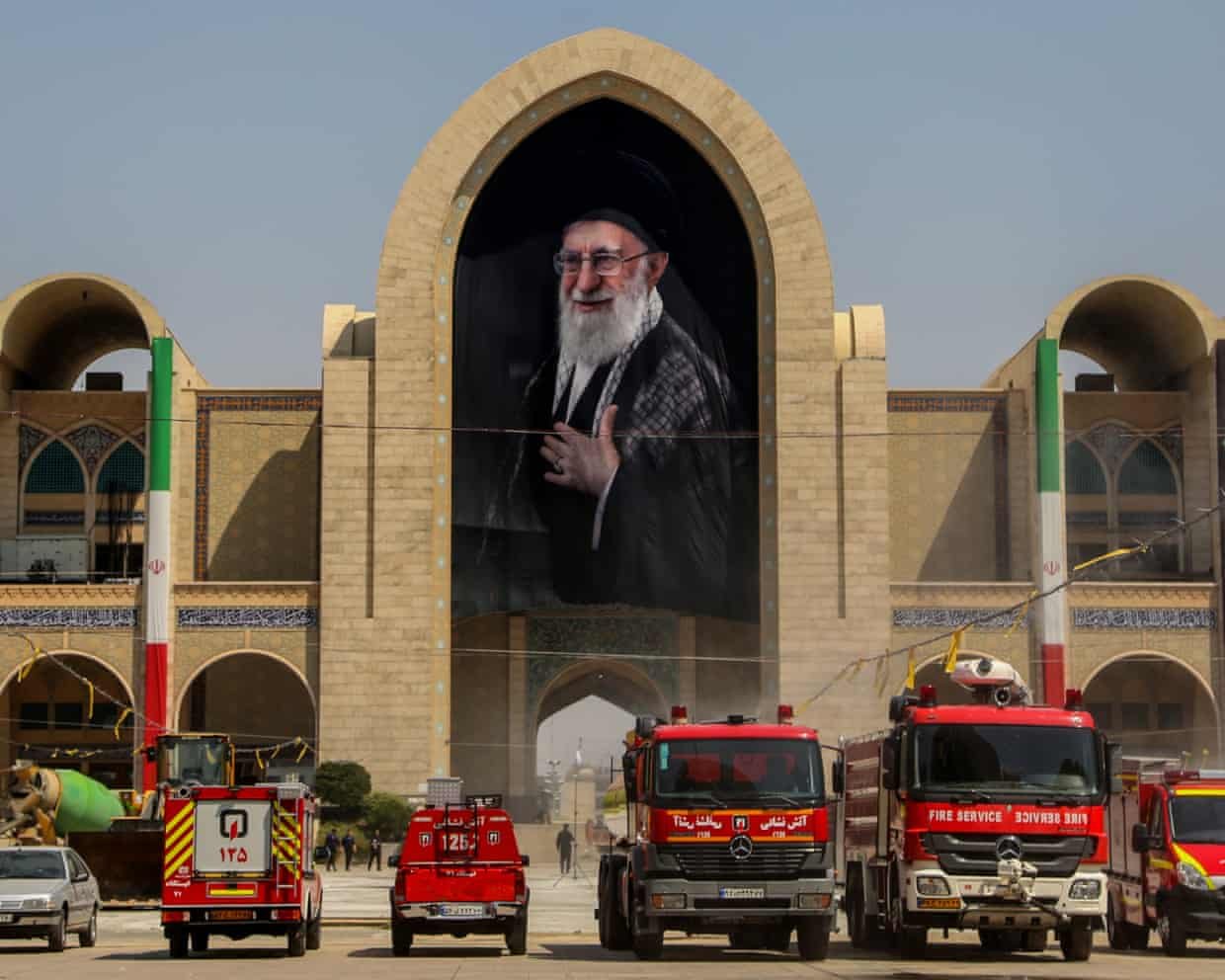
Ali Khamenei’s state funeral has become one of the most significant public events in contemporary Iranian history, with millions of mourners expected to participate in a six-day farewell that stretches across several cities in Iran and neighboring iraq. Designed as both a religious commemoration and a political statement, the ceremony reflects the central role Khamenei played in shaping Iran’s domestic Governance, regional influence, and ideological direction during his 36 years as supreme leader.
Beginning in Tehran and concluding with his burial in Mashhad, the funeral is intended to demonstrate national solidarity at a time of heightened regional tensions. Organizers have framed the event as a tribute to Khamenei’s leadership while emphasizing themes of resilience, sacrifice, and continuity. The carefully planned ceremonies also seek to reinforce Iran’s political stability as the country enters a new chapter following the end of an era that influenced generations of Iranians.
A Funeral Designed on an Unprecedented Scale
The state funeral has been planned as a multi-stage national event involving religious institutions, government agencies, military organizations, and millions of expected participants. Extensive preparations have transformed major public spaces with banners, ceremonial decorations, security checkpoints, and logistical arrangements to accommodate enormous crowds.
Officials describe the ceremony as one of the largest public gatherings since the 1979 Islamic Revolution. Beyond honoring the late supreme leader, the event is intended to project stability and demonstrate that state institutions continue functioning despite recent turmoil.
The symbolic slogan “We Must Rise” appears prominently throughout the funeral route, reinforcing messages of perseverance and national resolve.
Who Was Ali Khamenei?
For more than three decades, Ali Khamenei served as Iran’s highest political and religious authority. During his leadership, Iran experienced significant geopolitical challenges, economic Sanctions, regional conflicts, technological development, and changing Relationships with major world powers.
His influence extended beyond domestic politics into regional diplomacy and the wider Shia Muslim community, making his passing an event with consequences far beyond Iran’s borders.
Funeral Timeline Across Multiple Cities
| Day | Location | Purpose |
|---|---|---|
| Saturday | Tehran | Public funeral and lying in state. |
| Monday | Central Tehran | Mass public procession. |
| Tuesday | Qom | Religious commemoration. |
| Wednesday | Karbala and Najaf | Regional Shia tribute ceremonies. |
| Thursday | Mashhad | Final burial ceremony. |
Why the Funeral Carries Political Importance
State funerals for national leaders often serve purposes beyond remembrance. In this case, the extended ceremonies provide an opportunity for authorities to present an image of institutional continuity while reassuring supporters that the country’s political system remains intact.
The inclusion of multiple cities, prominent religious locations, and official ceremonies reflects an effort to combine national identity with religious symbolism. Such events also communicate political messages to domestic audiences and international observers alike.
Religious Symbolism and Muharram
The funeral coincides with Muharram, the first month of the Islamic calendar, when Shia Muslims commemorate the martyrdom of Husayn ibn Ali. This timing adds powerful religious significance to the ceremonies, with organizers drawing parallels between sacrifice, resistance, and perseverance.
For many participants, the overlap between the funeral and Muharram transforms the event into both a national farewell and a deeply spiritual gathering.
Massive Security and Logistical Planning
Hosting millions of mourners requires extensive coordination involving transportation authorities, emergency services, security personnel, and municipal agencies. Road closures, public transport expansion, temporary traffic restrictions, and enhanced crowd management measures have been introduced throughout the funeral period.
Authorities are also focusing on public safety, given the scale of attendance and the logistical challenges associated with managing one of the country’s largest public gatherings.
Regional and International Significance
The inclusion of ceremonies in Karbala and Najaf highlights Khamenei’s influence beyond Iran and underscores the religious connections shared among Shia communities across the region. The participation of foreign delegations further emphasizes the international attention surrounding the funeral.
At the same time, the absence of invitations to certain Western governments reflects continuing diplomatic divisions and differing geopolitical perspectives.
Economic and Social Context
Organizers have sought to balance messages honoring Khamenei’s legacy with broader themes focused on Iran’s future. Public messaging emphasizes resilience, reconstruction, and optimism while acknowledging the country’s evolving political and economic landscape.
This approach reflects an understanding that national unity depends not only on historical remembrance but also on public confidence in future leadership and governance.
Expert Insight: State Funerals as Strategic Political Events
Major state funerals frequently serve multiple purposes beyond honoring a leader’s legacy. They reinforce national identity, demonstrate institutional continuity, project stability to international audiences, and provide opportunities for governments to communicate political priorities during periods of transition.
In Iran’s case, the carefully planned sequence of ceremonies illustrates how symbolism, religion, and politics often intersect during moments of historic national significance.
What Comes Next?
Following the conclusion of the funeral in Mashhad, attention is expected to shift toward Iran’s evolving political leadership, domestic priorities, and international relationships. Observers will closely watch how the country’s institutions navigate the post-Khamenei era and whether the messages of unity presented during the funeral translate into long-term political stability.
Conclusion
The six-day funeral for Ali Khamenei represents far more than a farewell to a longtime leader. It is a carefully orchestrated national event blending religion, politics, history, and symbolism on an extraordinary scale. From Tehran to Mashhad, and through significant Shia religious centers, the ceremonies are intended to demonstrate continuity, resilience, and national cohesion during a pivotal moment in Iran’s history. Regardless of the political interpretations surrounding the event, its scale and symbolism ensure it will be remembered as one of the defining public ceremonies of the era.
For breaking news and live news updates, like us on Facebook or follow us on Twitter and Instagram. Read more on Latest World on thefoxdaily.com.




COMMENTS 0