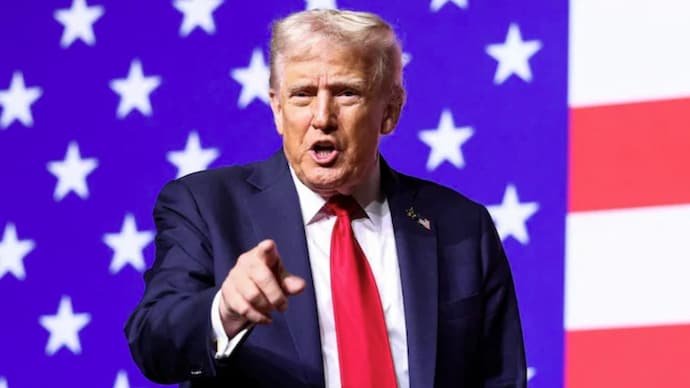
US President Donald Trump and Chinese President Xi Jinping are meeting at the White House on Thursday, September 24, in a summit designed to keep a fragile US-china relationship from sliding back into open confrontation. The leaders are expected to discuss Trade, artificial intelligence, Taiwan, Iran and broader technology competition as Washington and Beijing attempt to preserve a period of relative economic stability.
The talks follow an agreement to extend the existing US-China trade truce from its planned November 10 expiry to January 10. The additional time gives negotiators another window to work toward a broader economic arrangement, but it does not resolve the underlying disputes that pushed the world’s two largest economies into a damaging tariff confrontation in the first place.
Xi’s visit is also significant diplomatically. It is his first visit to Washington in more than a decade, while Trump has gone out of his way to emphasize the importance of the relationship, personally greeting Xi and his wife, Peng Liyuan, when they arrived at Joint Base Andrews on Wednesday. The White House is treating the visit as a major state occasion, even though the most difficult issues between Washington and Beijing remain unresolved.
Trade truce buys Washington and Beijing more time
Trade is the most immediate area where the summit has already produced a concrete development. The two governments agreed to extend their existing tariff truce until January 10, preventing the current pause in trade tensions from expiring in November. US Treasury Secretary Scott Bessent said the extension creates additional time for the two sides to pursue a larger agreement rather than allowing negotiations to return immediately to the tariff escalation of the previous year.
The significance of the extension becomes clearer when viewed against the scale of the earlier trade conflict. During the tariff confrontation, US duties on Chinese goods and China’s retaliatory tariffs reached triple-digit levels. The resulting uncertainty affected companies that depend on cross-border supply chains, manufacturers sourcing components from China and American businesses selling products into the Chinese market.
The truce has not ended those structural disagreements. Instead, it has created a temporary framework under which negotiations can continue without an immediate return to the most disruptive tariff levels.
Recent talks between US and Chinese officials have also addressed the possibility of lower tariffs on selected categories of goods. Washington and Beijing have been discussing a process for identifying products that could qualify for reduced duties, with potential areas including energy, agricultural products, medical devices and lower-technology consumer goods.
That approach illustrates the broader character of the relationship: cooperation is possible in specific areas even while the two governments remain strategic competitors.
Why the short extension matters
The decision to extend the truce only until January rather than agreeing to a much longer arrangement leaves a major question open. The two sides still need to settle disagreements involving tariffs, rare-earth materials, technology controls and market access.
Critical minerals are especially important because rare-earth materials and magnets are used across several advanced industries, including electronics, electric vehicles and defence manufacturing. China occupies a powerful position in the global supply chain for these materials, while Washington has been trying to reduce vulnerabilities created by excessive dependence on a single source.
At the same time, Beijing has an interest in maintaining access to major foreign markets and technology while protecting its own industrial priorities. That creates an unusual balance in which both governments have reasons to avoid a new trade shock even as each seeks leverage over the other.
The result is a relationship that is neither a return to normal economic cooperation nor a complete economic separation. Instead, the current policy environment is increasingly defined by selective trade, targeted restrictions and negotiations over strategically important industries.
AI becomes a new frontier of US-China competition
Artificial intelligence could prove more complicated than conventional trade negotiations because it combines economic competition with national security concerns.
Both the United States and China are competing to develop advanced AI systems and the computing infrastructure required to run them. Washington has imposed restrictions affecting China’s access to some advanced semiconductor technologies, while Chinese technology companies continue to develop domestic alternatives and expand their AI capabilities.
Against that backdrop, the two governments have discussed a possible mechanism for notifying each other about serious AI incidents that could create national-security risks. Bessent has argued that greater transparency between the two leading AI powers could help prevent dangerous incidents from escalating through misunderstanding or lack of communication.
The proposal is significant because it does not require the United States and China to agree on how AI should be developed. Instead, it focuses on communication when an incident becomes serious enough to affect national security.
That distinction could make limited cooperation easier. Washington and Beijing can remain competitors in AI research, chips and commercial applications while still recognizing that certain AI-related failures or attacks could create risks neither side wants to manage during a broader geopolitical crisis.
AI competition is about more than chatbots
The strategic competition surrounding artificial intelligence extends beyond consumer-facing applications. Advanced AI can influence cybersecurity, military planning, intelligence analysis, industrial automation and critical infrastructure.
That is why semiconductor export controls have become part of the wider US-China relationship. Access to advanced chips and manufacturing equipment can influence how quickly a country can build increasingly capable AI systems.
The issue also creates a difficult policy problem for Washington. Restricting access to advanced technology can be used as a national-security tool, but broad restrictions can also encourage China to accelerate domestic development of alternative technologies.
Beijing faces its own dilemma. Greater self-reliance can reduce vulnerability to US restrictions, but developing complete alternatives to the world’s most advanced semiconductor ecosystem is a long-term industrial challenge.
The White House summit therefore provides an opportunity for both sides to establish communication around AI even while deeper technological competition continues.
Taiwan remains the most sensitive security issue
Trade and AI may offer areas for negotiation, but Taiwan is likely to be considerably more difficult.
China claims Taiwan as part of its territory and has not renounced the possibility of using force to achieve unification. The United States does not maintain formal diplomatic relations with Taiwan but is bound by US law to provide the island with defensive arms and maintains a longstanding policy designed to deter conflict across the Taiwan Strait.
Beijing has repeatedly urged Washington to stop arms sales to Taiwan. For China, the issue is directly connected to sovereignty and national security. For Washington, arms sales are tied to Taiwan’s ability to maintain its defence capabilities.
The dispute has also become part of Trump’s broader negotiations with Xi. Trump has previously described US arms sales to Taiwan as a negotiating tool, while a major US arms package for the island has remained on hold. Reuters reported before the summit that Beijing’s concerns about the package were expected to feature in discussions.
Any movement on Taiwan would therefore carry consequences beyond the immediate relationship between Trump and Xi. It could affect perceptions of deterrence in East Asia, the calculations of Taiwan’s government and the wider security posture of US allies in the region.
Iran adds another layer to the summit
The war involving Iran is another issue where Washington and Beijing have sharply different positions.
The Trump administration has sought to pressure China over its relationship with Iran and has argued that Beijing’s economic ties to the Gulf region give it an incentive to help bring the conflict toward an end. China, meanwhile, has criticized US and Israeli military action and has called for an end to the fighting.
That makes a major breakthrough on Iran difficult to anticipate. The two governments do not approach the conflict from the same strategic position, and China’s relationship with Tehran is part of a broader foreign-policy framework that Washington has repeatedly challenged.
Iran also intersects with the economic relationship. China is an important buyer of energy, while the United States has used sanctions and other economic tools to pressure Tehran. Any significant change in the regional conflict could therefore affect energy markets, shipping and the calculations of governments across the Middle East.
For the Trump-Xi meeting, the most realistic area for discussion may therefore be crisis management rather than a complete agreement on the war itself.
The symbolism of Xi’s White House visit
The substance of the summit is only one part of the event. The symbolism surrounding Xi’s visit is unusually prominent.
Trump personally greeted Xi at Joint Base Andrews, a rare gesture for a visiting foreign leader. The White House is also hosting a formal state arrival ceremony and a state dinner, underscoring the importance Washington places on the relationship. Xi’s visit is his first to Washington in more than a decade.
The state dinner is expected to bring together senior political figures and prominent technology executives, highlighting the overlap between diplomacy and the technology competition at the heart of the US-China relationship.
The ceremony matters because the two governments are attempting to send two messages simultaneously. They want to show that dialogue remains possible, while neither side is abandoning its broader strategic objectives.
That balance explains why the summit can look unusually cordial while still dealing with some of the most consequential disputes in international Politics.
What businesses and consumers should watch
The outcome of the talks could affect businesses well beyond the companies directly involved in US-China trade.
A longer period of tariff stability would give manufacturers and importers more certainty when planning supply chains and investment. Companies that rely heavily on Chinese production could benefit from greater predictability, while firms that have invested in alternative production locations would need to assess whether changing trade conditions alter the economics of those decisions.
Technology companies face a separate set of considerations. Any changes to semiconductor restrictions, AI-related controls or access to Chinese markets could influence investment decisions across the technology industry.
Consumers may eventually feel the effects through prices and product availability, although the impact would vary considerably by industry. A trade truce does not automatically eliminate tariffs or reverse existing supply-chain changes. It mainly reduces the immediate risk of another rapid escalation.
Why the summit matters for the global economy
The United States and China account for enormous shares of global economic activity, manufacturing and trade. Their relationship therefore has consequences far beyond Washington and Beijing.
When the two governments impose tariffs or restrict technology exports, companies in other countries can be affected through supply chains, investment decisions and shifts in production. Conversely, a period of greater stability can make it easier for multinational businesses to plan.
Countries that have benefited from companies diversifying production away from China could also face changing conditions if US-China tensions ease. At the same time, continued restrictions in strategic industries could encourage more investment outside China’s established supply chains.
This means the summit is not simply a bilateral diplomatic event. It is also a signal to businesses and governments assessing whether the US-China relationship is moving toward managed competition or another cycle of escalation.
What happens after the White House talks
The most important test will come after the ceremony ends.
The extension of the trade truce gives negotiators until January to make progress, but a temporary agreement is not the same as a permanent settlement. Washington and Beijing still disagree over tariffs, rare-earth materials, advanced technology, AI safeguards and Taiwan.
The proposed AI notification mechanism could become a modest confidence-building measure if both governments agree on its scope and procedures. Trade negotiations could also advance if the two sides can identify specific areas where concessions are mutually acceptable.
But Taiwan and the wider security relationship will remain more difficult because they involve core strategic interests rather than individual commercial products.
The evidence so far points to a relationship based on managed competition rather than reconciliation. The two governments are demonstrating that they can negotiate and maintain high-level communication while continuing to compete over technology, security and global influence.
A fragile pause, not an end to US-China rivalry
Trump and Xi’s White House meeting is taking place during a period of relative stability in US-China trade, but the underlying rivalry remains firmly in place.
The extension of the trade truce to January gives both governments more time to negotiate and reduces the immediate risk of another tariff confrontation. The proposed AI notification mechanism offers another possible area of limited cooperation, particularly as both countries confront risks associated with increasingly powerful technology.
Taiwan and Iran, however, demonstrate why economic cooperation cannot by itself resolve the broader strategic relationship. The two governments continue to hold fundamentally different positions on security, sovereignty, technology controls and regional conflicts.
The significance of the Trump-Xi summit will therefore depend less on the ceremony surrounding the White House visit and more on what Washington and Beijing do after the leaders leave the room. If the trade pause leads to concrete agreements and sustained communication, the relationship could enter a more predictable phase. If unresolved disputes again overwhelm negotiations, the current truce could prove only another temporary interruption in a much longer US-China rivalry.
For breaking news and live news updates, like us on Facebook or follow us on Twitter and Instagram. Read more on Latest World on thefoxdaily.com.




COMMENTS 0