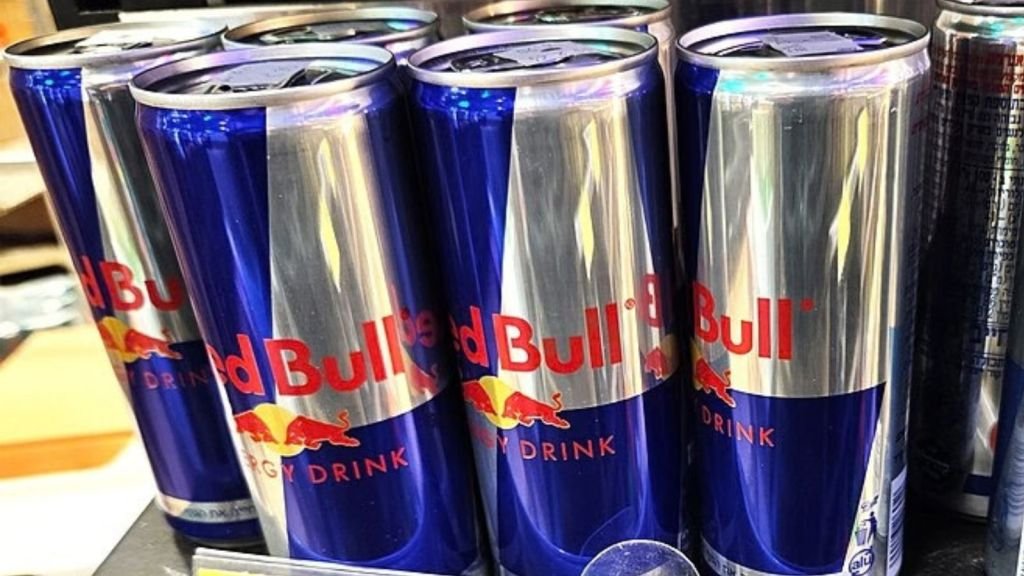
Red Bull India has taken its dispute with India’s Food Safety regulator to court, challenging a decision that prevents manufacturers of certain high-caffeine beverages from using the term “energy drink” on their product labels.
The company has approached the Delhi High Court, arguing that the Food Safety and Standards Authority of India, or FSSAI, imposed the prohibition without following the required regulatory process and without making any corresponding change to the underlying product standard.
The legal challenge, filed on September 25, marks the first court challenge to the regulatory move and comes as Indian authorities increase scrutiny of food and beverage companies. The wider enforcement campaign has included inspections and reviews of compliance by major brands operating in the country.
For Red Bull, the dispute goes beyond the wording printed on cans and bottles. The company argues that the restriction creates uncertainty for its existing Business and planned investments in India, where the energy drinks market has expanded rapidly over the past several years.
Why Red Bull has challenged FSSAI
At the centre of the case is FSSAI’s decision to prevent certain high-caffeine beverages from being marketed using the descriptor “energy drink”. Red Bull argues that the prohibition was introduced without a change to the relevant product standard.
In its petition, the company described the action as an “abrupt prohibition” and argued that it was imposed without prior notice. Red Bull said the move creates substantial regulatory uncertainty and could adversely affect its commercial investments in India.
The company has also argued that the decision conflicts with the country’s stated objective of facilitating international trade, promoting Investment and providing greater certainty to businesses.
Red Bull’s petition goes as far as arguing that the decision’s effect is to bring its entire business to a standstill. That is the company’s position in its legal filing, rather than an established finding by the court.
The Delhi High Court will now have to consider the company’s challenge and the regulator’s defence before determining the legal questions raised by the petition.
FSSAI expected to defend the decision
A government source has indicated that FSSAI will defend its position before the court.
The regulator’s position, according to the source, is that the use of the term “energy drinks” on product labels has historically not been permitted in the manner challenged by Red Bull.
This creates a central issue for the legal proceedings: whether the latest enforcement action represents the application of an existing regulatory position or amounts to a new prohibition that required additional procedural steps.
Red Bull’s petition argues that the regulator could not simply prohibit the descriptor without following the appropriate process, particularly when the underlying product standard had not been changed.
The case will therefore involve not only the commercial consequences for Red Bull but also questions about how food labelling rules are interpreted and enforced in India.
India ordered high-caffeine beverage makers to stop using the term
In June, Indian authorities directed manufacturers of high-caffeine beverages marketed as “energy drinks” to stop using that description on their products.
The move affected a category that has grown rapidly in India and includes several major domestic and international brands. Companies operating in the segment have argued that removing a familiar category descriptor could affect products whose marketing and consumer recognition have been built around the concept of providing an energy boost.
Regulatory scrutiny has extended beyond Red Bull. Other major companies and brands affected by the broader issue include Pepsi, Monster Beverage and Reliance-linked interests.
The companies operate in a market where branding and product positioning play an important role, particularly among younger consumers. A change in the way beverages can be described on packaging can therefore have implications beyond compliance and extend to marketing, distribution and consumer recognition.
Red Bull’s India business has grown sharply
The dispute comes as Red Bull has expanded significantly in India.
According to the figures cited in the supplied report, Red Bull’s revenue in India reached approximately $130 million in 2024. That was more than twice the company’s revenue in the country four years earlier.
The growth reflects the broader expansion of the energy drinks category in India. As disposable incomes, urban consumption and demand for functional beverages have increased, energy drinks have become increasingly visible in convenience stores, supermarkets, restaurants and other retail channels.
The category has also expanded beyond traditional sports and nightlife audiences. Energy drinks are increasingly marketed to consumers looking for beverages associated with alertness, stamina or an energy boost.
That wider consumer base has made the regulatory classification and labelling of these products increasingly important for manufacturers.
India’s energy drinks market is expanding rapidly
India has become an important growth market for energy drink manufacturers.
Retail sales in the category are estimated to be growing at around 12.6% annually, according to Euromonitor figures cited in the supplied report. That growth rate is higher than the corresponding rates reported for the United States and china.
The wider Indian energy drinks market is projected to reach approximately $1.6 billion in retail sales by 2028.
The numbers help explain why the dispute over a product descriptor has attracted attention from major beverage companies. India represents a substantial long-term market opportunity, and regulatory restrictions on how products can be classified or promoted can influence how companies position themselves.
For established brands such as Red Bull, the terminology is also closely connected with decades of global marketing. The phrase “energy drink” has become an internationally recognised category description, making its removal from Indian packaging particularly significant for the company.
Pepsi’s Sting changed the competitive landscape
The Indian market received another major boost when Pepsi launched Sting in the country in 2017.
The brand’s low retail price helped it reach a much broader consumer base than some premium energy drinks. Its ₹20 plastic bottles became particularly popular among younger consumers, with Euromonitor estimating significant consumption among people aged 15 to 19.
The arrival of lower-priced products expanded the category and intensified competition between established international brands and newer offerings.
It also demonstrated the potential size of India’s market for beverages positioned around energy and alertness.
As competition has increased, product labelling has become an important part of the regulatory debate because companies use category descriptions to communicate what a beverage is and how consumers should understand it.
Why the term “energy drink” matters to brands
Product descriptions are not merely words on packaging. They can influence how consumers identify a beverage, how retailers display it and how companies build advertising campaigns around it.
For a global brand such as Red Bull, “energy drink” is closely associated with its international identity. The company has built its business around a product category that is widely understood by consumers in markets around the world.
A restriction on the term could therefore require changes to packaging, advertising, distribution strategies and other forms of communication with consumers.
Red Bull’s legal argument is that these commercial consequences should not arise from an abrupt regulatory intervention that does not involve a corresponding change in the product standard.
Whether the company succeeds with that argument will depend on the legal interpretation of the relevant food safety and labelling rules and the procedure followed by FSSAI.
Health concerns are part of the regulatory debate
The regulatory scrutiny of energy drinks is not limited to labelling. These products have attracted attention in several countries because of concerns surrounding ingredients such as caffeine and sugar.
Some energy drinks also contain taurine and other ingredients that are marketed as part of their functional formulation.
Caffeine is a particular focus because excessive consumption can produce adverse effects, especially for children and adolescents. The amount of caffeine in individual products varies, making product composition and serving size relevant to any assessment of potential Health risks.
These concerns have led governments and health authorities in several countries to consider restrictions on the sale, advertising or marketing of energy drinks to younger consumers.
The health debate is separate from Red Bull’s legal challenge over the use of the term “energy drink”, but it forms part of the broader regulatory environment in which the Indian decision has been made.
England plans restrictions on sales to children
Regulatory scrutiny is also increasing in other markets.
England is set to prohibit the sale of energy drinks to children under the age of 16 from April next year, according to the information provided in the report.
Such measures demonstrate the different approaches governments are taking to the category. Some focus on labelling and product standards, while others concentrate on restricting access among younger consumers.
For manufacturers operating internationally, this creates a complex regulatory environment in which the same product category can face different rules in different countries.
India’s dispute with Red Bull is primarily about the use of a product descriptor, but the wider debate around caffeine and energy drinks provides important context for why authorities are paying greater attention to the category.
Legal dispute comes amid wider food safety enforcement
The Red Bull case is unfolding against a broader enforcement drive by Indian food safety authorities.
Regulators have increased inspections and compliance checks involving major food and beverage companies. Surprise inspections and scrutiny of product standards have formed part of efforts to ensure that manufacturers comply with food safety and labelling requirements.
The increased enforcement means companies are facing closer examination of how products are manufactured, described and marketed.
For businesses operating in heavily regulated consumer markets, regulatory certainty can be particularly important because product changes may require modifications to packaging, advertising materials, supply chains and retail inventories.
Red Bull’s argument about investment uncertainty is therefore linked to a broader commercial question: how quickly companies can adapt when regulators alter or enforce requirements affecting established product categories.
What the Delhi High Court case could determine
The proceedings could provide greater clarity on the legal process surrounding the restriction on the “energy drink” descriptor.
Among the central questions is whether FSSAI had the authority to impose the prohibition in the manner it did and whether the regulator was required to provide notice or follow a specific procedure before enforcing the restriction.
The court may also have to consider the distinction between an existing regulatory interpretation and a new restriction that changes how manufacturers can label products.
Red Bull’s challenge does not by itself suspend the regulator’s decision. The legal position will depend on orders passed by the Delhi High Court during the proceedings.
The case could also have implications beyond Red Bull if other companies producing or marketing similar beverages are affected by the interpretation of the rules.
A high-growth market faces a regulatory test
The dispute arrives at an important point for India’s energy drinks industry. The market is growing quickly, major global and domestic companies are competing for consumers, and the category is projected to expand substantially over the next several years.
At the same time, regulators are paying greater attention to food safety, labelling and the potential health implications of highly caffeinated products.
That creates competing considerations for policymakers and businesses. Regulators have to enforce food standards and address health concerns, while companies require clear and predictable rules under which they can develop products and make long-term investments.
Red Bull’s petition places that tension directly before the Delhi High Court.
The company is challenging what it considers an abrupt restriction on a globally recognised product description, while FSSAI is expected to defend the regulatory decision and its interpretation of India’s food safety framework.
The outcome will determine how the specific labelling dispute develops, but the case could also provide broader clarity for beverage manufacturers on the boundaries of product descriptions, regulatory enforcement and the procedures required when established market practices come under scrutiny.
For Red Bull, the stakes extend beyond the words printed on a can. India has become a significant and rapidly growing market for the company, and the court proceedings will now determine how its products can be positioned within the country’s evolving food safety and labelling framework.
For breaking news and live news updates, like us on Facebook or follow us on Twitter and Instagram. Read more on Latest India on thefoxdaily.com.






COMMENTS 0