The growing use of US economic and financial sanctions may be producing an unintended consequence: encouraging countries across the emerging world to build stronger alternatives in trade, finance, payments and connectivity.
That does not mean BRICS is becoming a unified economic bloc designed to replace the US-led financial system. The more significant development is subtler. Sanctions can increase the value of having more options more currencies for trade, more banks and development institutions for financing, more ways to settle transactions and more routes through which goods and energy can move.
The experience of Russia offers one of the clearest examples. After sweeping Western sanctions were imposed following the invasion of Ukraine, Russian trade was redirected toward countries including China, India, Türkiye and the United Arab Emirates. That shift required new banking arrangements, alternative payment mechanisms, different insurance structures and new logistics networks.
India-Russia trade illustrates how quickly those adaptations can occur. Bilateral merchandise trade reached $68.7 billion in 2024-25, compared with around $13 billion in 2021-22. More recently, Russian and Indian financial institutions have reported that roughly 96% of bilateral trade is now facilitated through the rupee and rouble.
The larger question for BRICS is whether such bilateral adaptations can gradually become a broader economic architecture.
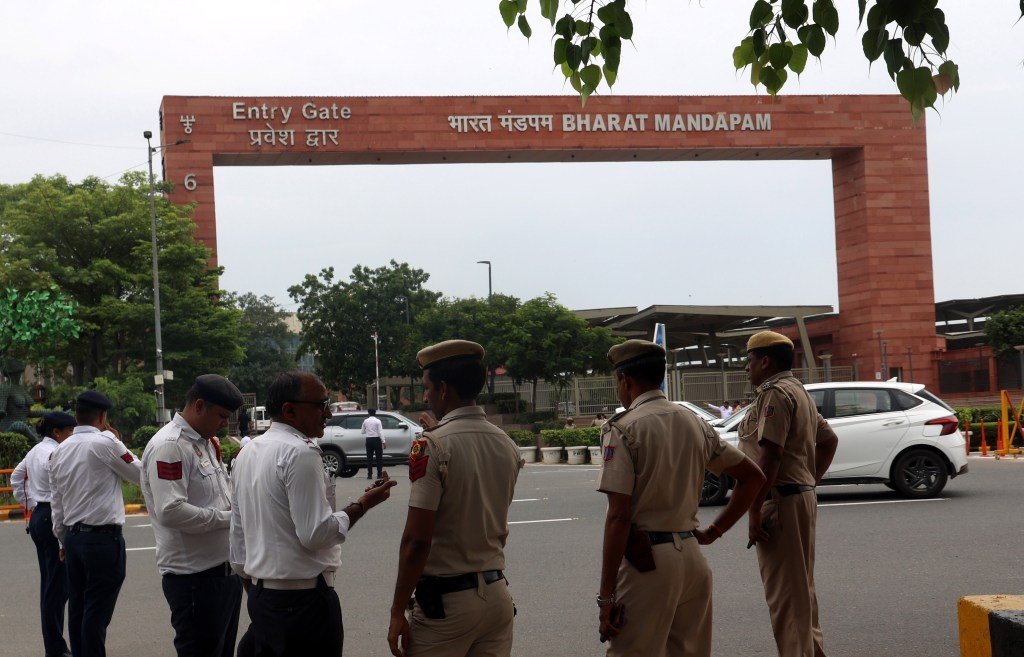
As India hosts the 18th BRICS Summit in New Delhi on September 12-13, 2026, that question is becoming increasingly important. India’s opportunity is not to turn BRICS into an anti-Western alliance. It is to use the group to build a more plural Global Economy in which dependence on any single currency, financial institution, payment system or trade corridor is reduced.
The sanctions paradox: pressure can encourage diversification
The modern global economy has been built around concentration.
The US dollar remains the dominant currency for reserves and international transactions. Global banking and payments rely heavily on institutions and infrastructure centred in Western financial markets, while many international trade routes are tied to a relatively limited number of ports, Shipping lanes and logistics hubs.
This concentration creates efficiency. A company does not need to maintain multiple settlement systems if one widely accepted currency and financial network can handle most transactions.
But concentration also creates vulnerability.
When sanctions restrict access to a currency, correspondent banks, payment networks, insurance markets or financial institutions, countries exposed to those systems suddenly face a different calculation. An alternative arrangement that might appear unnecessary in normal circumstances can become valuable insurance during a geopolitical crisis.
That is the sanctions paradox: measures intended to isolate a target can encourage the target and its trading partners to build mechanisms that reduce future exposure to the same pressure.
Those mechanisms do not necessarily replace the existing system. They can simply provide another option.
The dollar remains dominant but diversification is visible
Claims that BRICS is about to replace the dollar with a single alternative currency do not match the current structure of the global monetary system.
According to the latest IMF Currency Composition of Official Foreign Exchange Reserves data, the US dollar accounted for 56.77% of global allocated foreign-exchange reserves in the fourth quarter of 2025. The euro represented 20.25%, while the Chinese renminbi accounted for 1.95%.
Those figures show how difficult it would be for another individual currency to suddenly take the dollar’s place.
But they also reveal another trend. The IMF’s residual category for “other currencies” rose to 6.13% of global reserves in the fourth quarter of 2025, more than doubling since 2021.
That suggests the more meaningful story may not be de-dollarisation in the sense of replacing the dollar with another dominant currency. It is diversification.
Countries do not necessarily need to abandon the dollar. They can simply reduce the risks associated with depending on it for every transaction.
That distinction is likely to matter to India as it shapes the economic agenda of BRICS.
Why “de-dollarisation” is too narrow a way to understand BRICS
The phrase “de-dollarisation” often implies that BRICS countries are attempting to create one currency capable of competing directly with the dollar.
That is neither the easiest nor necessarily the most useful objective.
A common currency requires a deep level of monetary integration. Members would need to coordinate monetary policy, manage capital flows, create institutions that could act as a lender of last resort and accept constraints on their own economic sovereignty.
BRICS is nowhere near that model, and its members have little reason to create it.
India has its own monetary and financial interests. China has the renminbi. Russia operates with the rouble. Brazil uses the real. Gulf members have different currency arrangements and close financial relationships with global markets.
What makes more practical sense is allowing these currencies to be used more easily in bilateral and regional trade wherever commercial conditions permit.
That is a much more achievable form of diversification.
India-Russia trade shows how alternative settlement can work
The India-Russia relationship provides a powerful real-world example of how geopolitical pressure can create financial innovation.
Western sanctions dramatically changed Russia’s trading relationships. India, meanwhile, increased imports of Russian Oil, contributing to a sharp rise in bilateral trade.
According to Indian government data, trade between the two countries reached $68.7 billion in FY2024-25. Russian exports to India accounted for the overwhelming majority of that value, with crude oil and petroleum products among the largest imports.
The challenge was obvious: how could companies continue trading when established payment channels had become more difficult to use?
Indian and Russian banks expanded the use of national currencies and established mechanisms to facilitate rupee-rouble transactions. More recently, Russian banking officials have said that the payment infrastructure supporting bilateral trade is now functioning effectively, with dozens of banks involved in processing transactions.
The lesson is not that the dollar disappeared. It is that trade can continue when businesses and financial institutions have alternative channels available.
That is exactly the kind of resilience India could seek to promote across BRICS.
Sanctions are an accelerator, not the original cause
It would be misleading to argue that US Sanctions created BRICS economic cooperation from nothing.
Emerging economies were already seeking greater influence in international financial institutions before the latest wave of geopolitical conflicts. South-South trade was expanding, countries were exploring local-currency settlements and governments were discussing reforms to global institutions such as the IMF and World Bank.
The sanctions Environment simply increased the economic value of those efforts.
For a business deciding how to structure international trade, an alternative payment mechanism can look inefficient when the dominant system is stable and predictable. But when access to the dominant system suddenly becomes uncertain, that same alternative can look like insurance.
This is why sanctions may be accelerating rather than causing the integration of BRICS economies.
The group’s members have additional incentives to cooperate because they increasingly understand that geopolitical fragmentation has an economic cost.
BRICS has the scale to matter, but scale is not integration
The expansion of BRICS has dramatically changed the group’s economic weight.
The current 11 members are Brazil, Russia, India, China, South Africa, Egypt, Ethiopia, Iran, Saudi Arabia, the United Arab Emirates and Indonesia.
Together, they include some of the world’s largest consumer markets, major energy producers, commodity exporters and significant pools of capital. The group represents roughly half of the world’s population and around 40% of global economic output when measured at purchasing-power parity.
But a large economic footprint does not automatically create an integrated economic system.
BRICS is not the European Union. It has no common market, no common external tariff, no unified regulatory system and no single monetary policy.
Its members also have significant political differences. India and China remain strategic competitors. Gulf members have different relationships with Beijing, Washington and Moscow. Russia’s economy is deeply shaped by sanctions, while other members remain highly integrated into Western financial markets.
These differences make a centralized BRICS economic system unlikely.
A network-based model is much more realistic.
The future of BRICS may look like a network, not a bloc
The most plausible form of BRICS economic integration is not a closed trading bloc but a network of interoperable systems.
Under that model, members can continue trading with the United States, European Union and other markets while simultaneously strengthening links among themselves.
A Brazilian company could trade with India using local currencies while maintaining access to dollar markets. An Indian importer could purchase Russian commodities while using rupee-rouble settlement. Gulf investors could finance projects in Africa through BRICS-related institutions while also participating in Western capital markets.
The key is optionality.
This would make BRICS economically more resilient without requiring its members to abandon existing relationships.
Four pillars could drive deeper BRICS economic integration
1. Local-currency settlement
The most practical step is to make it easier for companies to invoice and settle bilateral trade in national currencies whenever there is sufficient commercial demand.
The objective should not be to create a single BRICS currency. Instead, countries could build deeper markets for rupee, renminbi, rouble, real, dirham and other member currencies.
That would require stronger foreign-exchange liquidity, better hedging instruments and financial institutions capable of managing currency risk.
The India-Russia experience demonstrates that such systems can emerge when conventional channels become difficult to use.
2. Payment interoperability
Payment systems are the infrastructure through which trade actually moves.
BRICS countries already have powerful domestic payment platforms, including India’s UPI and other national systems. Making these systems more interoperable could make cross-border transactions faster and potentially cheaper.
The goal does not need to be one centralized BRICS payment system. A network approach would allow national platforms to connect while remaining subject to domestic cybersecurity, financial regulation and data-protection rules.
This is an area where India has a particularly strong technological advantage because UPI has become one of the world’s most prominent real-time retail payment systems.
3. Trade finance and banking
Payment connectivity alone cannot create trade.
A company importing machinery or exporting pharmaceuticals still needs credit, guarantees, insurance, working capital and foreign-exchange risk management.
This is where banks and export-credit agencies become essential.
BRICS could strengthen trade-finance mechanisms for small and medium-sized businesses that are often the first to be excluded when cross-border transactions become more complex or risky.
Guarantee mechanisms, currency swaps, correspondent banking arrangements and liquidity facilities could make alternative trading channels commercially viable instead of merely politically attractive.
4. Development finance
The fourth pillar is institutional financing for infrastructure and development.
BRICS already has the New Development Bank, headquartered in Shanghai. The institution was created to finance infrastructure and sustainable development projects in member and other emerging-market economies.
By June 30, 2026, the NDB said it had approved 141 projects worth about $44 billion, with disbursements reaching about $25 billion.
Those numbers represent substantial progress, but they remain modest when compared with the infrastructure and climate-financing requirements of emerging and developing economies.
The next challenge is therefore not simply whether the NDB can lend more. It is whether the bank can mobilize substantially more private capital alongside its own financing.
The NDB could become more important under India’s BRICS presidency
The New Development Bank has increasingly emphasized local-currency borrowing and lending as part of its strategy.
The bank has said it is expanding borrowing in member currencies and plans a rupee bond programme aimed at mobilizing around Rs 250 billion over five years. It is also seeking to increase non-sovereign operations and use co-financing, blended finance and private-sector participation.
This is significant because development finance is ultimately about more than government-to-government lending.
For BRICS to become a meaningful economic network, businesses and investors need access to financing in the places where projects are actually being built. Roads, ports, power plants, digital infrastructure and renewable-energy systems require capital on a scale that a single multilateral institution cannot provide alone.
The NDB’s role could therefore evolve from being simply another development bank into a platform that helps mobilize a much larger pool of public and private capital.
Connectivity is the missing link in the BRICS economic story
Even efficient payments and adequate financing will not create integration if goods cannot move efficiently.
The geography of BRICS now stretches across Asia, Africa, the Middle East, Eurasia and Latin America. That creates enormous economic potential but also an extraordinary connectivity challenge.
A manufacturer in India needs reliable shipping and logistics links to Brazil. Gulf energy producers need efficient connections to Asian markets. African exporters need ports, railways, warehouses and customs systems capable of linking them to buyers elsewhere.
Connectivity therefore has to be understood more broadly than physical infrastructure.
It includes ports, railways and roads, but also customs procedures, digital trade systems, insurance, cross-border data flows and regulatory compatibility.
A trade corridor is only as efficient as its weakest link.
Trade corridors could reduce geopolitical vulnerability
Recent geopolitical disruptions have demonstrated how dangerous dependence on individual shipping routes can be.
Wars, sanctions, port disruptions and maritime insecurity can force companies to reroute cargo over much longer distances, increasing costs and delivery times.
A more diversified network of trade corridors can therefore serve as economic insurance.
For BRICS, this could mean improving connections among Indian Ocean ports, Gulf logistics hubs, African infrastructure and Eurasian transport corridors while maintaining access to European and American markets.
The objective should not be to create a BRICS-only trading system. A closed network would simply create a new form of dependence.
The stronger model is one in which BRICS members have more routes available to them.
India’s approach should be diversification, not decoupling
This is where India’s position becomes particularly important.
India maintains extensive economic relationships with the United States and Europe while simultaneously maintaining major trade and strategic links with Russia, the Gulf, Africa, East Asia and the wider Global South.
That means India has little incentive to replace one dominant system with another.
Its interest is in reducing excessive dependence on any single system.
That could become the defining principle of New Delhi’s BRICS presidency: diversification without decoupling.
India can argue that emerging economies should have greater choices without demanding that they sever existing relationships.
That approach also makes BRICS more politically sustainable because it does not require members to agree on a common geopolitical ideology.
Why India is well positioned to make that argument
India has experience with strategic autonomy that differs from outright economic disengagement.
New Delhi has deepened its relationship with Washington and European countries while continuing to import energy from Russia and expand ties with Gulf economies. It also maintains active partnerships across Africa and Southeast Asia.
India therefore has credibility when it argues for a world in which countries can maintain multiple economic relationships simultaneously.
That is also why India has a strong interest in keeping BRICS from becoming explicitly anti-American or anti-Western.
A confrontational BRICS would force countries to choose sides. A diversified BRICS would give them more room to pursue their own economic interests.
The five priorities India could push in 2026
India’s BRICS presidency can turn the diversification idea into practical policy through several areas of work.
- Expand local-currency financing: Encourage the NDB and member institutions to increase lending and bond issuance in national currencies.
- Improve payment interoperability: Connect national payment infrastructures where technically and legally feasible while preserving domestic regulatory safeguards.
- Expand MSME trade finance: Build stronger networks for export credit, insurance, guarantees and working capital.
- Develop connectivity corridors: Coordinate physical, digital, financial and regulatory infrastructure across major trade routes.
- Push global institutional reform: Seek greater representation for emerging economies in the IMF, World Bank and WTO while strengthening BRICS institutions in parallel.
Together, these measures would create an economic network rather than a closed bloc.
Why BRICS should avoid building a closed alternative to the West
There is a strategic temptation for BRICS to interpret sanctions as proof that it needs a completely separate financial and trade system.
That approach could produce the opposite of the resilience members want.
Creating a system that is completely insulated from Western markets would sacrifice access to some of the world’s deepest pools of capital, technology, consumers and financial expertise.
It would also create enormous duplication. Instead of using the strongest elements of existing institutions while developing alternatives where necessary, countries would be trying to recreate entire financial and regulatory ecosystems from scratch.
A more sensible model is additionality: build more options rather than replacing all existing options.
That means BRICS countries should be able to borrow from the NDB, World Bank, Asian Development Bank or private markets depending on the project. They should be able to trade in dollars, euros, rupees, renminbi or other currencies depending on commercial conditions.
The choice itself is the strategic asset.
China creates both an opportunity and a problem
Any discussion of deeper BRICS economic integration eventually runs into China’s enormous economic weight.
China is by far the largest manufacturing economy in the group and a major trading partner for almost every other BRICS member. The renminbi is also the most plausible BRICS currency candidate if the objective were simply to find an alternative currency for large-scale regional transactions.
But replacing dollar dependence with overwhelming dependence on the renminbi would not solve the underlying problem of concentration.
For India, this is particularly important. New Delhi wants greater economic integration with BRICS while also managing a strategic relationship with China marked by competition and unresolved security concerns.
India therefore has a strong reason to support a multi-currency model rather than a China-centred financial architecture.
That is another reason diversification is more attractive than simple de-dollarisation.
Sanctions are changing the meaning of economic resilience
For decades, economic resilience was often interpreted as maintaining diversified suppliers, stable currencies and multiple export markets.
Geopolitical fragmentation has added another layer: sanctions resilience.
Businesses and governments now need to consider whether they can continue making payments, obtaining insurance, accessing shipping services and financing trade if a particular country, bank or financial network becomes restricted.
This makes alternative infrastructure more valuable even when it is used only occasionally.
A second payment channel can sit unused for years. But during a crisis, it can become essential.
That is why the economic integration of BRICS does not necessarily require dramatic announcements of a new currency or financial system. It can happen incrementally, transaction by transaction, corridor by corridor and institution by institution.
Why the current BRICS moment is different
BRICS has existed for years, but the combination of its expanded membership and the current geopolitical environment gives its economic agenda greater relevance.
The group now brings together major energy exporters, manufacturing powers, commodity producers, consumer markets and financial centres.
At the same time, the global economy is becoming more fragmented by trade restrictions, technology controls, sanctions and competition over critical supply chains.
That creates a powerful incentive for members to make intra-BRICS commerce easier.
The challenge is turning that incentive into durable institutions that businesses actually use.
The real measure of BRICS integration will be commercial usage
The success of BRICS economic cooperation should not be measured primarily by declarations made at annual summits.
The better test is whether businesses genuinely begin to use alternative mechanisms.
Are more contracts being settled in local currencies? Are transaction costs falling? Are banks willing to finance more intra-BRICS trade? Are smaller businesses able to obtain credit? Are new shipping routes reducing vulnerability to geopolitical disruptions? Is the NDB able to attract private investors at much larger scale?
If the answers become increasingly positive, BRICS integration will be taking place regardless of whether the group ever establishes a formal common currency.
That is a much more realistic path to economic transformation.
Are US sanctions creating a new global economic order?
Not yet.
The global financial system remains heavily centred on the dollar, US capital markets, Western banks and institutions that have developed over decades. BRICS does not currently possess a unified alternative capable of replacing that system.
What is changing is the incentive structure.
Sanctions have shown governments and businesses that access to international financial infrastructure can itself become a geopolitical vulnerability. In response, countries are increasingly interested in keeping multiple channels open.
That means more local-currency transactions, more payment links, more development-finance options and more trade corridors.
Over time, those mechanisms could become significant enough to create a more plural global economic architecture.
India’s BRICS presidency should focus on optionality
India’s most useful contribution to BRICS in 2026 may therefore be to resist the temptation to frame the group as an alternative civilization or a replacement for the West.
The stronger proposition is practical and economic: countries should have choices.
They should have more than one currency in which to settle trade, more than one institution from which to borrow, more than one payment route through which to transact and more than one corridor through which to move goods.
That principle is compatible with continued trade with the United States and Europe. It is also compatible with deeper ties among BRICS members.
It does not require decoupling. It requires resilience.
From political forum to provider of economic options
The future of BRICS will ultimately depend on whether it can move from expressing dissatisfaction with the existing international order to providing practical alternatives that businesses and governments find useful.
The building blocks already exist. The group has substantial economic scale, the New Development Bank is operating, local-currency settlement is expanding in some bilateral relationships, national payment systems are becoming more sophisticated and connectivity projects are increasingly being discussed across regions.
What is missing is greater interoperability.
BRICS does not need to become a closed economic fortress to become more powerful. It can instead become a network that gives emerging economies greater freedom to choose how and with whom they trade, borrow, invest and settle payments.
What India can leave behind at the 2026 BRICS summit
As leaders gather in New Delhi on September 12-13, the most consequential BRICS economic agenda may not be the creation of a dramatic new currency or a direct challenge to the dollar.
It may be something much more practical.
India can push BRICS toward a system where multiple currencies, multiple financial institutions, multiple payment channels and multiple connectivity corridors work alongside one another.
Such a system would not eliminate the dollar or dismantle the existing global economy. It would make the global economy less dependent on any single centre of financial power.
That is a more credible interpretation of what sanctions are doing to BRICS. They are not single-handedly creating a parallel economic order. They are increasing the incentive to build one more layer of economic optionality.
If India can turn that insight into practical cooperation during its 2026 presidency, BRICS could evolve from a forum of emerging powers into something more consequential: a provider of global economic public goods that makes trade, finance and development more resilient without forcing countries to choose between East and West.
For breaking news and live news updates, like us on Facebook or follow us on Twitter and Instagram. Read more on Latest India on thefoxdaily.com.






COMMENTS 0