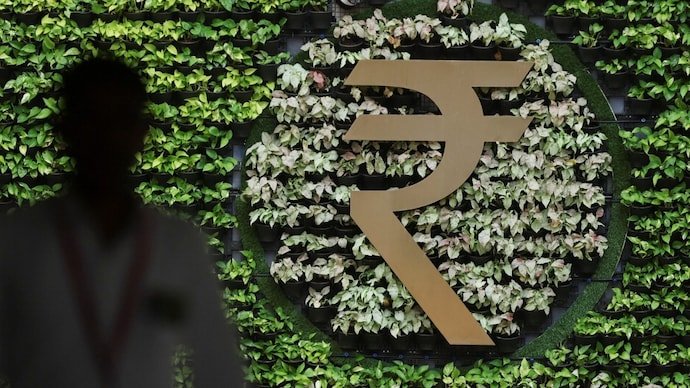
India’s latest economic growth figure took centre stage in New York as Indian Ambassador to the United States Vinay Kwatra rang the opening bell at Nasdaq, linking the country’s strong economic performance with its ambitions in Technology, digital infrastructure and global Investment.
India’s real GDP grew 7.8% year-on-year in the April-June quarter of 2026-27, according to the latest government data. The figure came in above the Reserve Bank of India’s earlier 7% projection and market expectations, reinforcing the strength of economic activity despite geopolitical uncertainty, energy-market pressures and disruptions affecting global trade.
For Kwatra, the Nasdaq ceremony offered an opportunity to present that growth story directly to one of the world’s most important technology and capital-market communities. Speaking at the exchange in Times Square on Wednesday, he described India as undergoing a significant economic and technological transformation and pointed to entrepreneurship, digital capabilities and its workforce as important drivers.
The event also carried a broader diplomatic message. India wants its economic relationship with the United States to expand beyond traditional trade and investment into technology, capital, infrastructure and the movement of skilled professionals.
Why India’s 7.8% GDP growth matters
The April-June growth figure is significant because it shows that India’s economy entered the 2026-27 financial year with considerable momentum.
Real GDP growth of 7.8% was lower than the revised 8.6% expansion recorded in the previous quarter, but it remained substantially stronger than many expectations for the period. The performance was supported by manufacturing, services, investment and domestic economic activity.
Government data showed that real gross value added, or GVA, increased 8.2% during the quarter. Manufacturing expanded 9.2%, while the broader services sector grew 10%. Financial, real estate and professional services were among the areas recording particularly strong expansion.
That combination matters because GDP growth becomes more meaningful when it is supported by several parts of the economy rather than being concentrated in one sector.
Investment also remained an important component of the expansion. The government reported strong growth in capital formation, while household consumption continued to increase. Exports provided another source of support, demonstrating resilience despite a difficult international Environment.
The numbers have also led economists to reassess their expectations for the full financial year. However, the quarterly figure should not automatically be interpreted as a guarantee that the same pace will continue throughout 2026-27. oil prices, global financial conditions, geopolitical tensions, Weather conditions and external demand remain important variables for India’s economy.
Nasdaq ceremony highlights India-US technology ambitions
Kwatra’s appearance at Nasdaq was about more than the symbolism of ringing the opening bell.
Nasdaq is closely associated with technology companies, innovation and growth-oriented capital markets. By using the occasion to discuss India’s economic transformation, Kwatra emphasized the areas where New Delhi sees substantial opportunities for deeper engagement with American companies and investors.
He highlighted the role of companies connected with Nasdaq in technology, technology-linked capital, technology infrastructure and the mobility of skilled professionals.
That reflects a broader shift in the India-US economic relationship. Technology is increasingly central to discussions involving investment, digital infrastructure, Artificial Intelligence, data centres, software, advanced manufacturing and highly skilled talent.
India’s large technology workforce and expanding digital economy have already made the country an important destination for global technology operations. At the same time, American companies remain significant participants in India’s technology and services ecosystem.
The challenge for policymakers is to convert that relationship into deeper investment and greater integration across emerging industries.
Kwatra links economic transformation to Viksit Bharat 2047
Kwatra also connected India’s economic performance with the country’s long-term Viksit Bharat 2047 ambition, the government’s objective of building a developed India by the centenary of independence.
He said India was being driven by a strong entrepreneurial ecosystem, expanding digital capabilities and a young and talented workforce. Those factors are central to the country’s strategy of moving toward higher-value economic activity.
For India, the long-term objective is not simply to maintain a high headline GDP growth rate. Sustained development requires investment in infrastructure, productivity, manufacturing capacity, technology, education, skills and employment opportunities.
The emphasis on American businesses and institutions therefore has a practical dimension. Foreign investment can contribute capital, technology and access to international markets, while Indian companies can provide scale, talent and access to one of the world’s largest consumer markets.
Kwatra said India looked forward to an even stronger partnership with American businesses, investors and institutions as it advances toward its 2047 goal.
What the latest GDP numbers reveal about India’s economy
One of the most notable features of the latest data is the breadth of growth.
Manufacturing expanded 9.2% in the April-June quarter, indicating continued strength in industrial activity. Services grew even faster, at 10%, reflecting the continuing importance of services to the Indian economy.
Investment has also become increasingly important. The government reported that investment growth contributed significantly to the quarter’s performance, suggesting that economic expansion is not being driven entirely by consumer spending.
Household consumption grew 7.1%, while exports increased 12% during the quarter. Together, those figures point to an economy supported by both domestic and external sources of demand.
This balance is important because India remains exposed to developments outside its borders. Higher energy prices can raise import costs, while weaker global demand can affect exports. A stronger domestic economy can provide some protection when external conditions deteriorate.
At the same time, India’s growth performance has generated renewed discussion about the reliability and methodology of the country’s GDP estimates. The latest numbers were released alongside a revised GDP series using a new base year and updated statistical methods.
The Ministry of Statistics and Programme Implementation has defended the changes, saying they reflect improvements in data sources and methodology rather than an attempt to inflate growth. That debate is likely to continue as economists and analysts examine the new series.
Why the US remains important to India’s growth strategy
The United States is one of India’s most important economic partners, making stronger commercial ties a natural part of New Delhi’s growth strategy.
The relationship extends across information technology, pharmaceuticals, financial services, manufacturing, digital services, aviation, education and investment. Indian professionals also play a significant role in the American technology sector.
Kwatra’s remarks at Nasdaq placed particular emphasis on the technology dimension of that relationship.
For American companies, India offers a combination of market scale, engineering and technical talent and an expanding digital economy. For India, deeper engagement with American companies can provide access to advanced technologies, investment and global business networks.
The relationship is therefore increasingly broader than the traditional movement of goods between the two countries.
Technology-linked capital is particularly important. The expansion of artificial intelligence, cloud computing, semiconductor-related industries, digital infrastructure and data centres requires large amounts of capital as well as specialized skills.
India’s ability to attract a greater share of that investment will depend on factors including infrastructure, regulatory predictability, ease of doing business, availability of skilled workers and access to global markets.
Ringing the Nasdaq bell as an economic signal
Opening-bell ceremonies are a long-standing tradition at stock exchanges, but they can also carry diplomatic and commercial symbolism when government representatives participate.
Kwatra described the event as representing confidence in enterprise, innovation and future partnerships between India and companies associated with Nasdaq.
That message fits closely with India’s effort to promote itself as a destination for technology investment and innovation.
The ceremony also provided a high-profile setting for India to showcase its growth story at a time when investors worldwide are assessing how major economies are responding to geopolitical and economic uncertainty.
India’s appeal in that environment rests partly on its domestic market and partly on its growth prospects. A large consumer base, expanding infrastructure and continued digital adoption create opportunities for companies seeking long-term expansion.
But investors will also watch whether the strong first-quarter performance can be sustained and whether investment translates into productivity and job creation over the longer term.
India’s growth comes despite global uncertainty
The 7.8% expansion occurred against a complicated international backdrop.
Geopolitical conflicts, energy-market volatility and disruptions to international shipping have created additional risks for economies that depend heavily on imported energy and global supply chains.
India is particularly sensitive to oil prices because it imports a large share of its crude oil requirements. A prolonged increase in energy costs can put pressure on Inflation, the trade balance and household purchasing power.
Global financial conditions are another consideration. Higher interest rates or tighter liquidity in major markets can affect capital flows into emerging economies, including India.
Yet the latest quarter showed that these pressures have not prevented the Indian economy from expanding at a comparatively rapid pace.
That resilience is one reason Kwatra characterized India as the fastest-growing large economy. The description is based on comparing the growth performance of major economies, although quarterly growth rates should always be considered alongside differences in economic structure, population, inflation and statistical methodology.
What could determine India’s next phase of growth
The immediate question is whether India can maintain strong growth while dealing with the risks surrounding the global economy.
One important factor will be investment. Continued spending on infrastructure, manufacturing capacity and private-sector expansion could help raise productive capacity and support growth beyond individual quarters.
Another will be the performance of exports. India has been attempting to diversify its export base and strengthen its role in global supply chains. Sustained export growth would provide another source of demand and help integrate Indian companies more deeply into international markets.
Technology could also become increasingly important. Artificial intelligence, digital services, advanced manufacturing and data infrastructure are areas where India hopes to attract significant international investment.
The availability of skilled professionals will be crucial to that effort. Kwatra specifically identified the mobility of skilled professionals as one of the important pillars of the emerging India-US partnership.
That makes the technology relationship dependent not only on capital and companies, but also on the movement and development of talent.
India-US partnership moves beyond trade
The Nasdaq event ultimately highlighted a broader evolution in the India-US relationship.
India is seeking stronger connections with American companies, investors and institutions at a time when both countries have substantial economic interests in technology and innovation.
For Washington’s business community, India represents a major market and a potential base for technology and services operations. For New Delhi, American capital and technology can support ambitions to increase productivity, develop infrastructure and move toward higher-value economic activity.
The partnership will not be without challenges. Trade policies, investment rules, technology regulations, immigration and the movement of skilled workers can all influence the commercial relationship.
Nevertheless, the message from Nasdaq was clear: India wants its economic growth story to be closely connected with global technology and investment networks, particularly those centered in the United States.
As India begins the 2026-27 financial year with 7.8% quarterly growth, the next test will be converting that momentum into sustained expansion. For Kwatra, ringing the Nasdaq bell provided a prominent stage to argue that India’s economic transformation and its technology ambitions are increasingly part of the same story.
For breaking news and live news updates, like us on Facebook or follow us on Twitter and Instagram. Read more on Latest World on thefoxdaily.com.





COMMENTS 0