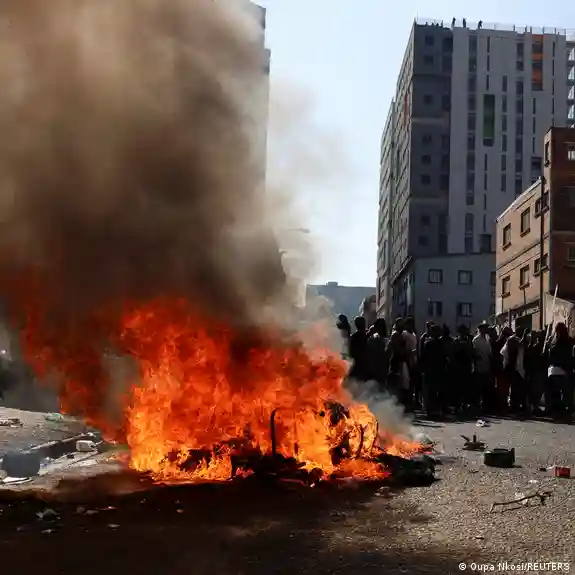
South Africa is once again confronting one of its most complex domestic challenges: balancing immigration enforcement with Constitutional Rights, humanitarian obligations and social stability. Large-scale demonstrations across multiple provinces have highlighted growing public frustration over Illegal Immigration, while Human Rights organisations warn against blaming migrants for broader structural economic problems.
The demonstrations represent the most significant migration-related mobilization since the deadly xenophobic violence of 2008, a reminder of how immigration remains one of South Africa’s most politically sensitive issues. As authorities increase security deployments and regional governments monitor the situation closely, the protests have evolved beyond immigration into a wider debate about Governance, economic opportunity and public confidence in state institutions.
South Africa Anti-Illegal Immigration Protests: Key Facts
| Issue | Latest Development | Significance |
|---|---|---|
| Nationwide Protests | Thousands marched across several provinces | Largest migration protests since 2008 |
| Government Response | Authorities rejected protesters’ deadline for migrants to leave | Only the state can enforce immigration laws |
| Police Deployment | Heavy security presence in major cities | Aimed at preventing violence and unrest |
| Migrant Movement | Thousands sought voluntary repatriation | Growing concerns about personal safety |
| Political Debate | Migration policy under renewed scrutiny | Pressure on government ahead of future reforms |
Why Are South Africans Protesting Illegal Immigration?
The demonstrations reflect long-standing public concerns over immigration, employment opportunities and access to public services.
Many protesters argue that undocumented migrants:
- Increase competition for jobs.
- Accept lower wages that undercut local workers.
- Place additional pressure on housing and healthcare.
- Contribute to the expansion of informal businesses.
- Complicate law enforcement efforts when immigration rules are violated.
These concerns have gained traction during periods of slow economic growth, persistent unemployment and rising living costs.
The Government’s Position
The South African government has firmly rejected demands made by some protest groups requiring undocumented migrants to leave the country by a self-imposed deadline.
President Cyril Ramaphosa met protest representatives before the demonstrations and appealed for peaceful action, emphasizing that immigration enforcement is the responsibility of state authorities rather than private groups.
Justice Minister Mmamoloko Kubayi also warned that while peaceful protest is protected, criminal acts such as looting, intimidation and violence would be prosecuted.
Who Organized the Demonstrations?
Several activist organizations have become prominent voices in South Africa’s immigration debate.
Among the most visible groups are:
- Operation Dudula.
- March and March.
- Progressive Forces.
These organizations argue for stricter border controls, stronger enforcement against illegal immigration and policies they believe would prioritize employment opportunities for South African citizens.
Historical Context: Why 2008 Still Matters
The comparison with 2008 is significant.
That year, South Africa experienced one of the country’s worst outbreaks of xenophobic violence after attacks targeted migrants from several African nations.
The unrest resulted in:
- Dozens of deaths.
- Hundreds of injuries.
- Thousands of displaced migrants.
- Widespread damage to homes and businesses.
Although this year’s demonstrations have largely remained peaceful, memories of those events continue to shape public concern and security planning.
Economic Challenges Fueling Public Anger
South Africa continues to face multiple economic pressures.
These include:
- High unemployment.
- Youth unemployment.
- Income inequality.
- Slow economic growth.
- Pressure on municipal services.
Many analysts note that these structural issues often intensify political debates surrounding immigration, even though economists generally view labour market dynamics as more complex than simple competition between citizens and migrants.
Human Rights Perspective
Human rights organizations have expressed concern that undocumented migrants, refugees and asylum seekers are increasingly being blamed for problems whose origins extend far beyond immigration.
Advocacy groups argue that:
- Economic inequality remains deeply rooted in historical factors.
- Public service challenges stem from governance and resource constraints.
- The asylum system requires administrative reform.
- Xenophobia can place vulnerable communities at risk.
These organizations continue urging authorities to distinguish between legitimate immigration enforcement and discrimination based on nationality.
Migration Trends Across Southern Africa
South Africa has long been one of Africa’s largest destination countries for migrants.
People move there from neighboring states including:
- Zimbabwe.
- Malawi.
- Mozambique.
- Lesotho.
- Eswatini.
Many seek employment opportunities unavailable in their home countries, while others arrive through formal refugee or asylum channels.
Voluntary Repatriation Accelerates
The protests have encouraged thousands of migrants to seek assistance from their embassies to return home voluntarily.
| Country | Reported Trend |
|---|---|
| Zimbabwe | Growing number returning through Beitbridge border crossing |
| Malawi | Returnees leaving temporary repatriation centres |
| Nigeria | Hundreds participating in voluntary repatriation flights |
Many migrants cited concerns about safety rather than changes in Immigration Policy as their primary reason for leaving.
Police Strategy Focuses on Preventing Violence
Authorities deployed large numbers of officers in Johannesburg, Durban and other urban centres.
Security measures included:
- Visible police patrols.
- Rapid response units.
- Monitoring of protest routes.
- Protection of commercial districts.
- Coordination with private security firms.
The objective was to prevent a repeat of previous episodes in which foreign-owned businesses became targets of attacks.
Understanding Illegal Immigration Versus Refugee Protection
The current debate also highlights the legal distinction between different categories of migrants.
| Category | Legal Status | Primary Consideration |
|---|---|---|
| Documented Migrants | Authorized to remain | Immigration compliance |
| Undocumented Migrants | No valid immigration status | Subject to immigration enforcement |
| Refugees | Protected under refugee law | Protection from persecution |
| Asylum Seekers | Applications under review | Legal assessment of protection claims |
This distinction remains central to both domestic law and international obligations.
Regional Implications for Southern Africa
The protests extend beyond South Africa because migration within Southern Africa is closely interconnected.
Neighboring governments are closely monitoring:
- Border crossings.
- Repatriation efforts.
- Regional labour mobility.
- Humanitarian needs.
- Cross-border trade.
Any sustained reduction in labour migration could affect both sending and receiving economies.
Political Impact Ahead
Immigration is likely to remain an important political issue.
Future policy discussions may include:
- Border management reforms.
- Modernization of immigration systems.
- Faster asylum processing.
- Labour market regulation.
- Regional migration agreements.
Political parties are expected to continue debating how to balance economic priorities with constitutional protections and international commitments.
Comparison: 2008 Versus 2026
| 2008 | 2026 |
|---|---|
| Large-scale xenophobic violence | Mostly peaceful nationwide demonstrations |
| Limited preparedness | Extensive police deployment |
| Sudden unrest | Organized protests with advance planning |
| Widespread attacks on migrants | Authorities emphasizing prevention and enforcement |
Although tensions remain high, authorities have sought to prevent the widespread violence witnessed nearly two decades ago.
Expert Insight: Immigration Reflects Broader Economic Pressures
Migration debates often become more intense during periods of economic hardship because visible population movements can become symbolic of wider frustrations. However, economists generally note that unemployment, inequality and weak economic growth are influenced by numerous structural factors, including education, investment, productivity and labour market conditions.
Effective immigration policy therefore requires both credible border management and broader economic reforms capable of expanding employment opportunities for citizens while respecting legal protections for refugees and lawful migrants.
Future Outlook
South Africa now faces the challenge of maintaining public order while addressing legitimate concerns about immigration enforcement through lawful processes. Authorities are likely to continue strengthening border management, reviewing immigration procedures and increasing cooperation with neighboring countries on migration issues.
At the same time, efforts to reduce misinformation, improve asylum administration and create greater economic opportunities may prove equally important in easing long-term tensions. Whether the current protests mark the beginning of lasting policy reforms or remain a temporary political flashpoint will depend on how effectively the government balances enforcement, constitutional rights and public confidence.
Conclusion
The nationwide anti-illegal immigration protests represent one of South Africa’s most significant public demonstrations on migration since 2008. While the marches were largely peaceful, they have highlighted deep public concerns over border control, employment and national security, while also exposing persistent disagreements about the causes of economic hardship.
As policymakers weigh future immigration reforms, South Africa faces the difficult task of protecting public safety, enforcing immigration laws fairly and preserving social cohesion in one of Africa’s most economically important and diverse nations. The way these competing priorities are managed will shape not only domestic Politics but also migration patterns across the wider Southern African region.
For breaking news and live news updates, like us on Facebook or follow us on Twitter and Instagram. Read more on Latest World on thefoxdaily.com.






COMMENTS 0