The Iran-US conflict has entered another tense phase, with Iran launching missiles and drones toward Kuwait, the United States maintaining pressure on Tehran and commercial shipping through the Strait of Hormuz remaining severely disrupted.
The latest escalation has unfolded alongside a new dispute over civilian casualties after a US strike in southern Iran appears, according to weapons experts who reviewed verified visual evidence, to have directly hit a building where a wedding was taking place. The United States says it is investigating the incident.
At the same time, US Vice President JD Vance has rejected describing the current confrontation as a “war”, even as Iran continues to launch attacks against US military positions and regional allies. Vance has also ruled out talks with Tehran while Iran continues firing on commercial vessels in the Strait of Hormuz.
The developments have once again placed one of the world’s most important oil and shipping routes at the centre of the conflict. With vessel traffic dramatically below normal levels and crude prices remaining elevated, the consequences are being felt far beyond the Middle East.
What was the latest attack on West Asia?
Iran launched missiles and drones toward Kuwait early Thursday, according to Kuwaiti authorities. Kuwait said its air-defence systems intercepted the incoming threats and described the attack as a blatant act of Iranian aggression.
Bahrain and Jordan also reported intercepting Iranian attacks, adding to a widening regional Security crisis in which Gulf states increasingly find themselves exposed to the consequences of US-Iran fighting.
The attacks followed renewed US strikes against Iranian military targets. Washington has said it is targeting capabilities that threaten commercial shipping and US forces in the region.
The Iranian strikes represent a significant expansion of the retaliation pattern because Gulf countries hosting American military facilities are now directly involved in the exchange of fire.
Kuwait is particularly exposed because of its geographic position and its close security relationship with Washington. Any sustained attacks on US bases or infrastructure there could create another escalation point in the conflict.
Does JD Vance consider the Iran-US fighting a war?
Despite the continuing military exchanges, Vance said he would not describe the current confrontation as a “war”.
At a White House briefing, he said there was currently “no active shooting” and rejected the framing of the confrontation as a conventional war. His comments came despite Iran’s attacks in the Gulf and ongoing US military operations against Iranian targets.
Vance also refused to provide a timetable for the end of the conflict or say whether the fighting would stop before the November 3 US midterm elections.
He said the administration would not establish “artificial timelines”, indicating that the duration of the campaign would depend on developments on the ground rather than the US electoral calendar.
The language reflects one of the administration’s central political challenges. Washington is attempting to maintain military pressure on Iran while avoiding a conflict that could become an open-ended war and create greater domestic political costs.
Vance also said the United States would not enter talks with Iran while Tehran continues to fire on commercial vessels in the Strait of Hormuz.
That position makes shipping security a central condition for any potential diplomatic opening between Washington and Tehran.
Why is the Strait of Hormuz so important?
The Strait of Hormuz is one of the world’s most strategically important maritime chokepoints because enormous volumes of crude oil, petroleum products and liquefied natural gas normally pass through it.
Before the current conflict, more than 130 commercial vessels were passing through the waterway on some days, according to shipping data cited in reports. Since hostilities intensified, traffic has fallen sharply.
Lloyd’s List Intelligence recorded only 102 transits over an entire week, compared with 130 or more vessels per day before the conflict.
More recent Kpler tracking has shown an even more dramatic decline in observed shipping activity. The average number of daily transits has fallen from around 95 in February to roughly 15 a day by August.
The numbers demonstrate the scale of the disruption, although tracking systems cannot capture every vessel because some ships disable their automatic identification systems for security reasons.
Still, the overall trend is unmistakable: commercial operators are avoiding the waterway or waiting for conditions to become safer.
Is oil still moving through Hormuz?
Yes, but at much lower levels and under increasingly complicated security arrangements.
US officials say American naval forces are escorting commercial vessels through the strait to keep essential oil cargo moving.
Vance said around 15 million barrels were escorted on Wednesday, while other US officials have described larger coordinated escort operations involving dozens of commercial ships.
The continued movement of cargo is important because a complete shutdown of Hormuz would remove a substantial amount of energy supply from international markets almost immediately.
However, escorting ships does not eliminate the broader risks. Shipowners, insurers and crews still have to decide whether the potential financial and physical danger of entering the strait is acceptable.
That means a waterway can technically remain open while commercial traffic still operates far below normal capacity.
Why shipping disruption is pushing oil prices higher
Brent crude has remained above $95 a barrel as traders price in the risk of further supply disruptions.
oil prices respond not only to the amount of crude physically unavailable but also to expectations about future supply. When traders believe an important shipping route could become even more dangerous, they tend to demand a higher risk premium.
The problem becomes more serious when alternative export routes are limited.
For Gulf producers, the Strait of Hormuz is the most important maritime outlet for large quantities of energy. Any prolonged reduction in shipping therefore creates a potential mismatch between oil production and the ability to deliver that oil to international customers.
That is why the conflict is affecting markets even when some tankers continue to move.
What is the US blockade on Iran doing?
The United States has continued a maritime blockade and enforcement campaign designed to restrict Iran’s ability to export oil and use shipping networks to circumvent US sanctions.
US Central Command said on Thursday that American forces had redirected 87 commercial vessels, disabled three vessels and boarded two others as part of efforts to ensure what it described as “total compliance”.
The blockade is aimed at weakening Iran’s access to oil revenues and preventing commercial activity that Washington says supports Tehran’s military capabilities.
For Iran, the blockade creates another major pressure point because oil exports provide a critical source of foreign currency and government revenue.
For the global market, however, the policy creates an opposing risk: restricting Iranian oil at the same time that shipping through Hormuz is disrupted can further tighten global supply.
Why the US-Iran conflict is affecting commercial shipping
The dispute over shipping is not a side issue. It has become one of the central triggers for the current escalation.
Washington says Iranian forces have threatened or attacked commercial vessels operating through the Gulf and Strait of Hormuz. US military operations have consequently focused on Iranian radar, air-defence, missile and maritime capabilities that Washington says are being used against commercial traffic.
Iran, meanwhile, has sought to use control over the waterway as leverage against US pressure.
The result is a dangerous cycle. Iranian attacks or threats push shipping companies to reduce operations. The United States responds by increasing naval escorts and military pressure. Iran then retaliates against US forces or regional allies.
Every new incident increases the risk that commercial shipping becomes even more difficult.
What happened at the Iranian wedding?
One of the most serious recent civilian incidents occurred in Kuhestak in southern Iran on September 1.
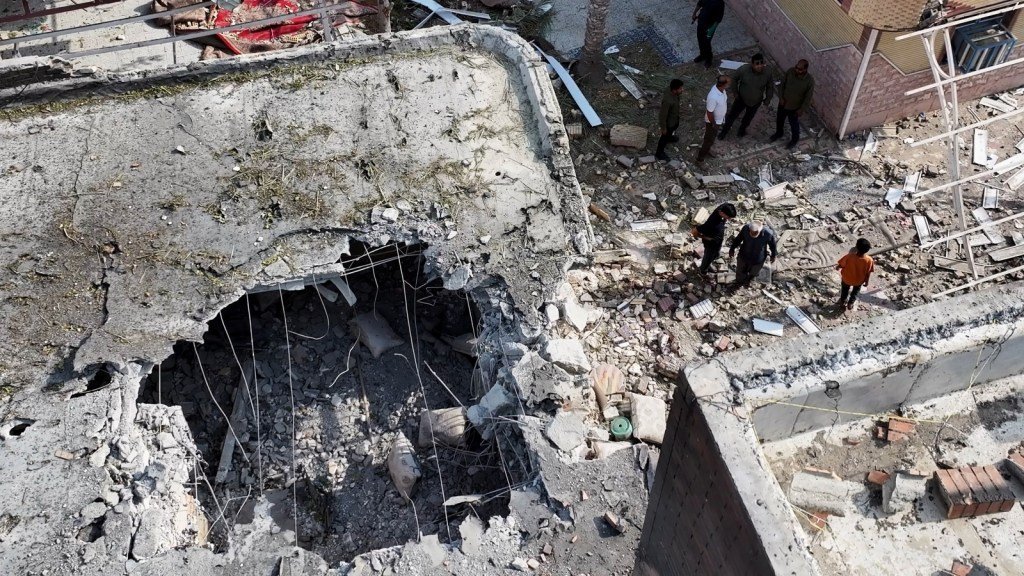
A munition struck a home where a wedding celebration was taking place, killing at least five civilians and injuring nearly 70 people, according to Iranian authorities and rights monitors.
Weapons experts who reviewed photographs and videos verified by Reuters concluded that the damage was consistent with a direct strike on the building rather than fragments from a nearby attack.
Several experts also assessed that a US weapon was more likely than an Iranian air-defence missile.
The wedding house was about 135 metres from a communications tower that US forces had reportedly targeted during strikes in the area.
The proximity of the two locations has become central to the investigation. US officials have said they are examining several possible explanations, including whether the US strike hit the wedding house, whether an Iranian interceptor caused the damage or whether another error occurred.
Washington has not publicly accepted responsibility for the deaths.
Why the wedding strike matters
The incident has intensified concerns over civilian casualties because the building was reportedly hit while a large family gathering was taking place.
Photographs from the aftermath showed wedding decorations and personal belongings scattered among the rubble.
The physical evidence reviewed by experts suggests the building itself was struck, rather than simply damaged by debris from the nearby telecommunications target.
That distinction is important. If the weapon came directly from the US attack, investigators would have to determine what the intended target was, whether the munition missed, what intelligence was available before the attack and what precautions were taken to protect civilians.
The US military has said it is investigating.
The case is also being closely watched because of an earlier major civilian casualty incident in Minab, where a primary school was hit during the opening phase of the conflict.
What did Netanyahu say about Iran’s regime?
Israeli Prime Minister Benjamin Netanyahu said Iran’s Islamic Republic is weaker than ever and suggested that removing the regime is now within reach.
Speaking to Israeli military leaders, Netanyahu described the Iranian government as being under severe pressure and said regime change remained Israel’s main objective.
He argued that Iran’s leadership is fighting for its survival and that the possibility of the regime falling is now closer than before.
His comments come ahead of Israel’s October 27 general election, adding a domestic political dimension to the military confrontation.
Netanyahu also highlighted the fact that Iran’s recent retaliation has largely focused on US forces and other American allies in the region rather than Israel itself.
He argued that this pattern was deliberate and suggested that Tehran’s ability to attack Israel had been constrained.
What happened after the earlier ceasefire?
The current escalation follows months of shifting military and diplomatic pressure.
The United States and Israel launched their initial joint offensive against Iran in late February. President Donald Trump later announced a ceasefire in April, creating a temporary reduction in direct military activity.
That pause did not produce a lasting political settlement.
Instead, Washington increased economic pressure and sanctions enforcement while tensions surrounding shipping in the Strait of Hormuz continued to grow.
The United States later resumed military strikes against Iranian targets. Iran responded with attacks against US assets and American partners in the Gulf and elsewhere in the region.
The breakdown of the earlier ceasefire demonstrates how difficult it has become to separate military, economic and maritime aspects of the conflict.
Even when direct attacks temporarily decrease, sanctions, blockades and restrictions on shipping can continue to generate confrontation.
What is happening on the Israel-Lebanon front?
The conflict has also continued to affect southern Lebanon.
The Israeli military said it had taken operational control of the Ali Taher ridge, a strategically important area overlooking villages and roads leading toward Nabatiyeh.
Israeli forces said they had cleared Hezbollah fighters from two underground routes in the area, killing some fighters while others fled. Israel said operations were continuing.
The ridge is believed to be near an extensive Hezbollah underground facility, making it strategically important to Israeli forces.
Hezbollah did not immediately issue a response to the Israeli claims.
The developments show that the regional security crisis is not confined to the US-Iran confrontation. Israeli operations in Lebanon continue alongside the larger confrontation with Iran.
There is also fresh tension in the occupied West Bank
Israeli police also arrested a settler suspected of participating in an attack on a Palestinian home in the occupied West Bank.
The suspect was being questioned, and police were seeking an extension of his detention.
The incident adds another layer to the region’s already complex security situation, with violence and political tension continuing on several fronts at the same time.
Will schools in Iran remain open?
Despite the continuing conflict, Iran’s education authorities say schools will continue with in-person classes.
Education Minister Alireza Kazemi said preparations were underway for the new academic year and that the government was working to ensure that schools could operate despite the difficult conditions.
Keeping schools open is a significant logistical challenge in a conflict Environment, particularly when military strikes and air-raid warnings can disrupt transportation and public services.
The government’s decision reflects an attempt to preserve basic civilian life while military operations continue.
Why the conflict could keep affecting the global economy
The Strait of Hormuz connects the military confrontation directly to the world economy.
Reduced vessel traffic threatens the smooth movement of oil and other commodities, while higher energy prices can feed into Inflation and transportation costs around the world.
For oil-importing countries, sustained crude prices above $95 a barrel can increase fuel expenses and place additional pressure on consumers and businesses.
Higher energy costs can also complicate central-bank policy because they can push inflation higher at the same time that economic activity weakens.
That combination can produce a difficult economic environment in which policymakers face pressure from both inflation and slower growth.
The longer shipping disruption continues, the greater the risk that a temporary geopolitical shock turns into a broader global economic problem.
Why the Hormuz traffic figures matter
Shipping statistics provide one of the clearest measures of the conflict’s economic impact.
Before hostilities began, roughly 125 to 130 commercial vessels could pass through the strait each day. Recent observations are dramatically lower.
Kpler data cited in reports showed observed traffic falling to around 15 vessels a day by August, while more recent daily data have also remained far below the normal level.
That gap is important because a waterway’s economic significance is determined by how efficiently goods can move through it, not simply whether the route is technically open.
If insurers charge more, ships take longer routes or operators wait for naval escorts, the cost of transporting goods rises even if the waterway never officially closes.
That is already happening to some extent around Hormuz.
Could Iran and the US return to negotiations?
Diplomacy remains possible, but the immediate conditions are difficult.
Vance has explicitly linked any US talks to Iran stopping attacks on commercial vessels. Iran, meanwhile, has used its ability to disrupt shipping as leverage against US military and economic pressure.
That leaves both sides with sharply different starting positions.
Washington wants guarantees over shipping security and broader strategic issues. Tehran wants relief from sanctions and pressure while maintaining leverage over the strait.
The continuation of military operations makes compromise even harder because every new attack creates additional political pressure on leaders to respond.
For now, neither side appears willing to establish a fixed timetable for ending the confrontation.
What happens next?
The immediate risk is another cycle of retaliation.
Iran’s attacks on Kuwait and other regional targets could prompt further US military action. Any new strike on a commercial ship could also accelerate American operations around the Strait of Hormuz.
The wedding investigation adds another source of pressure. If Washington concludes that a US munition directly struck the civilian gathering, the administration could face tougher questions over targeting decisions and civilian protection.
Meanwhile, the continuing military presence around Hormuz will keep shipping companies and oil traders focused on whether the waterway is becoming safer or more dangerous.
Developments in southern Lebanon and the occupied West Bank could further complicate the situation if violence spreads across additional fronts.
The bigger picture: a regional conflict with global consequences
The latest Iran-US escalation is no longer confined to the territory of the two countries.
Iran has fired toward Kuwait, Bahrain and other regional locations. Israel is continuing operations in Lebanon. The United States is using naval forces to protect commercial shipping. Oil prices are rising as traders assess the threat to energy flows.
At the centre of all these developments is the Strait of Hormuz.
The waterway has become both a military flashpoint and an economic weapon. Its disruption threatens to turn a regional conflict into a global energy crisis, while efforts to keep ships moving require increasingly visible US military protection.
The deadly wedding strike shows the human cost of the conflict on the ground, while the collapse in shipping activity shows its impact at sea.
Vance’s refusal to call the confrontation a “war” does not change the reality that military forces are striking targets, commercial vessels are facing danger and countries across the Gulf are being drawn into the confrontation.
The immediate outcome will depend on whether Washington and Tehran can prevent another cycle of escalation.
For now, there is no clear end date. The United States says it will not set an artificial timetable, Iran continues to use military and maritime pressure as leverage, and Israel is openly discussing the possibility of weakening or removing the Iranian regime.
That leaves the Strait of Hormuz as the key indicator to watch. If commercial traffic begins returning toward normal levels, it could signal that the confrontation is easing. If shipping remains severely depressed or attacks spread, the current crisis could continue driving up oil prices, threatening supply chains and deepening the economic consequences far beyond West Asia.
For breaking news and live news updates, like us on Facebook or follow us on Twitter and Instagram. Read more on Latest World on thefoxdaily.com.




COMMENTS 0