A 30-year-old Hydropower worker trapped inside a tunnel in Nepal for nine days has been rescued alive after saying he spent the ordeal chanting the Hare Krishna mahamantra. Sanjay Sah was pulled out from the Trishuli 3A hydropower project on Friday, September 4, coinciding with Krishna Janmashtami, the Hindu festival celebrating the birth of Lord Krishna.
Sah was among two workers rescued alive from the tunnel after an enormous surge of ICE, rock, mud and floodwater swept through the Trishuli River corridor on August 26. His survival has provided a rare moment of relief in a disaster that has devastated communities, destroyed Infrastructure and left large numbers of people missing.
The second survivor, 45-year-old mechanical supervisor Kabir Maharjan, was also brought out alive and taken for medical treatment. Sah was transported to a hospital in Trishuli, while Maharjan was airlifted to the Nepal Army Hospital in Kathmandu because of his condition.
Sah’s account is remarkable not only because he survived nine days underground, but also because of what he says helped him endure the isolation and uncertainty. Shortly after his rescue, he told Security personnel that he had been chanting the Hare Krishna mantra throughout his time trapped inside the tunnel.
His rescue has also raised fresh hope that others believed to be trapped in hydropower tunnels may still be alive.
Sanjay Sah stayed behind to help others
Sah was working as a foreman with the Nepal Electricity Authority when the disaster struck. He said he was inside the control room when warnings about the flooding reached the workers.
Rather than immediately leaving, Sah said he remained behind because he believed he had a responsibility to help others escape.
“I was working in the control room. My responsibility was to save everyone’s life,” Sah said after his rescue.
He recalled telling people to run after learning that the disaster was approaching. By the time he tried to get out himself, however, the conditions had become too dangerous and his escape route was effectively cut off.
His account suggests that the floodwater and debris entered the project with enormous force, leaving workers with very little time to react.
Once trapped, Sah could no longer determine what was happening outside. He remained inside the tunnel, hoping that rescuers would eventually reach him.
“I was chanting Hare Krishna” for nine days
After being brought to safety, Sah said he had spent the previous nine days chanting the Hare Krishna mahamantra.
His statement carried added emotional significance because his rescue occurred on Krishna Janmashtami, the festival marking Lord Krishna’s birth according to the Hindu calendar.
Sah did not describe chanting as a substitute for the Rescue Operation. Rather, his account showed how faith became a source of hope while he waited in an Environment where survival was uncertain and contact with the outside world was extremely limited.
The coincidence between his rescue and Janmashtami quickly became one of the most striking aspects of the story.
For Sah, however, the focus remained on the people who may still be underground. Even after surviving nine days himself, he warned rescuers that other workers could still be trapped further inside the tunnel and possibly near the powerhouse.
He told security personnel that he had been able to communicate with three or four people nearby, either by speaking or making noises. His account has become important to ongoing rescue efforts because it suggests that survivors may have remained in isolated sections of the tunnel.
Two workers rescued after nine days underground
The rescue of Sah and Maharjan represents a significant breakthrough in the search operation at the Trishuli 3A project.
Rescue teams had been working through blocked and debris-filled tunnels since the August 26 disaster. The difficult terrain, unstable conditions and huge quantities of material carried into the hydropower complex made the operation particularly dangerous.
Specialised equipment was brought in as rescuers attempted to locate workers believed to be trapped underground. At different points, rescue teams reported hearing voices and establishing limited communication with people inside the tunnel.
Those reports helped maintain hope that workers could still be alive despite the length of time that had passed since the flood.
The successful extraction of Sah and Maharjan has now provided concrete evidence that people can survive for an extended period inside sections of the affected tunnel system.
Authorities are continuing to search for others.
Who is Kabir Maharjan?
Maharjan, 45, was working as a mechanical supervisor at the hydropower project when the disaster struck.
His rescue alongside Sah brought immense relief to his family after nine days of uncertainty.
His wife, Hira Shobha, expressed her joy after learning that he had survived. She described his return as receiving a “second life.”
Maharjan was in a more serious condition than Sah following the rescue and was airlifted to the Nepal Army Hospital in Chhauni, Kathmandu, for further treatment.
The contrasting medical needs of the two survivors illustrate the physical toll of remaining trapped underground for so long. Even when workers can survive the initial disaster, prolonged confinement, injuries, dehydration, lack of mobility and exposure to contaminated conditions can create serious Health risks.
What caused the Nepal disaster?
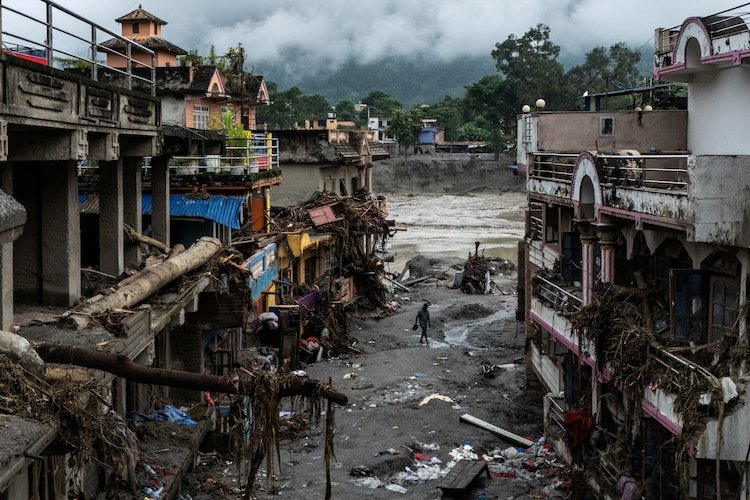
The August 26 disaster was triggered when an enormous mass of ice and rock collapsed near the Nepal-Tibet border, sending a surge of water, debris and sediment into river valleys.
The resulting floods and debris flows devastated large parts of northern and central Nepal, particularly communities and infrastructure along the Trishuli River corridor.
Roads, bridges, homes and hydropower facilities were damaged or destroyed.
The Upper Trishuli 3A project was among the hydropower sites severely affected. The sudden arrival of floodwater left many workers unable to escape before tunnels and surrounding facilities were overwhelmed.
The disaster has become one of Nepal’s deadliest recent natural catastrophes, with authorities and humanitarian organisations still trying to account for people who were swept away or remain trapped.
The scale of destruction has complicated rescue operations because roads and access routes were themselves damaged, while debris made it difficult for teams to reach affected sites.
Why hydropower tunnels became deadly traps
Nepal’s hydropower sector relies heavily on tunnel construction and underground infrastructure because of the country’s mountainous geography and abundant river systems.
Tunnels are used for water diversion, power generation and other components of hydropower projects. Workers inside these structures can be particularly vulnerable during sudden floods or landslides because escape routes may be narrow and limited.
When a major surge enters a tunnel, debris can block entrances and internal passageways within minutes.
That appears to have been one of the major problems facing the workers at Trishuli 3A.
Unlike a conventional building, where people may have several possible exits, a long tunnel can leave workers with very few escape options once water and debris enter from one direction.
Sah’s account that the tunnel was very long and that floodwater may have carried people deeper inside helps explain why locating missing workers has been so difficult.
Sah fears others may still be trapped
Even after being rescued, Sah did not believe the search should end.
He told authorities that not everyone may have been able to escape and suggested that some people could still be trapped deeper inside the tunnel, particularly around the powerhouse area.
His comments are significant because he was physically present inside the tunnel when the flood struck and says he was able to hear or communicate with several people after becoming trapped.
Rescuers are therefore treating reports of possible survivors seriously as they continue searching inaccessible sections of the project.
The discovery of two living workers after nine days has also provided practical evidence that survival remains possible under some conditions, encouraging rescuers to continue searching areas that might otherwise appear inaccessible.
More than 600 hydropower workers remain missing
The scale of the hydropower-related disaster extends far beyond Trishuli 3A.
According to the Independent Power Producers’ Association of Nepal, more than 600 people working at 11 hydropower projects remain missing.
Other estimates indicate that hundreds of workers may still be trapped inside tunnel systems connected to several projects along the affected river corridors.
The numbers are still being revised as authorities receive new information from local communities and project operators.
The uncertainty reflects the enormous scale of the disaster. In some locations, roads and communication networks were destroyed, making it difficult for families and officials to establish who escaped, who was evacuated and who remains unaccounted for.
The rescue of Sah and Maharjan therefore represents much more than two individual survivors. It has given families waiting for information a reason to believe that other people may also have survived.
Rescue teams face a race against time
Finding people alive after nine days underground is exceptionally difficult, but the possibility of survivors has pushed rescue teams to continue working in dangerous conditions.
Specialised equipment has been deployed to search through debris and blocked sections of the tunnel. Teams have also relied on reports of sounds and possible communication from underground.
The nature of the disaster creates a further challenge: rescuers must balance speed against the risk of triggering additional collapses or exposing workers to unstable structures.
Water, mud and rock can shift without warning inside a damaged tunnel. Equipment must therefore be used carefully, particularly when crews believe people may be trapped nearby.
The successful rescue of two workers demonstrates that persistence and technical resources can make a difference even after the initial window for survival appears to have passed.
The Trishuli disaster has devastated Nepal’s infrastructure
The flood did not only affect workers at hydropower projects.
The wider disaster swept away roads and bridges, damaged settlements and disrupted access to communities along the Trishuli River system.
For Nepal, where many mountain communities depend on a limited number of roads connecting valleys and towns, the destruction of transport infrastructure can make rescue and relief operations significantly harder.
Hydropower facilities themselves are strategically important because they provide electricity and are major drivers of Nepal’s economic development.
Damage to such projects therefore creates both an immediate humanitarian emergency and a longer-term reconstruction challenge.
The event has also highlighted the vulnerability of infrastructure built in mountainous regions where rivers, glaciers, landslides and extreme Weather can interact in unpredictable ways.
A disaster that spread far beyond one valley
The August 26 event affected communities across northern and central Nepal, while the impact also extended into Tibet.
The floodwaters carried huge quantities of debris downstream, magnifying destruction far from the initial collapse.
That is one reason the disaster has produced such a large number of missing people. Individuals were swept away in rapidly moving water, while others disappeared when homes, bridges and work sites were destroyed.
The difficulty of recovering bodies or confirming the whereabouts of people in remote mountain terrain means casualty and missing-person figures are expected to continue changing.
Families are therefore facing not only grief but also uncertainty about what happened to relatives who have not yet been located.
Why Sah’s survival has become a symbol of hope
Sah’s story stands out against that background of uncertainty.
He survived nine days underground after staying behind during the initial emergency because he believed it was his responsibility to help others. He then remained trapped while rescue teams searched for signs of life.
His statement that he spent those nine days chanting Hare Krishna has added a deeply personal dimension to an otherwise devastating disaster story.
The fact that he emerged alive on Janmashtami has made the rescue especially meaningful to many people following the disaster.
But the most important consequence of his survival may be practical rather than symbolic: it demonstrates that people trapped inside affected tunnels can remain alive for considerably longer than initially feared.
That knowledge could influence the intensity and duration of rescue operations at other hydropower sites.
What happens next at Trishuli 3A?
The immediate focus remains on medical treatment for the two rescued workers and continued searches for those still unaccounted for.
Sah is being treated locally and was reported to be in stable condition, while Maharjan was transferred to Kathmandu for further care.
Rescuers are continuing to inspect sections of the tunnel where workers may still be trapped. The information provided by Sah about people he could hear or communicate with could help teams identify potential areas of interest.
Authorities will also have to investigate exactly how the flood entered the project, how evacuation procedures unfolded and whether additional measures could have reduced the loss of life.
Those questions will become especially important as Nepal prepares to rebuild damaged hydropower infrastructure and other facilities exposed to similar hazards.
The wider lesson from Nepal’s hydropower disaster
The Trishuli 3A rescue is a reminder of both human resilience and the dangers faced by workers in high-risk infrastructure projects.
Sah survived because he remained alive long enough for rescuers to reach him despite being isolated inside a tunnel overwhelmed by a catastrophic natural event. Maharjan also survived the same ordeal, although he required more intensive medical attention.
Their rescue offers hope to families whose relatives are still missing, especially those connected to other hydropower projects affected by the disaster.
But it also exposes the enormous scale of the crisis. More than 600 hydropower workers are still reported missing, while thousands of people across Nepal remain unaccounted for following the floods and debris flows.
The priority now is to sustain rescue operations while conditions permit and to locate as many survivors as possible.
Nine days underground, one rescue that changed the mood
When Sanjay Sah entered the Trishuli 3A control room on August 26, he could not have known that he would spend the next nine days trapped underground.
He stayed behind because he believed others needed help. When he eventually became trapped himself, he said he turned to prayer and continued chanting the Hare Krishna mahamantra while waiting for rescuers.
On September 4, he was finally brought out alive.
The timing of his rescue, on Krishna Janmashtami, has given the story an extraordinary emotional resonance. Yet the deeper significance lies in what his survival means for the ongoing operation.
Sah’s account suggests that other voices may still be waiting to be heard inside Nepal’s damaged hydropower tunnels.
For a country still confronting the destruction left by the August 26 disaster, the rescue of two workers after nine days cannot erase the enormous loss. But it has created something Nepal desperately needed: a renewed reason to keep searching.
For breaking news and live news updates, like us on Facebook or follow us on Twitter and Instagram. Read more on Latest World on thefoxdaily.com.



COMMENTS 0